What You Should Know
- A Distinct Identity Makes Your Specialty Clear: A recognizable business name and the correct professional designation help potential clients understand your services. Creative titles may enhance your marketing, but they cannot replace the occupational title recognized by your licensing authority.
- Simple Scheduling Can Increase Confirmed Appointments: A Zenoti survey found that more than 83% of frequent nail-salon clients had abandoned a booking because they could not reach the business or the online process was too difficult. An accessible, mobile-friendly system can reduce these barriers.
- Legal Requirements Depend on the State: Georgia generally requires 525 hours in an approved nail-care school program, whereas Arkansas requires a 600-hour manicure program. Future professionals must also fulfill the current application, examination, and licensing conditions in their state.
- Responsible Practices Protect Clients and Professionals: Keeping uncured products away from skin, using compatible systems and curing equipment, managing filing dust, and complying with sanitation rules can help prevent avoidable injuries, infections, and acrylate sensitization.
Entering the beauty industry can be incredibly rewarding, but creating a recognizable career requires more than artistic ability. Many new professionals want to know how to attract nail clients, manage self-doubt, or create an Instagram profile that produces actual appointments. This guide explains how to shape a credible identity, develop an effective online presence, reach local clients, prioritize safety, and build a financially sustainable nail business.
Shape an Identity Clients Can Recognize
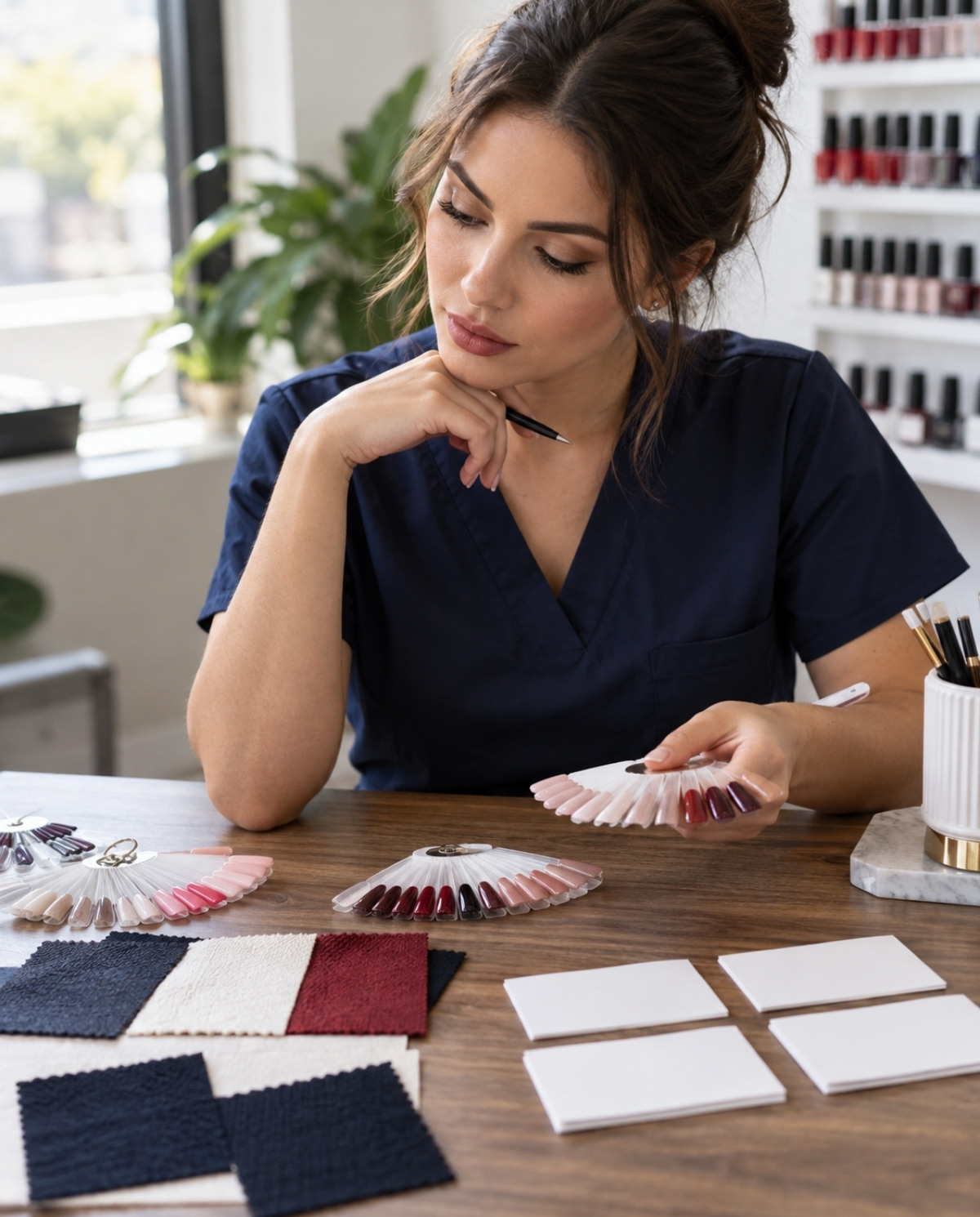
Your professional identity influences how potential clients interpret your work before they ever sit at your station. Before ordering printed materials or publishing a website, determine what you want the public to associate with your services. The name and title you select should make that positioning easy to understand.
Licensing terminology differs across jurisdictions. A licensed professional may be identified as a nail technician, manicurist, nail specialist, or nail care professional, depending on the state. The appropriate regulatory board—not the title written in a social media profile—defines the individual’s lawful scope of practice.
Creative descriptions such as nail artist, nail sculptor, and nail care specialist may support a brand when they accurately represent the services offered. Someone known for intricate hand-painted designs might use nail artist, while a professional specializing in custom extensions might choose nail sculptor. These descriptions ordinarily serve a marketing purpose rather than representing separate state-issued credentials.
Only describe yourself as certified when you have earned an authentic certification and can identify the organization that awarded it. A private product or technique certificate may document additional education, but it does not substitute for a state license or authorize services beyond your legal scope.
When developing nail technician business name ideas, prioritize clarity, memorability, and ease of spelling. Complicated or unconventional spellings may prevent clients from finding your profile, recommending the business, or tagging it correctly.
Combining your name with your specialty, such as Elena Miller Nail Artistry or Claws by Chloe, reinforces that clients are reserving time with an individual professional. A descriptive or location-based option such as Midtown Gel Studio or The Natural Nail Lab can immediately communicate a specialty or service area. Those planning to operate a larger salon in the future may benefit from a broader name such as Luxe & Lacquer that can accommodate additional professionals and services.
Before adopting a business name, investigate:
- Your state’s registered-business database
- Federal and state trademark records
- Available website domains
- Social media usernames
- Local assumed-name or DBA requirements
- Restrictions involving words such as salon, academy, medical, or certified
A business name alone does not grant permission to provide services. Legal operation may require an individual license, business registration, insurance, local permits, establishment approval, and compliance with state-board regulations. Anyone planning to open a physical location should research whether someone can own a salon without holding a cosmetology license and determine which credentials apply to the owner, establishment, and service providers.
Nail services can support a meaningful long-term career. According to the U.S. Bureau of Labor Statistics occupational outlook for manicurists and pedicurists, employment in this occupation is projected to grow 9% from 2025 through 2035, compared with 3% across all occupations.
In May 2025, national median earnings were $35,760 annually, or $17.19 per hour. Approximately 201,800 manicurist and pedicurist jobs existed in 2025, and self-employed workers represented 23% of the occupation. However, BLS wage estimates exclude self-employed workers. Independent professionals must subtract supplies, rent, insurance, taxes, processing charges, and other operating expenses when calculating take-home income.
Some workers may also qualify for the temporary federal deduction for reported tips. Under the IRS guidance concerning the qualified-tip deduction, eligible taxpayers may deduct as much as $25,000 in qualified tips for tax years 2025 through 2028. Eligibility is subject to occupation, income, filing-status, and business-income limitations. The provision does not eliminate the obligation to report tips and does not necessarily remove payroll or self-employment taxes.
Beginning with an accurate and legally responsible identity creates a dependable base for future career and business development.
Design an Online Experience That Encourages Booking
Your digital presence often provides a prospective client’s first impression of your business. A visitor should be able to identify your location, specialties, approximate prices, qualifications, and booking method without searching through numerous posts.
An effective nail technician bio for Instagram communicates the essential information quickly. Include your name, appropriate professional designation, city or studio location, and primary specialty. Examples might include Japanese Gel Art, Structured Overlays, Natural Nail Care, or Custom Extensions. Conclude with a direct link or instruction explaining how to reserve an appointment.
Only state that you are licensed when the license is active and covers the services being promoted. Professionals working from a suite or independently operated station inside another establishment should clarify whether appointments are made directly with them or through the salon.
Other useful profile details include:
- Typical operating hours
- A complete service-menu link
- Deposit and cancellation terms
- Instructions for first-time clients
- Removal and outside-product policies
- Parking and building-access information
- Available payment methods
Nail technician captions for Instagram can do more than accompany finished-service photos. Educational content allows you to demonstrate the reasoning behind your practices. The natural nail plate contains layers of keratinized cells, and aggressive filing or buffing can make it thinner and weaker. Lifting can have several causes, including contamination, inadequate preparation, incompatible systems, application problems, physical trauma, or incomplete curing.
Explaining your preparation process, why unnecessary filing is avoided, and how clients can maintain their services safely between visits demonstrates professional knowledge. With suitable client permission, content may also show how reusable implements are cleaned and disinfected according to product directions and state requirements.
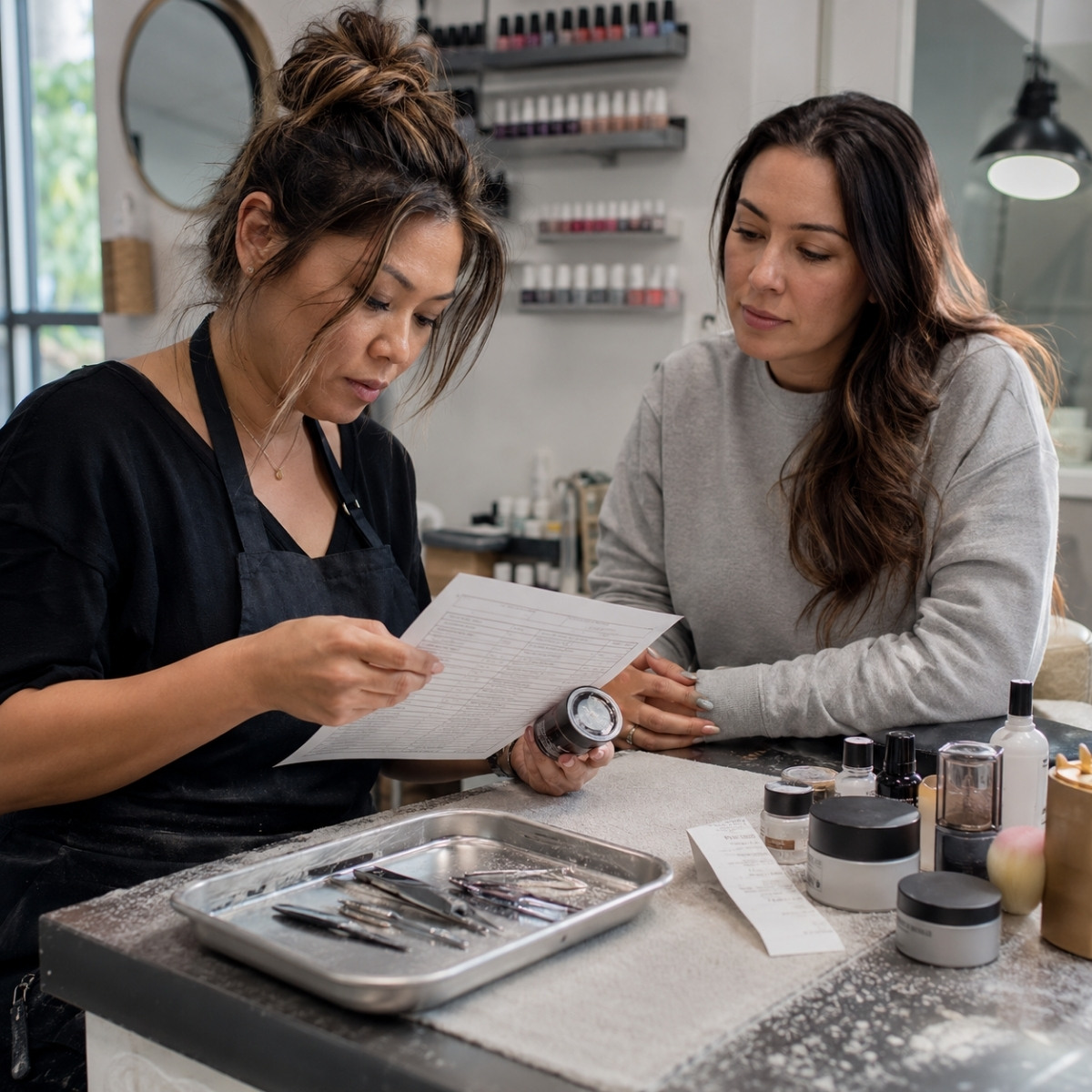
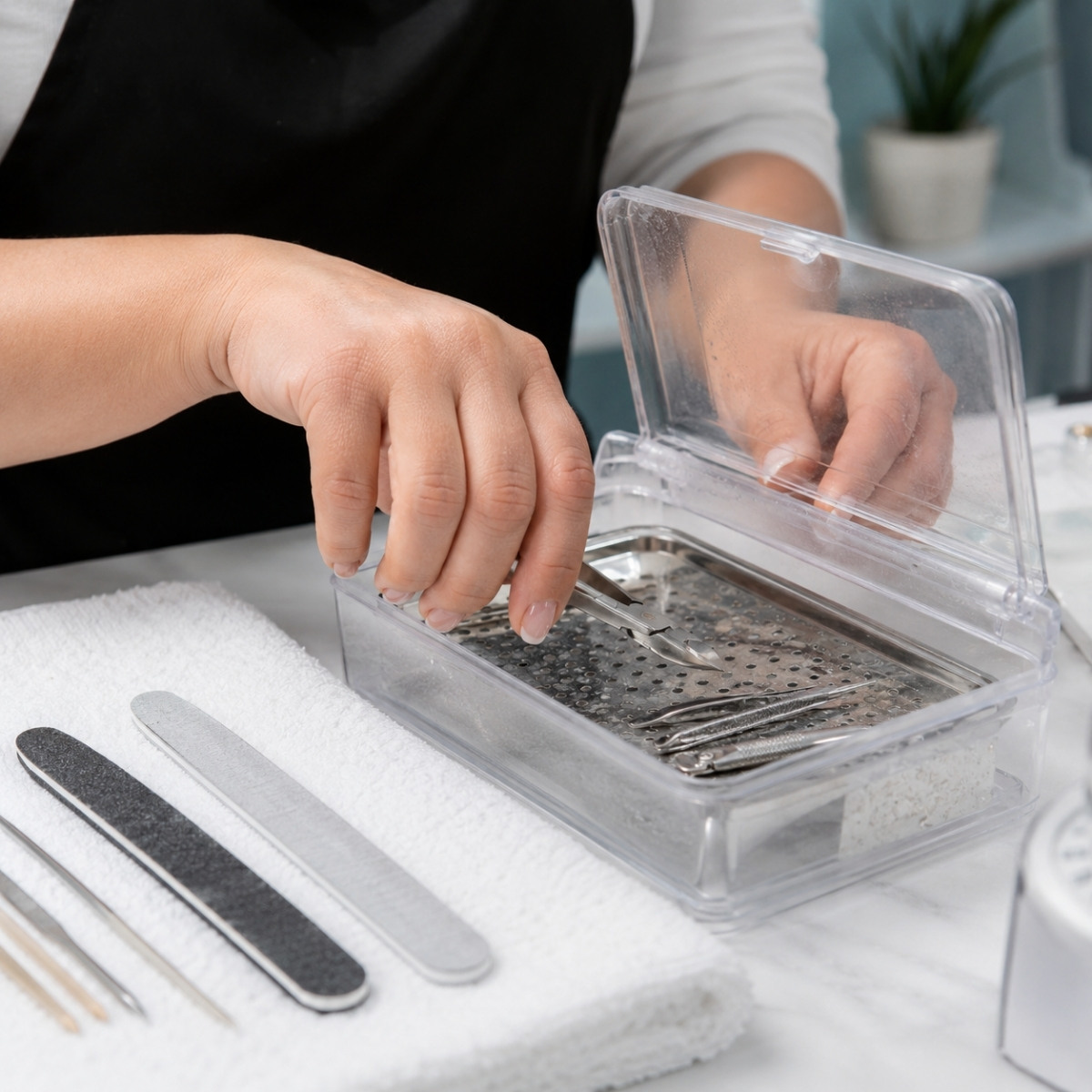
Sanitation terminology should be used accurately. Cleaning, disinfection, and sterilization describe different processes. Nail establishments commonly clean suitable reusable, nonporous implements before disinfecting them with products and contact times accepted under state rules. An autoclave performs sterilization, but a business should only advertise autoclave use when it operates a properly maintained and validated device for compatible instruments.
Social media may introduce clients to your services, but a dedicated nail technician website gives you greater control over the complete customer journey. A mobile-responsive site can organize services by name, description, duration, starting price, and additional fees. Potential charges for removals, repairs, length, shape, and complex artwork should be disclosed clearly.
Eligibility and limitations should also be explained for relevant services. Avoid promises to cure nail diseases or medically restore damaged nails. A nail technician may notice visible concerns, refuse a service that appears unsafe, and encourage a client to consult a qualified healthcare professional. Diagnosing and medically treating a condition generally remain outside the technician’s legal role.
Use a high-resolution portfolio that displays your own work accurately and from multiple angles. The examples should represent services that clients can genuinely request. Pair the portfolio with a reservation system that allows visitors to view policies, check availability, and submit or confirm appointments outside ordinary operating hours.
The Research and Markets Global Nail Salon Report estimates that the worldwide nail-salon market will expand from $14.08 billion in 2026 to $19.34 billion in 2030. It identifies custom artwork, premium services, digital scheduling, and increased attention to hygiene and safety among notable market trends.
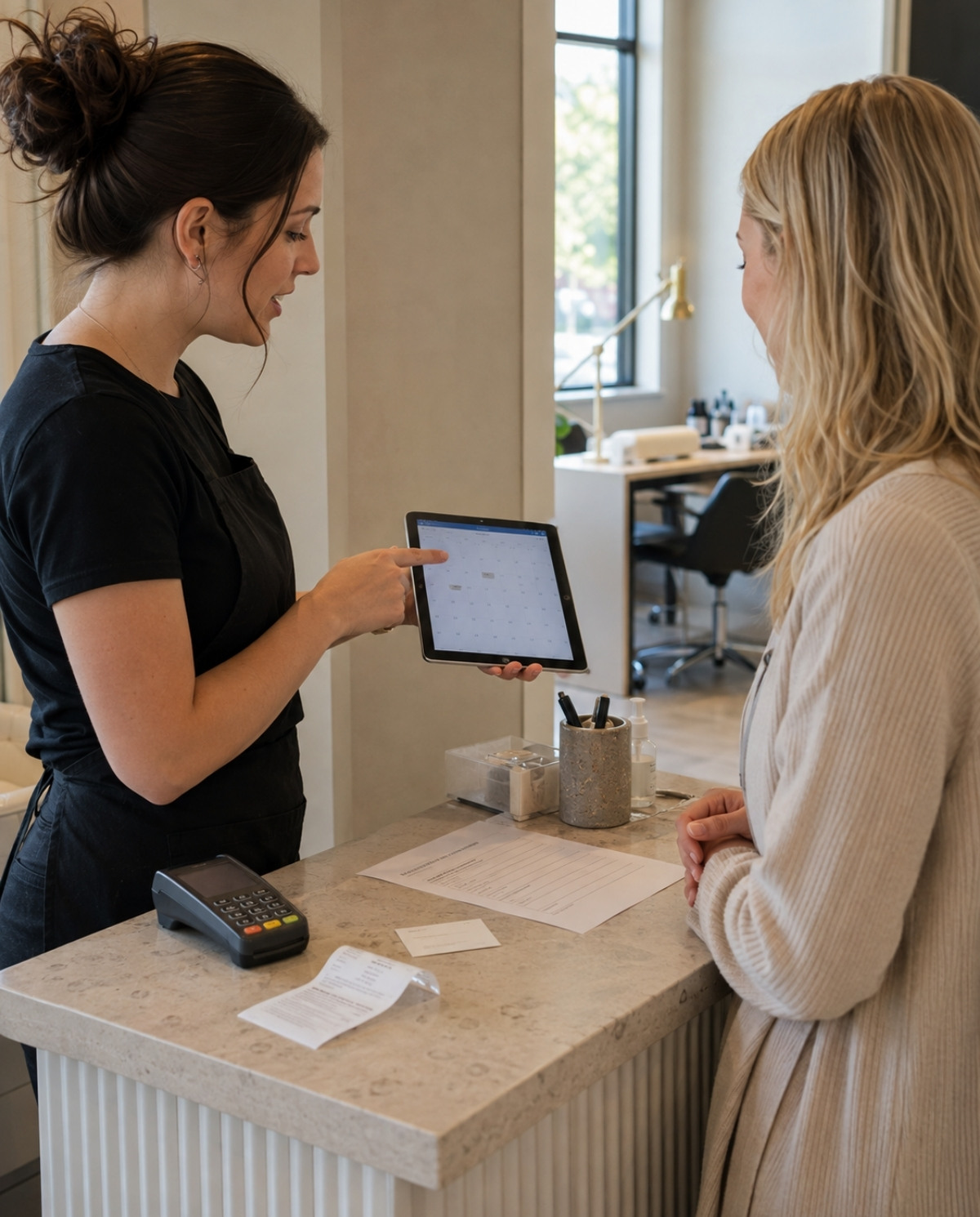
Convenience is particularly important in this growing market. A Zenoti survey involving more than 1,000 U.S. salon and spa clients reported that over 83% of frequent nail-salon clients had skipped an appointment because they could not reach the business or found its online booking process too difficult.
The survey also reported that 64% of nail-salon regulars always considered calling the easiest way to manage appointments. Online scheduling should therefore improve access without eliminating personal assistance. Providing visible phone, text, or email support can help clients who need repairs, cannot identify the correct service, or have questions before confirming an appointment.
Reducing friction between discovery and reservation allows independent professionals to compete through accessibility as well as technical ability.
Use Community Relationships to Expand Your Reach

Online promotion increases digital visibility, while local outreach helps a business become familiar within its surrounding community. Using both approaches creates additional opportunities for nearby clients to encounter and remember your services.
Choose durable cardstock and a straightforward layout when producing nail technician business cards. Include your name, accurate title, city, website, social media information, and a QR code leading to a service menu or booking page.
Test the QR code with several mobile devices before approving a large print order. Direct it to a stable webpage under your control rather than a short-term offer or temporary link that may eventually stop working.
With permission from the business owner, nail technician flyers may be displayed at organizations that serve a related audience. Possible partners include hair salons, bridal stores, clothing boutiques, photographers, wedding planners, fitness studios, and beauty retailers.
Referral arrangements should provide an identifiable benefit without obscuring normal prices. A complimentary basic accent, small cuticle-oil sample, or another modest first-appointment benefit may be appropriate. Clearly communicate eligibility conditions and expiration dates.
A confident professional introduction also influences how others perceive your work. Rather than minimizing your occupation with a statement such as “I just do nails,” prepare a brief description that identifies your license, location, specialty, and the clients you serve.
For example:
“I am a state-licensed nail technician serving the Midtown area, with a focus on structured gel overlays and detailed custom artwork. My approach emphasizes careful preparation, precise application, and responsible maintenance guidance.”
This type of introduction distinguishes your services without promising health outcomes or implying authority outside your licensed scope.
Create the Kind of Service Clients Return To
Successful nail technician promotion involves regular visibility, reliable service, sound technical practices, and a consistent client experience. A first reservation introduces someone to the business, but long-term retention helps create predictable demand.
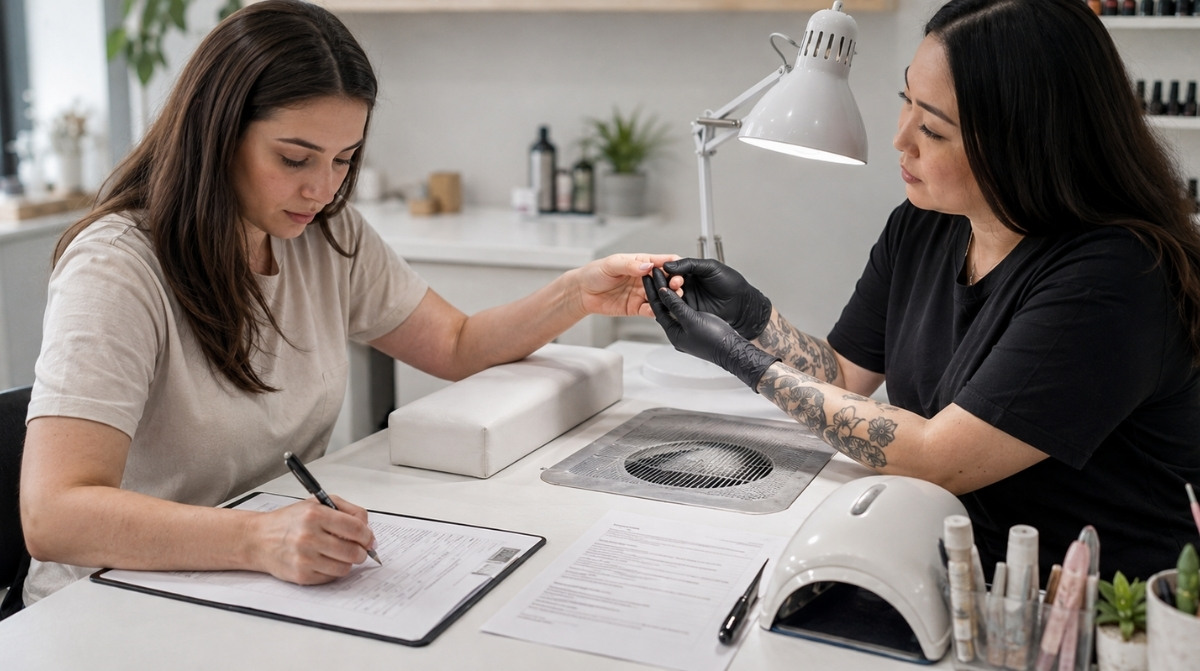
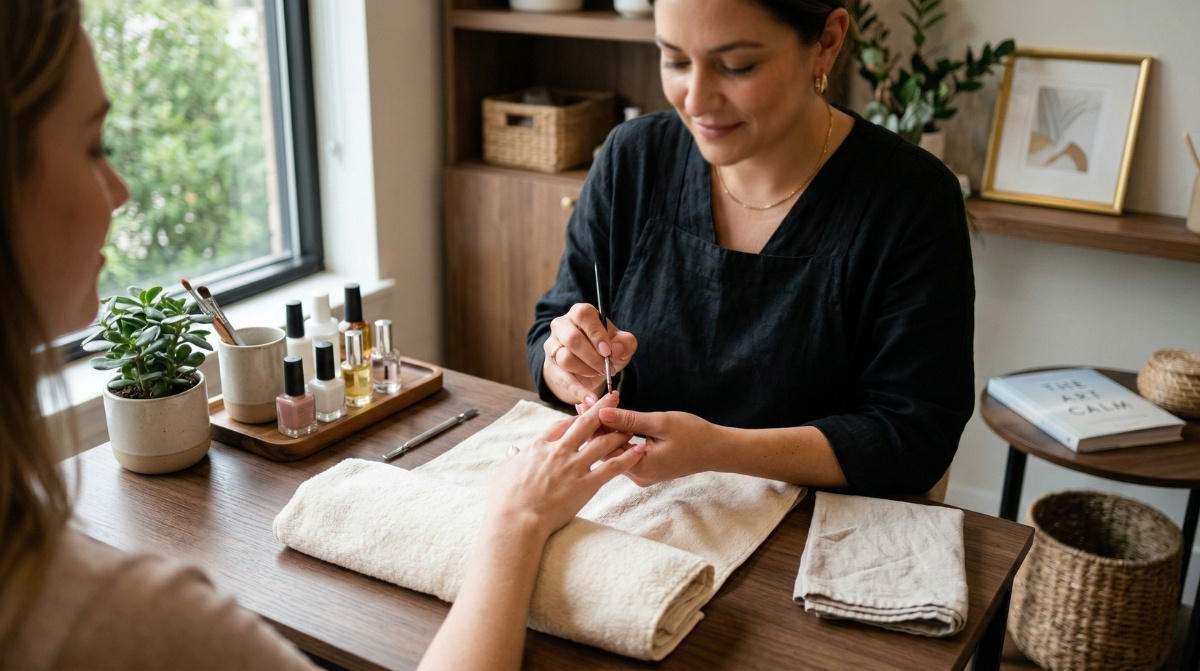
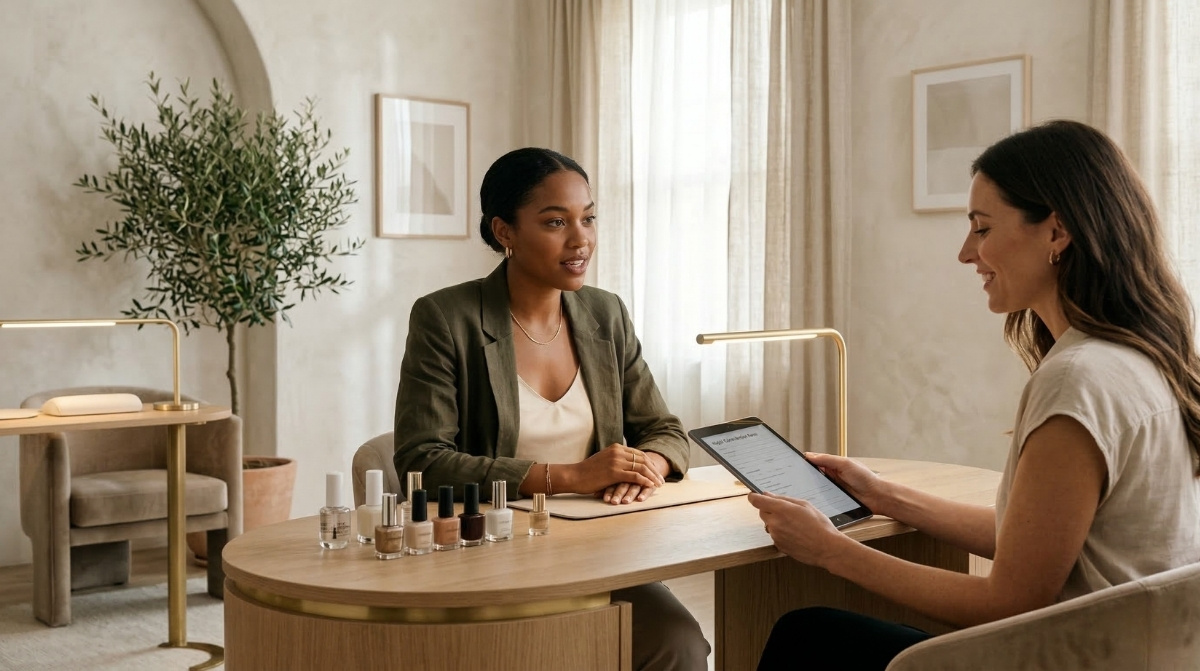
During an initial consultation, ask about the client’s service history, existing products, daily activities, maintenance preferences, and known sensitivities. Observe the visible condition of the nails and surrounding skin without trying to identify or diagnose a disease.
Set practical maintenance expectations before beginning. Extensions and structured overlays usually need ongoing maintenance, but the correct interval varies according to nail growth, length, structure, product system, lifestyle, and manufacturer directions. No single three-week or four-week schedule is appropriate for every client.
When the service is complete, offer to reserve the next suitable maintenance visit. Advance scheduling simplifies the client’s routine while allowing the business to forecast upcoming demand more effectively.
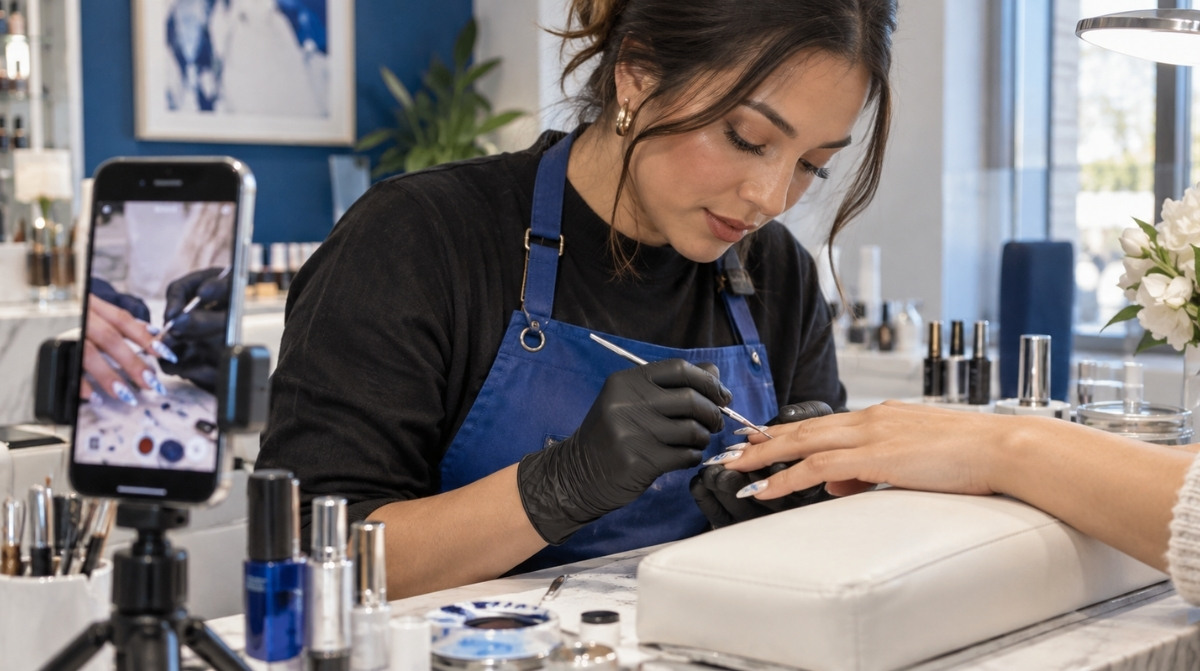
Authentic reviews and accurate photographs provide valuable social proof. Obtain permission before photographing or publishing a client’s hands. Avoid editing an image so heavily that its actual color, shape, finish, or condition is misrepresented.
Monitor a practical selection of business indicators:
- Percentage of clients who rebook
- Repeat-client rate
- Average transaction value
- No-show and late-cancellation rate
- Revenue generated per available booking hour
- Referral conversion rate
- Sources through which new clients found the business
These measurements help reveal whether a campaign is attracting suitable returning clients or merely producing short-term discounted appointments.
A mission statement can provide direction when making operational decisions. Useful mission statement examples for a nail technician generally explain whom the business serves, which value it provides, how the service is delivered, and how the client should feel afterward.
For example:
“I provide busy professionals with clean, durable nail services through precise preparation, responsible product use, and consistent sanitation standards, helping each client feel polished, confident, and valued.”
A mission should influence actual operations rather than function only as promotional copy. If the business promises attentive care and responsible service, its appointment duration, cleanliness, prices, consultations, and policies should reflect those commitments.
Set Prices That Support the Business
New professionals sometimes charge considerably less than nearby providers while developing their confidence and portfolio. A temporary introductory offer can serve a strategic purpose, but continued underpricing may prevent the business from paying its expenses or investing in equipment and additional education.
Research comparable services in the local market without automatically duplicating another provider’s menu. An employee, booth renter, suite operator, and home-based professional may face very different operating costs.
Pricing calculations should consider:
- Consumable products used during each appointment
- Service, setup, and cleanup time
- Booth, suite, or facility expenses
- Insurance and licensing costs
- Scheduling and payment-processing fees
- Disinfection products, laundry, and disposable supplies
- Marketing and photography expenses
- Taxes and unpaid administrative work
- Education, repairs, and equipment replacement
- The profit needed to maintain the operation
Time-intensive additions such as extreme length, detailed shaping, repairs, removals, charms, or hand-painted designs may need separate charges. Publish sufficient information for clients to anticipate the likely total before booking, even when design complexity affects the final amount.
Gross revenue should never be confused with personal earnings. The amount collected from clients must still cover operating expenses, taxes, and the continuing costs of running the business.
Turn Safe Practices Into a Professional Standard

Product knowledge and responsible workplace practices contribute directly to client trust and career longevity. Chemical safety affects application techniques, equipment selection, ventilation, cleanup procedures, and exposure for both the client and professional.
The European Union prohibited TPO, formally known as Trimethylbenzoyl Diphenylphosphine Oxide, in cosmetic products beginning September 1, 2025. Under Commission Regulation (EU) 2025/877, TPO was added to the prohibited-substances list after being classified as a Category 1B substance toxic to reproduction.
The EU prohibition does not automatically control cosmetic products in the United States or other jurisdictions. Professionals should comply with the regulations that govern their location and obtain properly labeled products from dependable professional suppliers.
Artificial-nail systems may contain acrylates and methacrylates capable of causing allergic contact dermatitis. According to DermNet’s information about nail-cosmetic allergies, associated ingredients include methacrylate compounds such as HEMA, or 2-hydroxyethyl methacrylate.
Repeated contact between the skin and uncured or inadequately cured material is a primary concern. Sensitization may persist once it develops, and a reaction can appear on the fingers, surrounding skin, eyelids, face, or other areas contacted by the hands.
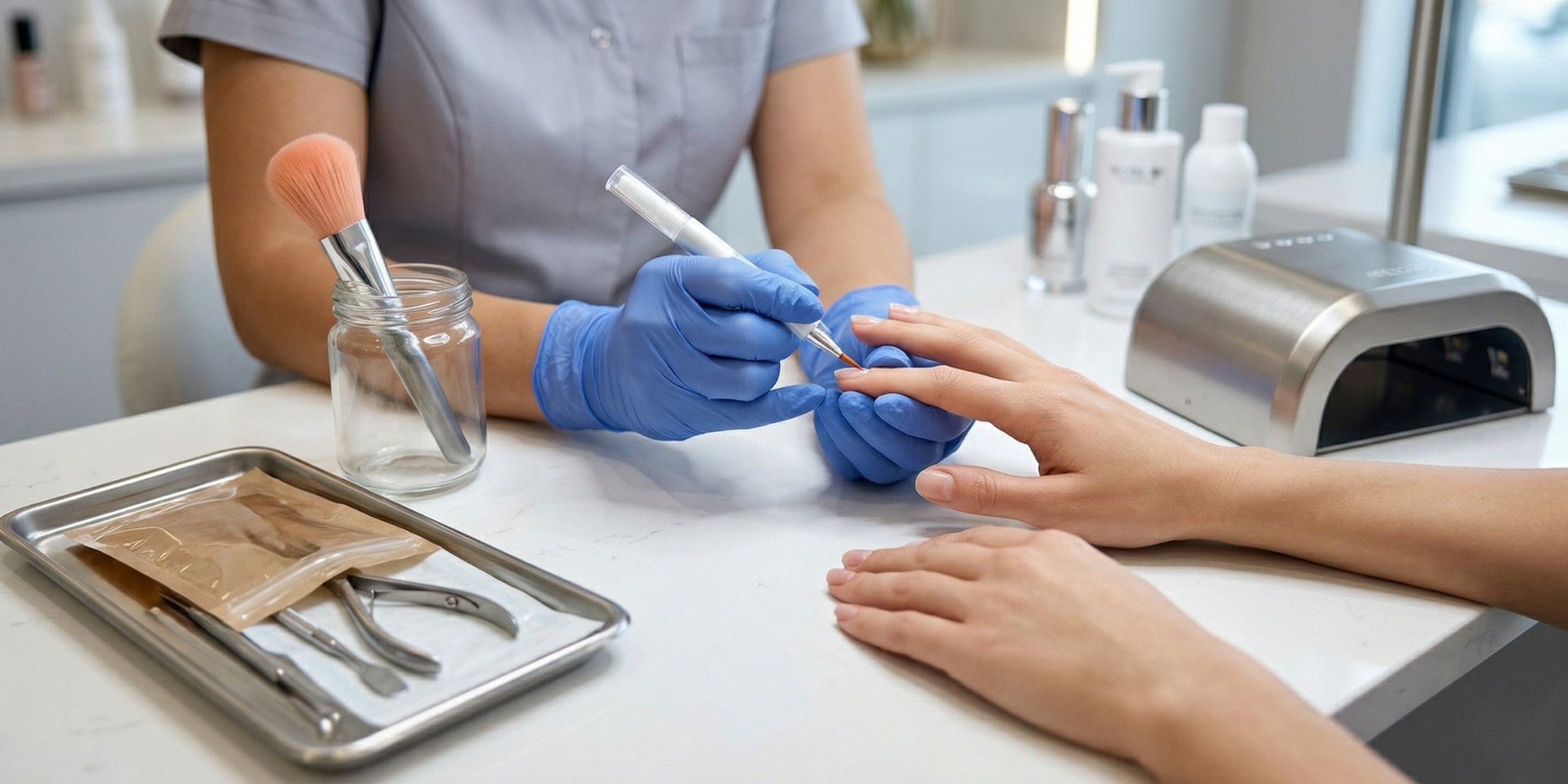
Responsible salon practices include:
- Preventing uncured gel, acrylic, and related products from touching the skin
- Following the lamp specifications and curing schedule validated by the product manufacturer
- Avoiding unapproved combinations of incompatible product systems
- Replacing curing equipment that is damaged or no longer reliable
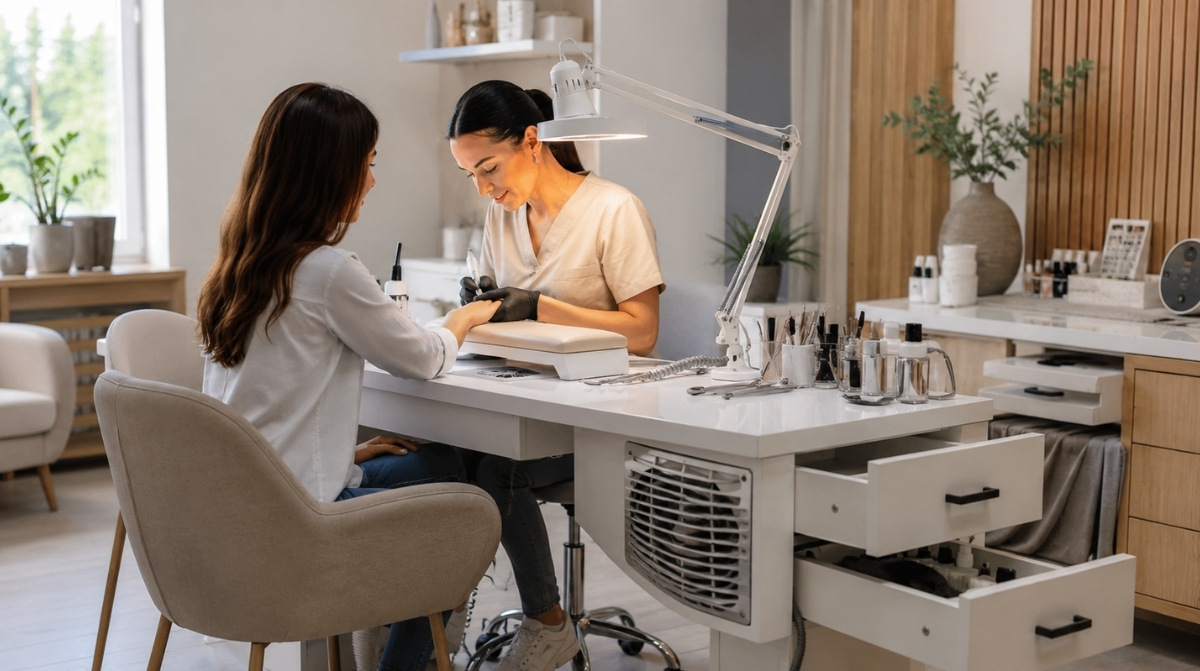
- Capturing or controlling dust produced during filing
- Maintaining appropriate workplace ventilation
- Selecting suitable gloves and other protective measures when required
- Reviewing labels and Safety Data Sheets before using products
- Ending a service if burning, blistering, swelling, or another concerning response occurs
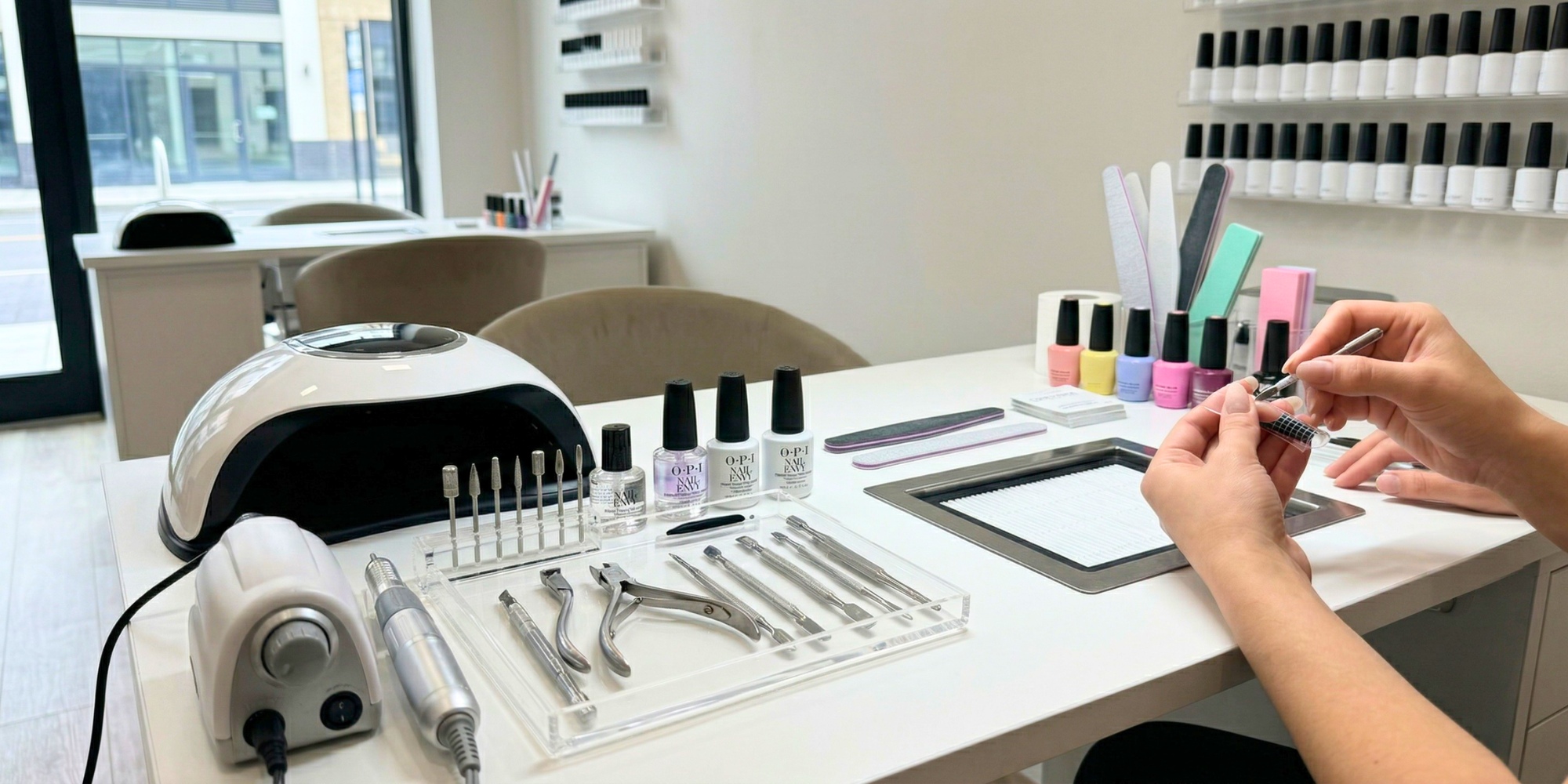
Curing compatibility cannot be determined by wattage alone. Different gel formulas may rely on particular photoinitiators and require defined wavelengths, exposure periods, or equipment designs. The complete system directions supplied by the manufacturer provide better guidance than the advertised power rating of a randomly selected lamp.
The U.S. Occupational Safety and Health Administration’s resources for nail salons address ventilation, chemical hazards, workplace practices, protective measures, and access to Safety Data Sheets. These recommendations have direct relevance to routine chemical handling in nail establishments.
The FDA Modernization of Cosmetics Regulation Act, commonly called MoCRA, primarily imposes obligations on cosmetic manufacturers, processors, and responsible persons whose names appear on product labels. The law may affect a nail business that produces, packages, distributes, or markets its own cosmetics, but it does not replace OSHA protections or cosmetology-board requirements governing salon operations.
Accurate safety education can strengthen professional credibility without relying on frightening claims or describing any nail product as completely allergy-free.
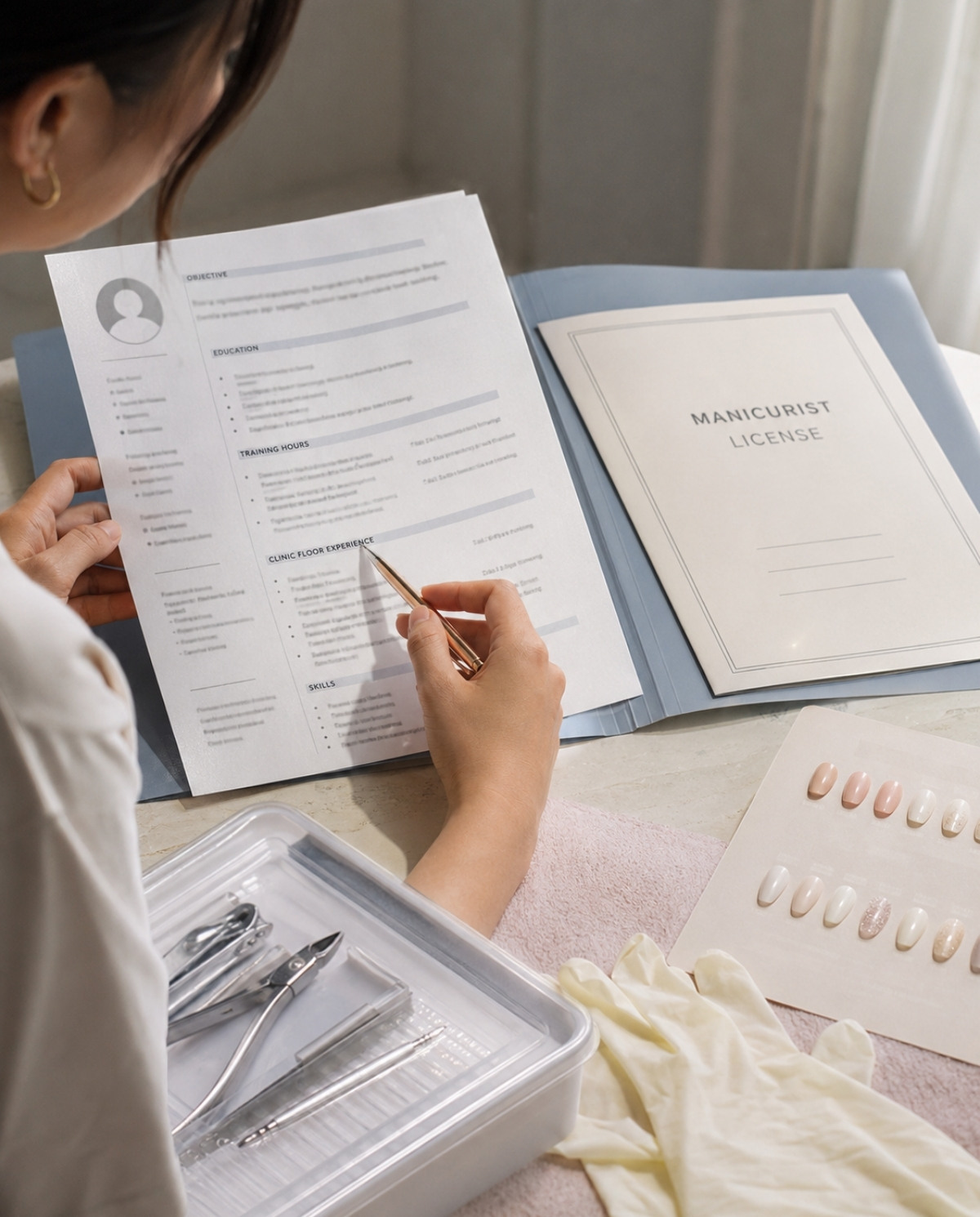
Prepare for a Career With Training and Legal Compliance
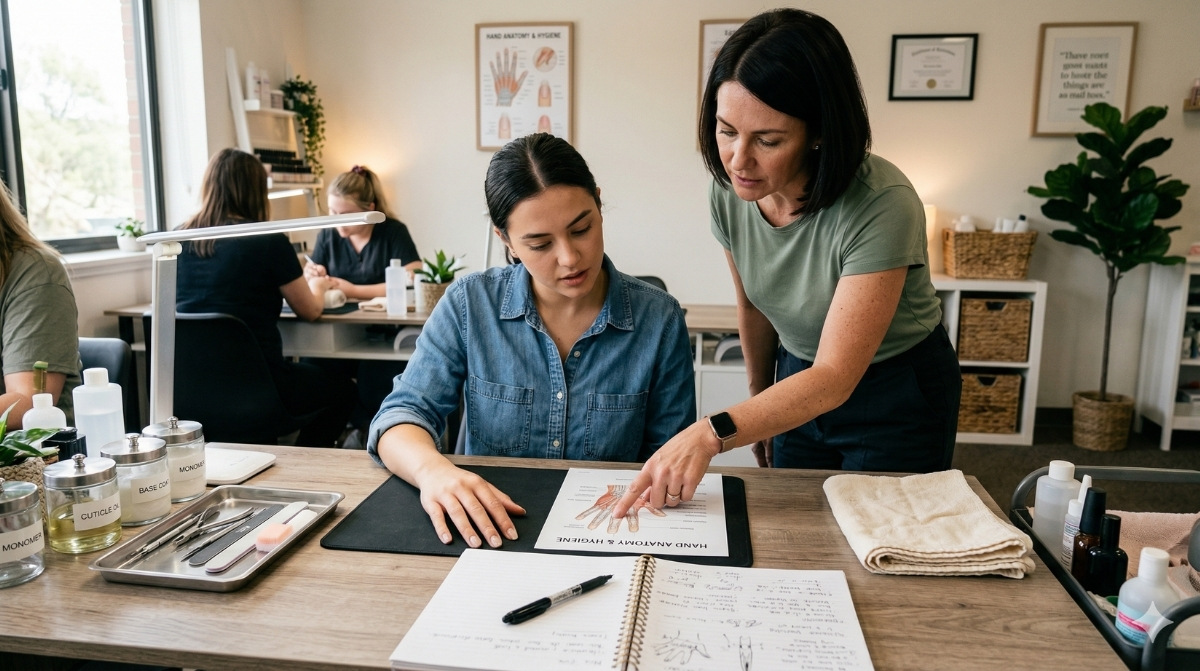
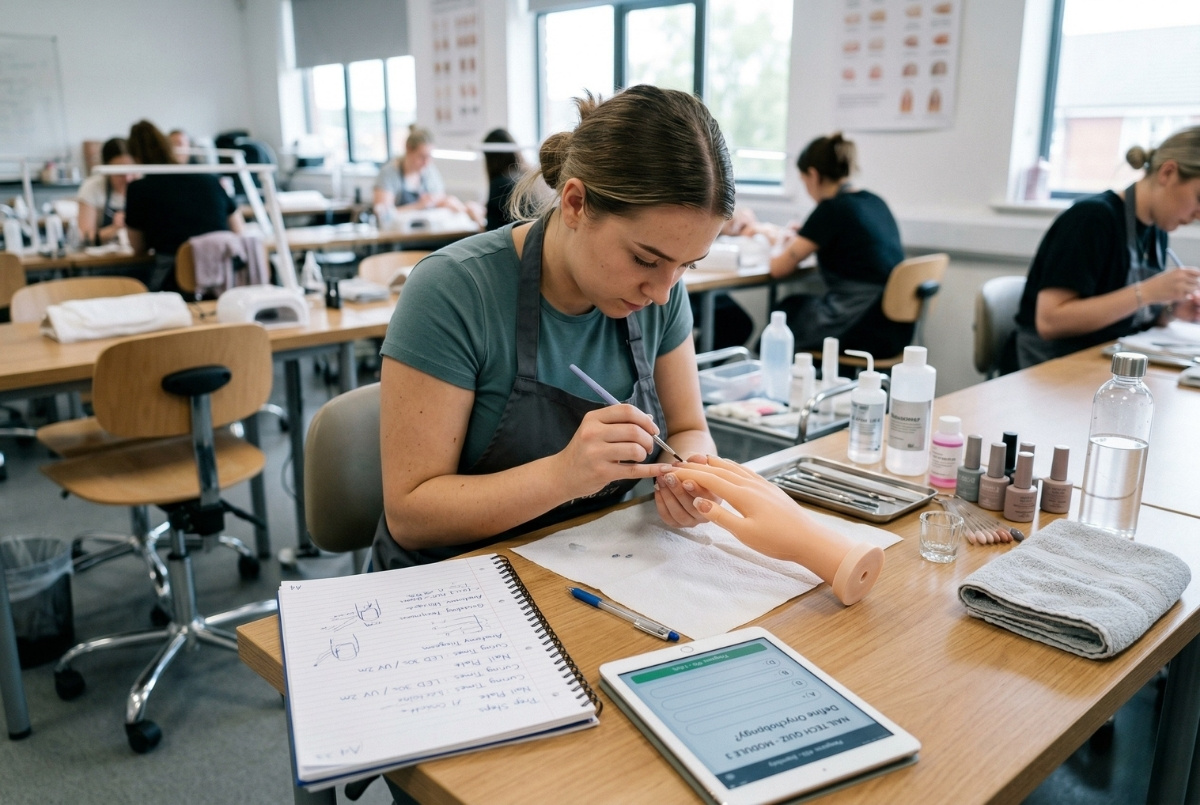
A lasting nail career requires more than online demonstrations and a collection of starter products. Structured education, supervised practice, accurate chemical knowledge, and compliance with the relevant licensing authority provide the foundation for working professionally.
Training and licensing requirements differ among states, affecting the required instructional hours, examinations, and steps that must be completed before providing paid services.
Georgia generally requires a minimum of 525 hours in an approved nail-care school program or 1,050 hours of approved apprentice training. Education includes nail-care theory and practical instruction involving product use, sanitation, infection control, and applicable laws. Applicants must also meet the examination, application, and licensing requirements established by the Georgia State Board of Cosmetology and Barbers.
This overview of Georgia nail technician requirements offers introductory information, but prospective students and applicants should confirm current requirements with the state board before making enrollment or licensing decisions.
Arkansas requires a 600-hour manicure program. Candidates must also complete the examinations, fees, applications, and other conditions currently required by the Arkansas Department of Health’s Cosmetology Section. Testing vendors and procedures may change, so the department’s current rules and candidate materials should serve as the final authority.
The Arkansas nail technician licensing overview provides useful background, but it should be considered alongside current information from the responsible state agency.
Those interested in performing a wider selection of beauty services should review whether a cosmetology license permits work as a barber, lash technician, esthetician, or nail technician under the laws of the relevant state.
A cosmetology credential does not automatically provide the same authority as every barbering, esthetics, or specialty license. The permitted services may be included, restricted, independently regulated, or excluded depending on the jurisdiction and credential.
Learning about career opportunities available with a cosmetology license in traditional and remote settings may also introduce paths involving education, product sales, brand representation, platform work, and other beauty-industry roles. Certain positions may require additional education, employer qualifications, or instructor credentials.
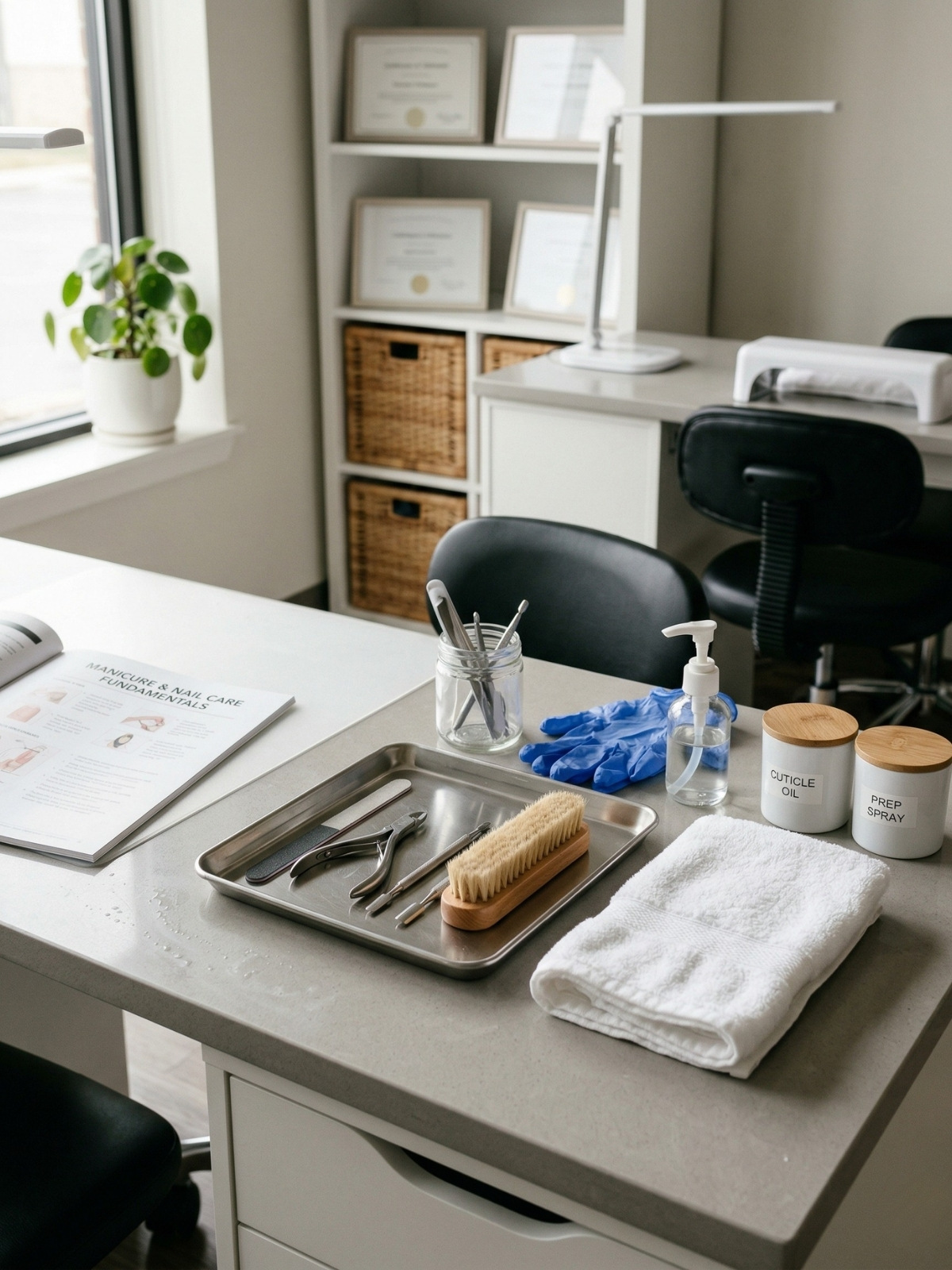
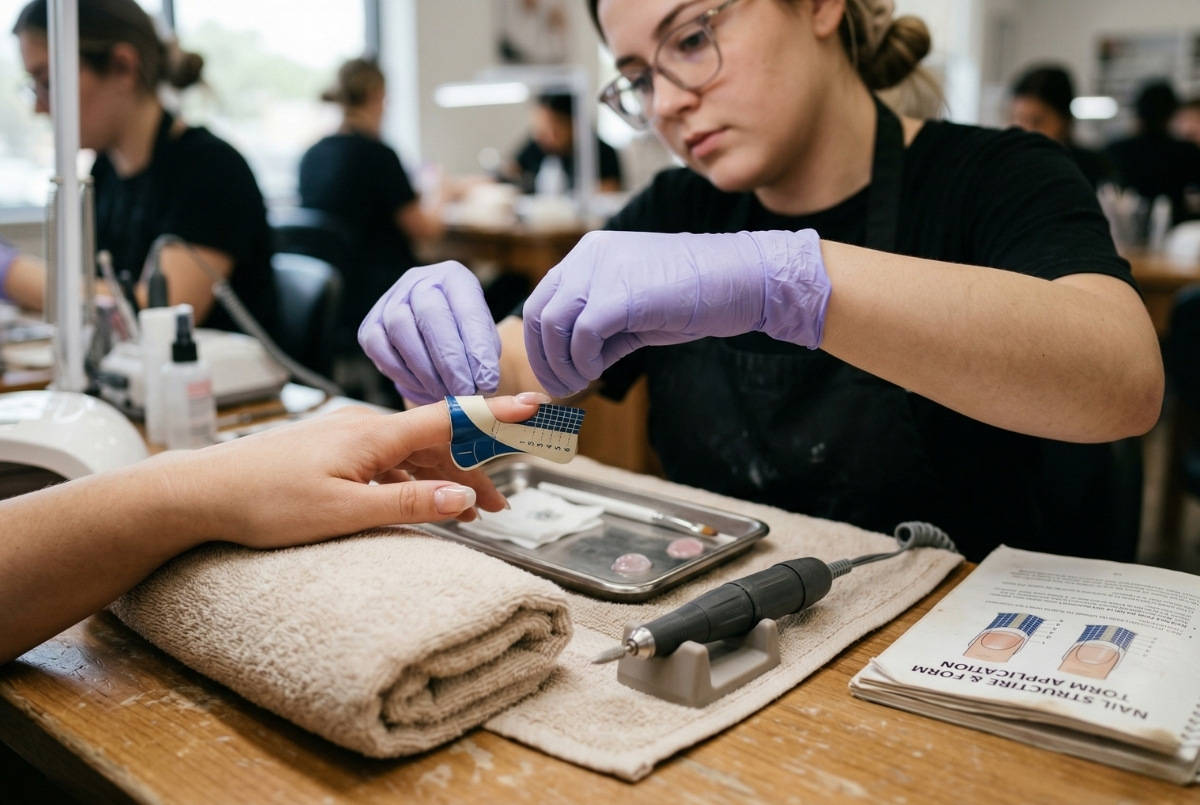
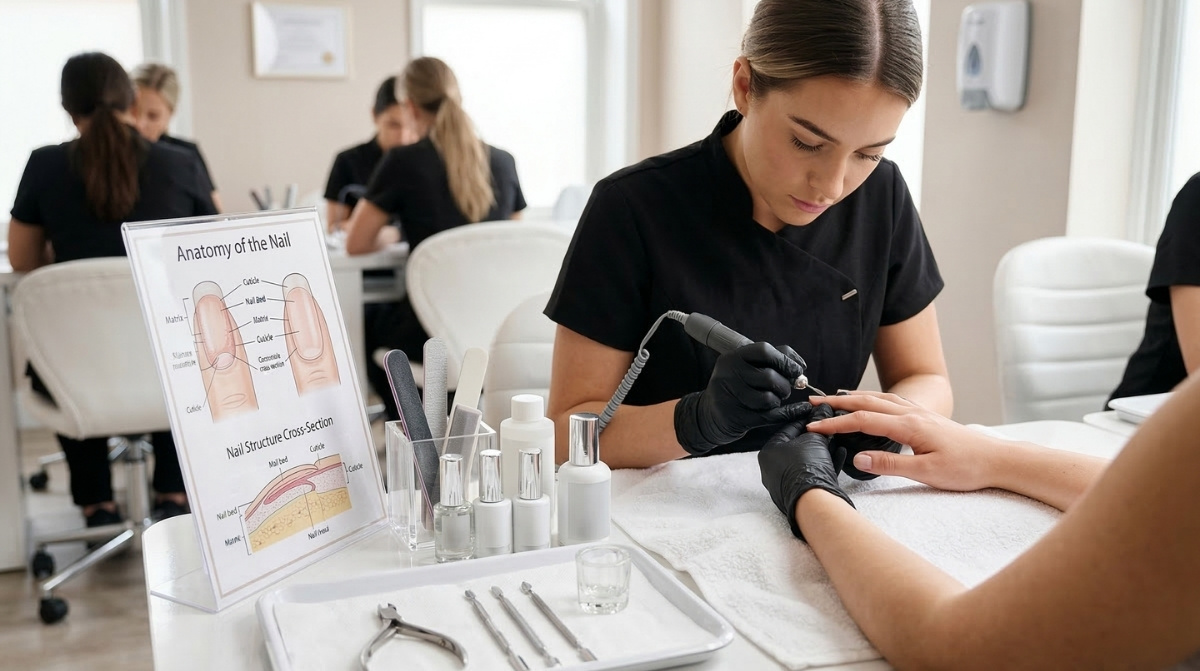
An approved nail technology or cosmetology program can introduce students to essential areas such as:
- Nail Anatomy and Structure: Studying the nail plate, matrix, nail bed, surrounding skin, contraindications, and visible concerns that may require a service to be changed, refused, or referred to a healthcare professional.
- Product Behavior and Chemistry: Learning how gels, acrylics, adhesives, primers, solvents, and curing systems function so they can be chosen and applied responsibly.
- Hazard Communication: Understanding Safety Data Sheets, product labeling, safe storage, exposure reduction, manufacturer directions, and applicable OSHA requirements.
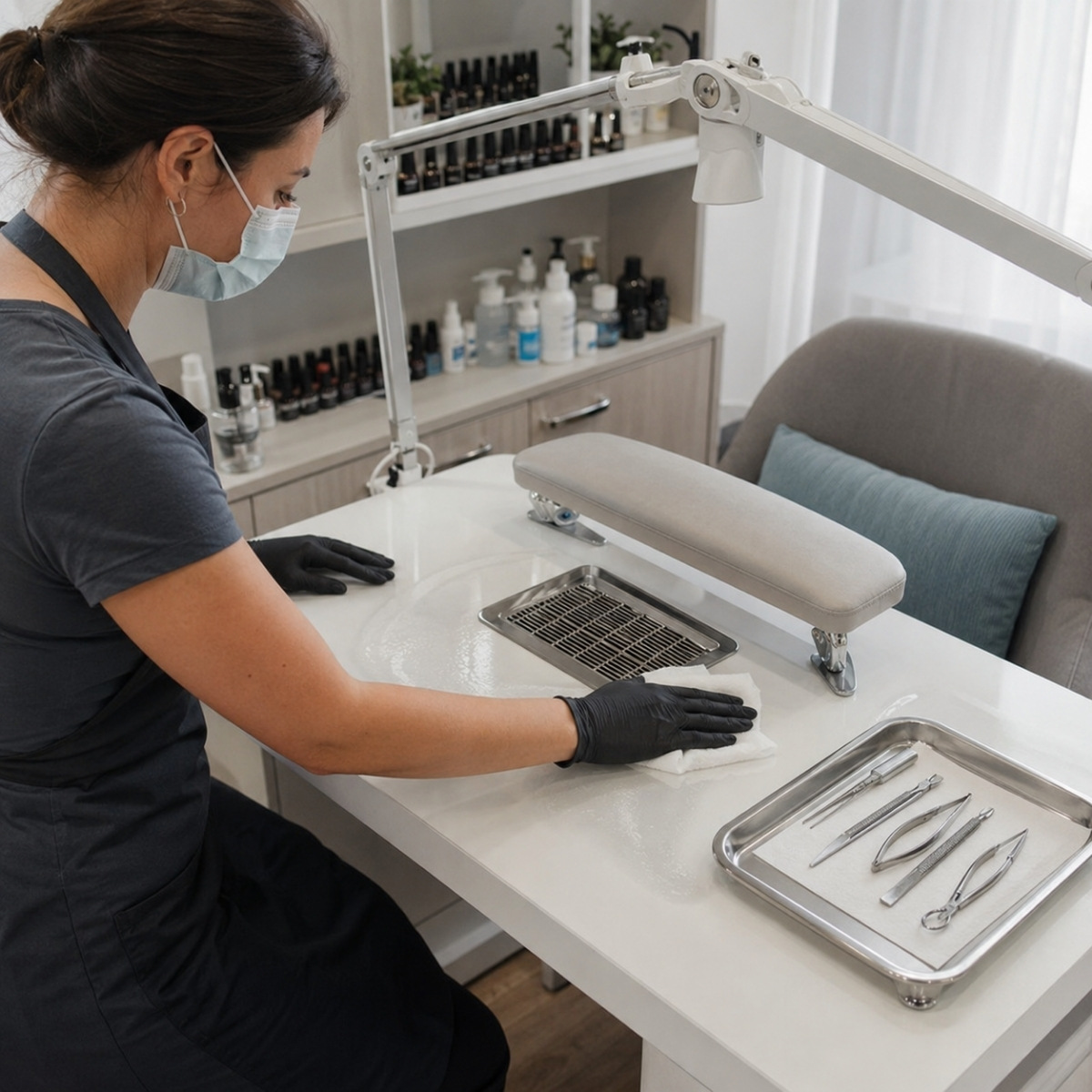
- Tool Cleaning and Disinfection: Removing visible debris from reusable, nonporous implements before applying an appropriate EPA-registered disinfectant for its required contact time and discarding porous or single-use materials when required.
- Infection-Control Procedures: Following applicable requirements for hand hygiene, blood exposure, surfaces, linens, waste, and pedicure equipment.
- Professional Limits: Recognizing visible concerns and recommending medical evaluation without diagnosing diseases or claiming to treat infections and other medical conditions.
- Client Consultations: Reviewing the visible condition of the nails, previous services, maintenance preferences, known sensitivities, and lifestyle factors before selecting an appropriate cosmetic service.
- Business Fundamentals: Developing practical knowledge of scheduling, pricing, inventory, licensing, records, customer service, and retention.
Formal education helps aspiring professionals develop the technical foundation, legal standing, and judgment required to transform creative interests into a sustainable career.
Common Questions From Aspiring Nail Professionals
When can a new nail technician expect a stable client list?
There is no guaranteed timeframe. Some professionals establish a reliable group of returning clients within several months, while others may require a year or more. Location, availability, salon traffic, prices, demand, retention, referrals, technical ability, and an existing audience can all affect the result.
Regular promotion, straightforward scheduling, accurate service information, appropriate rebooking, and genuine local reviews may support growth. However, a busy calendar is only sustainable when the pricing and appointment duration allow the business to remain profitable.
How should beginners determine their service prices?
Extremely low prices may attract initial attention but can make it difficult to cover products, facility expenses, insurance, taxes, processing charges, sanitation materials, and working time.
Research comparable local services, calculate direct and indirect expenses, estimate realistic appointment durations, and include an appropriate profit margin. When offering a temporary introductory rate, disclose the standard value and the date on which the promotion ends.
Is a personalized website domain required?
A custom domain is beneficial but not compulsory. An address such as www.yourname-nails.com may be easier for clients to remember and provides more control than relying entirely on a social network or generic scheduling link.
Purchasing a domain does not automatically improve local search placement. Visibility also depends on factors such as an accurate Google Business Profile, consistent contact details, relevant location and service pages, appropriate business categories, legitimate reviews, and trustworthy local links.
What posting schedule should a nail professional follow?
No single schedule produces the same outcome for every profile. Consistent, useful content is generally more valuable than posting repeatedly without a clear purpose.
Three high-quality posts per week can serve as an initial schedule, with stories added when there are worthwhile availability notices, educational explanations, behind-the-scenes material, or client-approved results. Track profile visits, booking-link activity, inquiries, and completed appointments to determine which content contributes to business results.
Which details belong on an appointment page?
A useful appointment page explains each service, approximate duration, starting price, deposit requirements, cancellation terms, removal charges, repair rules, maintenance expectations, location, and instructions for new clients.
When the appropriate appointment length cannot be determined from the service name alone, ask the client to provide a current photograph or contact the business before booking. This can help prevent an unsuitable service or time slot from being selected.
May nail technicians work on damaged or infected nails?
Nail technicians may provide cosmetic services permitted under their state license. They can observe visible concerns, decline a service that appears unsafe, and encourage the client to obtain qualified medical advice.
They should not diagnose fungal infections, prescribe treatments, or claim that a cosmetic procedure cures disease. Unexplained discoloration, drainage, swelling, pain, broken skin, or suspected infection may justify postponing the appointment and recommending professional medical evaluation.
Start Building Your Future in Nail Care
Developing artistic talent into a professional career begins with structured education. At USA Beauty & Barber Academy, the Nail Technician program includes hands-on experience in manicures, pedicures, nail enhancements, and design techniques. Students can also develop skills involving client relations, salon business, customer retention, résumé preparation, and employment searches.
The school’s supportive learning environment is designed to help students strengthen their practical abilities, confidence, and professional foundation before pursuing opportunities in the nail industry.
To review the admissions process and available training, visit the USA Beauty & Barber Academy Enrollment page.
Complete the contact form below to request more information, arrange a campus tour, and speak with the admissions team.