Will Your Cosmetology License Transfer? What to Know Before Moving States

Main Points to Remember

  • Licensing Labels Vary: Reciprocity and endorsement are not defined consistently among state boards. Both can describe routes to a new state license based on an existing credential, but each state sets its own standards for records, examinations, and professional experience.
  • The Compact Is Still Being Implemented: Twelve states have adopted the Cosmetology Licensure Compact, but multistate licenses are not currently being issued.
  • Lower Training Hours May Be Accepted: Moving to a state with a higher education requirement does not always require additional schooling. A board may consider an active license, accepted examinations, or documented work experience.
  • Documentation Can Cause Delays: Depending on the destination state, official records may need to come from a licensing agency, examination provider, school, or employer. Submission rules and processing timelines are not uniform nationwide.

Moving your beauty career to another city can bring new creative opportunities and an entirely new group of clients. However, an unexpected licensing problem can quickly interrupt those plans. If you have spent hours navigating state board websites and trying to determine how to transfer a cosmetology license to another state, you are certainly not the only one.

Beauty professionals commonly worry that their previous school hours will not be recognized, that their applications will become stuck in administrative review, or that they will be unable to earn income while waiting for authorization.

Fortunately, obtaining a license in another state does not necessarily require beginning your education again. The process becomes easier to understand once you know how the new state evaluates your current license, original education, examination history, and professional experience.

How States Handle Reciprocity and Endorsement

Anyone researching a cosmetology license transfer from state to state online will regularly encounter the terms reciprocity and endorsement. Although these labels are sometimes treated as two clearly separate systems, licensing boards do not apply them consistently.

Reciprocity can refer to one state recognizing a professional license issued by another jurisdiction. In certain professions, it may be based on a formal agreement between two states. A cosmetology board, however, might use “reciprocity” as the name of its general application process for out-of-state professionals even when no mutual agreement exists.

Endorsement typically describes a process in which a destination board grants a new license after considering an applicant’s existing credential. The review may include the applicant’s license status, original education, examination results, work history, disciplinary record, or several of these elements together.

Official terminology illustrates this inconsistency. The Georgia State Board of Cosmetology and Barbers explains that Georgia does not reciprocate with other states but permits actively licensed professionals to seek licensure by endorsement. In contrast, the Nevada State Board of Cosmetology refers to its out-of-state pathway as reciprocity.

For that reason, applicants should concentrate on the destination board’s current instructions instead of drawing conclusions from the name assigned to the application pathway.

Online applications are now common, but related documentation may follow a separate submission process. The destination board could require records from another licensing agency, a beauty school, an examination provider, or a former employer.

What to Expect From the Cosmetology Licensure Compact

The Cosmetology Licensure Compact is intended to provide an additional mobility option for eligible cosmetologists who want to practice in multiple participating states. Nevertheless, legislative adoption of the compact does not mean professionals can already use multistate licenses.

According to information published by the Council of State Governments National Center for Interstate Compacts, twelve states have enacted the compact: Alabama, Arizona, Colorado, Delaware, Kansas, Kentucky, Maryland, Ohio, Tennessee, Virginia, Washington, and West Virginia.

The official Cosmetology Licensure Compact website explains that the compact is not yet available for licensee use. Member states are not currently issuing multistate cosmetology licenses. Until the necessary systems and rules are fully implemented, professionals must rely on the ordinary licensing process of each state where they want to work.

After implementation, an eligible cosmetologist will be able to apply for a multistate license through the licensing authority in the cosmetologist’s home state. The applicant must reside in a compact member state, maintain an active and unencumbered cosmetology license issued by that home state, and pay the applicable fees.

An unencumbered license is one that is not currently suspended, revoked, restricted, or limited by conditions affecting the licensee’s authority to practice. The term does not necessarily mean that the licensee has never had a complaint or disciplinary matter that was previously resolved.

A multistate license will provide authority to practice in other compact member states. However, the licensee must comply with the scope-of-practice, health, safety, and professional-conduct requirements of the state where a service is provided.

What a Destination Board May Examine

Each licensing board creates its own standards for public protection and for evaluating professionals licensed elsewhere. When investigating cosmetology license transfer from state to state requirements, be prepared for the destination board to consider some of the following:

  • Condition of Your Current License: Many out-of-state pathways require an active license in good standing. An expired credential could place the applicant into a reinstatement, examination, or different licensing process.
  • Verified License History: A board may request an official record identifying the license type, current status, original issue date, examination history, and disciplinary information.
  • School and Testing Documentation: Depending on the state, applicants may need transcripts, curriculum records, or evidence of passing an approved state or national examination.
  • Identification and Required Disclosures: Requested materials can include government-issued identification, a Social Security number or another accepted tax identifier, lawful-presence evidence, and disclosures involving criminal convictions or professional discipline.
  • Local Regulatory Testing: Acceptance of a professional examination does not always eliminate testing. The new state may administer an additional examination on its laws, sanitation standards, or licensing regulations.
  • Licensing Expenses: In addition to an application fee, an applicant could face costs for official certifications, examinations, fingerprinting, document translation, or a temporary permit.

Nevada provides one current example. The state charges a nonrefundable $325 reciprocity application fee and requires applicants to pass a 25-question Nevada State Law Test with a minimum score of 75 percent. These details appear in the Nevada State Board of Cosmetology transfer instructions.

Our guide to cosmetology license requirements by state offers a wider look at education hours, examinations, renewal rules, and licensing mobility. Applicants should still verify every requirement directly with the destination board because fees, statutes, forms, and administrative procedures can change.

Why a License Card May Not Be Enough

A copy of a wall license may confirm that a credential exists, but it often does not contain everything a destination board wants to review. Depending on the state, the applicant may need official certification showing the license’s issue date, current status, original qualification method, and disciplinary history.

California generally requires the issuing state to send certification directly to the California board. Applicant-submitted certifications are not accepted under the procedure described in the California Board of Barbering and Cosmetology reciprocity FAQ.

Nevada follows a different approach. Its board can look up licensing information online for applicants from numerous states, although it may later request certification to confirm application details. Applicants from certain other jurisdictions must have certification sent directly to Nevada before applying.

These differences demonstrate why applicants should not assume that all boards accept or reject documents in the same manner.

Processing timelines also differ. An application may be delayed by missing certifications, incomplete testing information, inconsistent names, disciplinary review, or records associated with licenses from several states. Request necessary documentation early and use the destination board’s latest processing information when planning a move.

How Boards Address Differences in School Hours

Having fewer school hours than the destination state requires for its new students can affect an application. It does not, however, automatically create a deficit that must be completed hour for hour.

Some states use a 1,000-hour initial education pathway, while others require 1,500 hours. A licensee moving between two such states should not assume that the numerical difference automatically results in hundreds of additional classroom hours.

The Georgia State Board of Cosmetology and Barbers states that a person actively licensed elsewhere may apply by endorsement without obtaining additional hours, even if that person completed fewer hours than Georgia requires for its initial school pathway.

The distinction is significant. Initial licensing requirements explain how an unlicensed applicant qualifies through education in that state. Endorsement and reciprocity rules govern the evaluation of someone who has already obtained a professional license elsewhere. The standards for these pathways are not necessarily identical.

A professional whose original education included fewer hours may have several possible routes, depending on the destination state.

1. Evaluation Based on an Existing Active License

Some jurisdictions focus more heavily on the applicant’s current unrestricted license than on an exact comparison of school-hour totals.

California is one example. Its board can license a qualifying out-of-state professional through reciprocity without requiring the California written examination when the applicant holds a current license that is unrestricted and in good standing. The criteria are available in the California Board’s reciprocity information.

An active license does not make the applicant’s original education irrelevant in every situation. A destination board might examine how the license was initially obtained, particularly when the current credential was granted through reciprocity from another jurisdiction.

2. Substitution Through Documented Professional Experience

Certain states permit verified work experience to offset part of an educational shortage or help an applicant become eligible for an examination-based route.

No nationwide formula controls this process. Every state determines whether experience is accepted, what records prove it, and how the experience is converted. California, for example, allows every three complete months of qualifying licensed practice to count as 100 hours of training for certain out-of-state examination applicants. The formula is provided in the California Board’s licensing requirements.

When experience credit is available, the board might ask for employer affidavits, tax documents, pay records, business records, or license-history information. Applicants should follow the official checklist instead of sending unrequested personal or financial documents.

3. Completing Only the Education the Board Requires

When a destination board determines that more education is necessary, the applicant may not need to repeat a complete cosmetology program. A school approved in the destination state might evaluate the previous transcript and award credit for eligible coursework.

The applicant and receiving school cannot independently guarantee that every previously completed hour will be accepted. The destination board’s regulations and the school’s approved transfer policy control the amount of credit available.

Before paying tuition, ask the board whether supplemental training is required, how many hours or subjects must be completed, and whether the instruction must come from a school approved in that state. Written confirmation can help prevent enrollment in unnecessary coursework.

4. Meeting a Testing Requirement Instead

Sometimes the main concern is not the education-hour difference. The board may instead need evidence that the applicant passed an acceptable professional examination or understands the destination state’s laws.

Nevada requires reciprocity applicants to pass its state-law examination. Georgia may require further testing when an applicant cannot document an accepted written and practical examination. Depending on the jurisdiction, another applicant could face a theory, practical, state-law, or jurisprudence test.

These examination rules operate independently from school-hour requirements and should be reviewed before relocation.

Why Comparing Hour Totals Can Be Misleading

A comparison of two education-hour numbers does not reveal every factor involved in licensing mobility. Boards may also consider license status, examination history, professional experience, credential title, and authorized scope of practice.

Licenses with similar names do not always permit identical services. Nevada, for instance, does not recognize the Florida Full Specialist license because its training requirements are not considered comparable to Nevada’s separate esthetics and nail-technology licenses.

Applicants therefore need to compare both the license category and the services legally included within it, rather than relying exclusively on school-hour totals.

How Georgia and Arkansas Approach Out-of-State Applicants

The following state examples illustrate how much the review process can vary:

  • Georgia: The Georgia State Board of Cosmetology and Barbers does not describe its process as reciprocity. An actively licensed professional in good standing may apply through endorsement, including an applicant whose original education contained fewer hours than Georgia currently requires. Additional testing is generally unnecessary if the applicant proves that a national or state-approved written and practical examination was passed in English. Anyone previously licensed in multiple states must provide verification from each licensing state. Georgia licensees generally complete five hours of continuing education for renewal, subject to applicable exemptions. Under the current Georgia rules, three hours must consist of approved health and safety education. The remaining two hours may address approved professional subjects.
  • Arkansas: The initial school route for Arkansas cosmetologists includes a 1,500-hour education requirement. Licensed professionals from other jurisdictions should instead consult the separate application materials issued by the Arkansas Department of Health Cosmetology Section. The initial 1,500-hour standard should not automatically be treated as an hour-for-hour deficit for reciprocity applicants. Arkansas testing information also contains a state-law component, as shown in the Arkansas cosmetology candidate bulletin. Because required documents and examinations can depend on how the original license was earned, applicants should request an individual determination before enrolling in further education.

Situations That Can Lead to Additional Testing

The destination board determines whether an applicant must complete another written, practical, or state-law examination. The decision is not controlled solely by the organization that developed or administered the applicant’s previous test.

Numerous states use one or more examinations developed by the National Interstate Council of State Boards of Cosmetology, commonly called NIC. Adoption is not uniform, however. A jurisdiction might use an NIC theory examination, an NIC practical examination, both components, or an entirely different testing system.

Passing an NIC examination in one jurisdiction does not guarantee that another board will accept the score automatically. The destination state decides whether the previous test satisfies its licensing standard and whether official score verification is necessary.

The NIC testing maps illustrate the different examinations and providers used by state boards. Applicants should ask the destination board:

  • Which theory and practical examinations are accepted for an out-of-state application?
  • Does the board require the accepted examination to have been administered in English?
  • Who must provide the official examination record?
  • Is there an additional state-law or jurisprudence test?
  • Does the applicant need to retest if the original licensing state did not require a practical examination?

Georgia generally waives further testing when an endorsement applicant proves that an approved written and practical examination was passed in English. Nevada requires its state-law test and can require other examinations based on the applicant’s qualifications.

California shows why dividing jurisdictions into “NIC states” and “non-NIC states” can create an incomplete picture. California eliminated practical examinations for its license types beginning January 1, 2022, according to the California Board of Barbering and Cosmetology. Qualifying out-of-state licensees can also receive a California license through reciprocity without completing the California written examination.

If further testing is required, our cosmetology state board exam preparation guide explains common written and practical testing formats. Applicants must still consult the current candidate bulletin for the destination state because examination components and procedures can differ.

Preserving Proof of Your Previous Examinations

A physical license commonly does not identify every examination component the licensee completed. When the destination board requires proof of a theory, practical, national, or state-approved examination, an official score report or license certification containing that information may be necessary.

This issue can become more complicated when the applicant has held a license for many years, the original testing provider has changed, or the current license was acquired through reciprocity rather than direct examination.

Obtaining these records before moving can clarify whether retesting is required while the applicant still has convenient access to the original school, examination provider, and licensing agency.

An Organized Plan for Moving Your License

A structured preparation process can reduce administrative problems and help prevent an avoidable interruption in employment:

  1. Match the License Categories: Verify that your existing license corresponds to the credential you are seeking. Compare both its official title and permitted scope of practice.
  2. Consult the Destination Board: Read the current application checklist for endorsement, reciprocity, or out-of-state licensure.
  3. Review Your Testing Background: Identify the theory and practical examinations you completed and determine whether the new board accepts them.
  4. Arrange License Verification: Follow the destination board’s procedure for online verification or official certification from each relevant licensing state.
  5. Collect Other Documents as Directed: Required records could include transcripts, curriculum descriptions, examination scores, name-change records, employer affidavits, tax records, disciplinary orders, or certified translations.
  6. Obtain a Decision About Education Hours: Do not enroll in additional training until the board confirms that it is needed and explains how previous hours will be evaluated.
  7. File a Complete Application: Submit the required forms and payments, then monitor messages from the board for deficiencies or requests for more information.
  8. Maintain the Existing Credential: When possible, keep your current license active until the destination license is granted. Certain simplified pathways are limited to applicants with active credentials.
  9. Receive Authorization Before Practicing: A payment receipt, pending application, or examination approval may not authorize professional services. Work only after the destination state has issued a license, valid temporary permit, or other applicable authorization.

Portability Assistance for Service Members and Spouses

Active-duty service members and military spouses may have access to expedited processing, temporary recognition, reduced or waived fees, or other licensing-portability protections. These options are separate from standard reciprocity and endorsement applications.

Eligibility can depend on military orders, residency, the status of the existing license, and whether the destination state considers the licensed professions substantially similar. Before filing an ordinary transfer application, military applicants should examine both the board’s military instructions and any relevant federal portability protections.

Why Your Original Education and Records Still Matter

Interstate licensing rules demonstrate how education and long-term recordkeeping can influence professional mobility well after graduation.

Completing a program approved by the appropriate state licensing authority helps demonstrate that the applicant satisfied the educational requirements for the original license. Accreditation may provide separate academic or financial-aid benefits, but it does not guarantee that another jurisdiction will accept every hour or issue a license without further review.

Quality education also extends beyond technical services. Students need a foundation in sanitation, chemical safety, client consultation, professional conduct, and the legal limits of cosmetology practice.

Personal recordkeeping is equally valuable. Preserve physical or digital copies of your transcript, curriculum description, examination records, original license information, name-change documents, and continuing education certificates. Replacing these materials can become difficult years after completing school.

If you are entering the field or mapping out your next professional step, our guide to what comes after cosmetology school explains how education, licensing, salon employment, and longer-term career decisions fit together.

Common Questions About Interstate Licensing

Is there a standard processing time for an out-of-state license?

No national processing timeline applies to every board. The duration depends on the destination jurisdiction, whether the application is complete, how licenses and examinations are verified, and whether the file requires additional review.

Missing documentation, inconsistent names, credentials from multiple states, and unresolved disciplinary records can create delays. Consult the destination board’s current processing notice before committing to an employment start date.

Am I allowed to work while the application is pending?

Only when the destination state has issued an active license, temporary permit, or another form of legal authorization covering the services you plan to perform.

An application receipt, fee confirmation, or pending portal status generally does not grant permission to practice. Unauthorized work can result in fines, licensing discipline, or complications with the pending application.

How should I handle a lower original hour requirement?

Do not immediately enroll in another school. First, ask the destination board how it reviews professionals who already hold active out-of-state licenses.

Possible pathways can include recognition of the existing license, acceptance of previous examinations, credit for verified experience, supplemental education, or additional state-law testing. Obtain an official determination before paying for further training.

Are NIC examination results automatically recognized elsewhere?

No. Another state may accept previous NIC results, but acceptance is not guaranteed. The destination board determines which examination components satisfy its standards and whether it needs official score verification or additional testing.

Does every cosmetology credential authorize skin and nail services?

No. Cosmetology licenses commonly include certain hair, skin-care, and nail services, but the legal scope differs among states. It may also be narrower than the authority granted under a separate esthetics or nail-technology license.

Certain chemical peels, light-based procedures, lasers, advanced cosmetic devices, and deeper treatments may require another credential or may be restricted to medical professionals. Licensees must follow the scope-of-practice law in the jurisdiction where the service occurs.

Can cosmetologists currently use the compact in all member states?

Not yet. Twelve states have enacted the Cosmetology Licensure Compact, but multistate licenses are not presently available. Professionals must continue following the individual licensing process of each destination state until implementation is complete.

Once applications become available, eligibility will include residence in a compact member state, an active and unencumbered home-state cosmetology license, and payment of the required fees.

Prepare Your Beauty Career for Future Opportunities

Career flexibility begins with strong professional preparation, reliable personal records, and an understanding of the licensing standards that apply wherever you intend to practice.

USA Beauty and Barber Academy offers training in Master Cosmetology and other beauty fields with an emphasis on practical skills and career preparation. Prospective students can explore the school’s enrollment options to learn how to begin. For questions about programs or upcoming opportunities, use the contact form at the bottom of this page to connect with the school.

What You’ll Really Learn in Cosmetology School

What You’ll Learn at a Glance

  • More Than Cutting and Styling: Cosmetology training can include chemical texture services, hair coloring, basic skin care, nail services, makeup, hair removal, and sanitation alongside traditional hair techniques.
  • Science Supports Safe Services: Students study subjects such as anatomy, basic chemistry, infection control, product safety, and practical math. Scientific Concepts make up 35% of the content in the NIC Cosmetology Theory Examination.
  • Professional Skills Matter Too: Beauty-school training can also cover salon business, retailing, client communication, professionalism, and other career skills that become useful when building a clientele or eventually running a business.
  • Licensing Rules Depend on Location: States set their own training and licensing requirements. Georgia and Arkansas both require 1,500 hours of cosmetology education, although their curriculum rules and licensing procedures are not identical.

Starting beauty school can feel exciting and a little intimidating at the same time. You may imagine working with color, creating dramatic transformations, or eventually building a loyal client base, while still wondering what you will actually spend your time learning in class. Cosmetology training is much broader than repeating basic haircuts on mannequins. If you are still deciding whether this path fits your goals, exploring whether cosmetology is a good career for you can help you think through the commitment before enrolling. Below, we look at the practical work, theory, safety knowledge, and professional skills that make up a well-rounded cosmetology education.

What Cosmetology Training Actually Covers

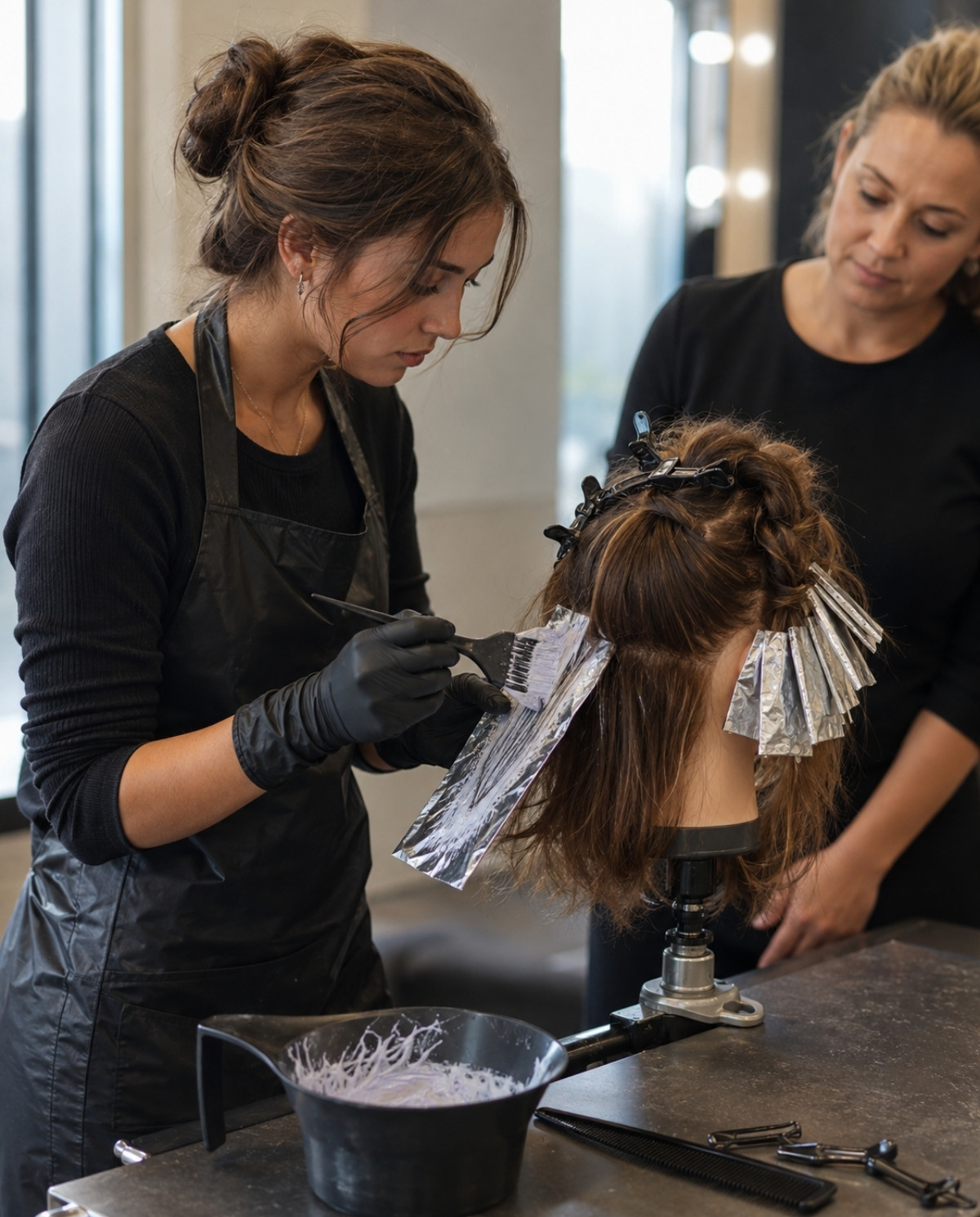
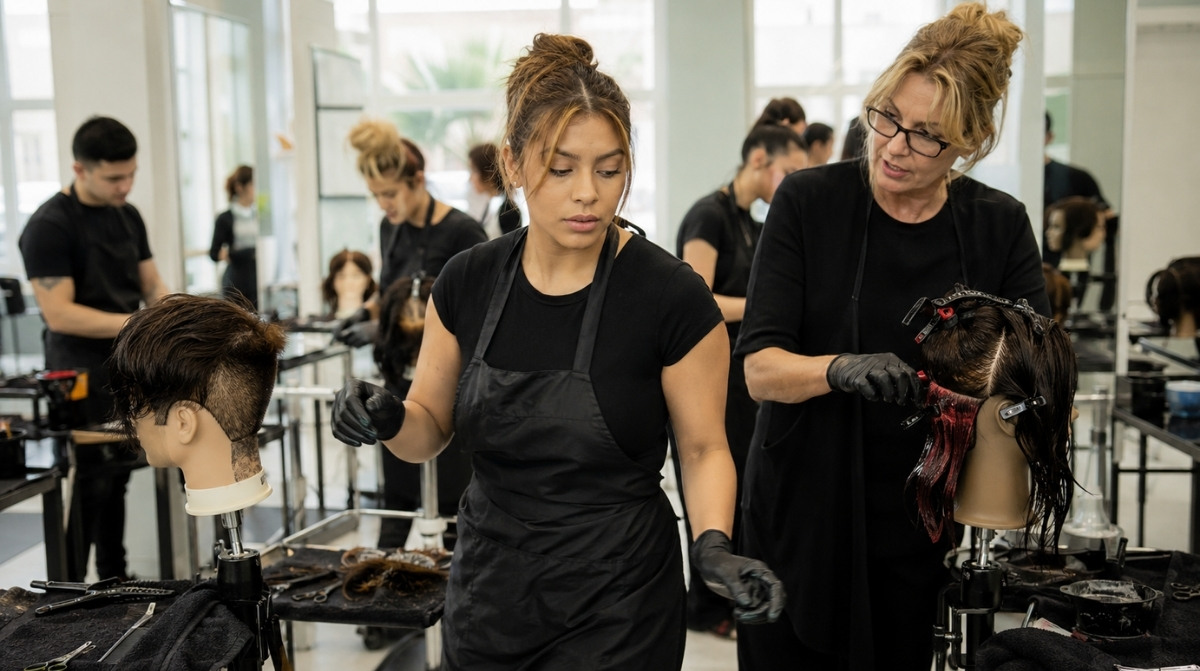
Cosmetology student applying lightener and placing foils on sectioned mannequin hair while an instructor observes the professional coloring technique.

If you are asking what do you learn from cosmetology school, hair services are only one part of the answer. A full cosmetology program combines classroom theory with supervised practice so students learn both the steps behind a service and the reasons those steps matter.

Hair still takes up a significant part of cosmetology training. Students build skills in cutting and styling while learning how texture, density, growth patterns, facial shape, elevation, and design principles influence the finished result. The NIC Cosmetology Theory Examination includes topics such as haircutting and shaping, wet and thermal styling, natural hair styling, design principles, and procedures for different hair types and textures.

Chemical services are another major area. Students learn about permanent waving, chemical relaxing, coloring, lightening, and how these products affect the hair. Color education can include formulation, application techniques, foiling, balayage, corrective color, and the use of complementary colors to neutralize unwanted tones.

USA Beauty & Barber Academy’s Master Cosmetologist program also reflects the broad nature of cosmetology training. Its published program information includes haircutting, coloring, perming, styling, manicures, pedicures, acrylic nail services, lash and brow services, facials, waxing, and makeup application.

Why Math and Science Matter in Salon Work

Math shows up in cosmetology more often than many new students expect. Chemical products may need to be prepared according to specific manufacturer ratios, while timing and correct application techniques help produce more consistent results and reduce the risk of unnecessary hair damage or skin irritation. Haircutting also involves practical concepts such as angles, elevation, over-direction, balance, and proportion. As your career develops, basic math can also help with service pricing, product costs, retail sales, and other business decisions.

Science is equally important because cosmetologists work directly with skin, hair, nails, tools, and chemical products. According to the National Interstate Council of State Boards of Cosmetology, Scientific Concepts make up 35% of the content in the NIC Cosmetology Theory Examination. Topics in that domain include:

  • Infection control and workplace safety
  • Anatomy and physiology
  • Hair, scalp, skin, and nail conditions
  • Basic chemistry, chemical reactions, chemical interactions, and pH

This information has a direct purpose in real services. Students need to understand how contamination can spread, how tools and work areas should be disinfected, what to do during a blood-exposure incident, and when a hair, scalp, skin, or nail condition may make a service inappropriate. Chemical knowledge also helps students understand product interactions and why manufacturer instructions need to be followed carefully.

Cosmetology Is Broader Than Hair Services

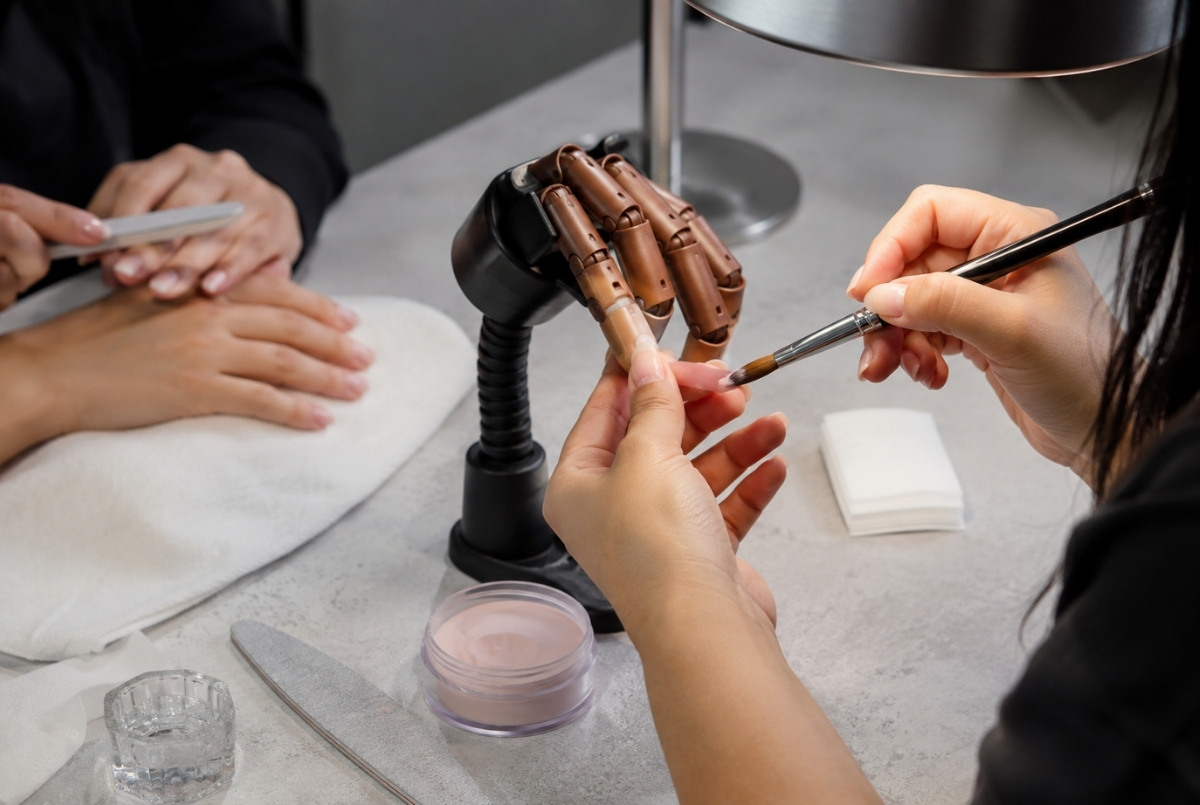
Cosmetology student carefully applies acrylic product to a practice hand with a nail brush while another student practices a basic manicure nearby.

Some students enter beauty school because they love hair, while others are more interested in makeup, skin care, nails, or hair removal. Cosmetology gives students exposure to several parts of the beauty industry rather than limiting the curriculum entirely to hairstyling.

USA Beauty & Barber Academy’s Master Cosmetologist program includes services beyond hair, including manicures, pedicures, acrylic nail services, facials, waxing, makeup, and lash and brow services. Depending on the exercises included in your program, your training may involve:

  • Basic facial and skin-care techniques
  • Makeup application
  • Waxing and other permitted hair-removal methods
  • Manicures, pedicures, and other nail-care procedures

That variety allows students to experience several types of beauty services before deciding which areas they may want to focus on professionally. Hair-removal training, for example, can involve learning appropriate techniques, sanitation practices, client preparation, and precautions for different treatment areas.

One important concept throughout this training is scope of practice. A cosmetology license does not automatically authorize every beauty or aesthetic procedure. State law defines which services a cosmetologist may legally perform, so graduates need to follow the regulations of the state where they work.

Where Skin Care Fits in a Cosmetology Program

Skin-related training is not limited to applying cosmetics. Students also need basic knowledge of skin structure, common conditions, sanitation, contraindications, client evaluation, and safe product use.

The NIC Cosmetology Theory Examination assigns 10% of its examination content to Skin Care and Services. That section includes skin analysis, contraindications, infection-control procedures, basic facial services, hair removal, makeup application, and the safe use of skin-care equipment.

Cosmetology students may therefore receive foundational practice in cleansing, skin evaluation, basic exfoliation, facial procedures, makeup, and hair removal. USA Beauty & Barber Academy also lists facials, waxing, and makeup among the services included in its Master Cosmetologist training.

That foundation should not be confused with advanced esthetic or medical-aesthetic practice. Procedures such as certain advanced chemical treatments, laser services, or medical skin treatments may require additional education, a different license, medical supervision, or another credential depending on state law.

Career Skills Beyond Technical Services

Knowing how to perform services is essential, but technical ability is only part of building a career in cosmetology. Professionals also need to communicate with clients, manage their reputation, understand products, and develop habits that support long-term client relationships.

USA Beauty & Barber Academy lists Salon Business, Client Retention, Resume Writing, and Job Seeking Skills as part of its Master Cosmetologist program. Those subjects can become especially useful when students move from school into their first job and begin building a clientele.

Professional training may also help students understand client communication, retailing, salon operations, and the expectations of working in a service-based environment. Over time, those skills can support professionals who choose employment, independent work, salon management, or eventually business ownership.

The U.S. Bureau of Labor Statistics projects about 84,200 openings for barbers, hairstylists, and cosmetologists each year, on average, from 2024 through 2034. BLS also reports that 48% of hairdressers, hairstylists, and cosmetologists were self-employed in 2024.

For people who operate their own salon or shop, BLS notes that responsibilities may include maintaining business and inventory records, ordering supplies, arranging advertising, and hiring or supervising employees. That is why developing business awareness can matter just as much as improving technical skills over the course of a career.

If you want to explore different directions after graduation, take a look at what careers you can have with a cosmetology license to see how cosmetology training can lead to different professional paths within your legal scope of practice.

Building Skills That Last Beyond Current Trends

Cosmetology student reviews a resume and career materials at a salon reception desk with a portfolio, appointment notebook, and retail products nearby.

Hair and beauty trends change constantly, but cosmetology education is built around principles that can be applied to many different styles. Rather than memorizing a single trending haircut or color technique, students learn how design, texture, chemistry, and client characteristics affect the service they are performing.

Hair texture is one example. The NIC examination blueprint includes knowledge of hair-care and hair-design procedures for different hair types and textures, along with natural hair styling such as braiding. Students also study hair and scalp conditions so they can recognize factors that may influence whether or how a service should be performed.

Chemical services require another layer of knowledge. Permanent waving, chemical relaxing, coloring, and lightening can change the structure or condition of the hair. Understanding the products being used, recognizing possible reactions, and following manufacturer instructions help reduce avoidable problems during these services.

Cosmetologists also work in an industry affected by federal product and workplace-safety rules. The FDA’s Modernization of Cosmetics Regulation Act of 2022, commonly known as MoCRA, expanded federal oversight of cosmetics. It introduced or strengthened requirements involving serious adverse-event reporting, facility registration, cosmetic product listing, and safety substantiation. Many of these obligations apply to manufacturers, processors, and responsible persons for cosmetic products rather than individual cosmetologists, but understanding product safety remains important for professionals who use these products regularly.

Workplace safety is another separate concern. The Occupational Safety and Health Administration warns that certain hair-smoothing products may contain or release formaldehyde. Salons and beauty schools that use products containing or capable of releasing formaldehyde may need to comply with OSHA formaldehyde and hazard-communication requirements. This is one reason chemistry, ventilation awareness, product handling, and safety procedures matter in professional beauty environments.

Training Hours and Licensing Rules Are State Specific

Cosmetology licensing is regulated at the state level, so required training hours and curriculum rules are not identical nationwide.

In Georgia, the current State Board of Cosmetology and Barbers rules require a complete cosmetology school course to total 1,500 hours and take a minimum of nine months. Students begin with 250 hours of Level 1 training and must complete those first 250 hours before providing clinical services on clients.

Arkansas also requires at least 1,500 hours of cosmetology training under its cosmetology rules. The state’s 2026 Candidate Information Bulletin identifies the NIC Cosmetology Theory Examination as the written examination for cosmetologists. Within the NIC examination content outline, Scientific Concepts make up 35% of the tested content.

Because licensing procedures can change from one jurisdiction to another, students should always review the current requirements in the state where they plan to practice.

After finishing the required training and completing the licensing process, learning what comes after cosmetology school can help you understand the next steps toward employment, salon work, and long-term career development.

Common Questions Before Starting Cosmetology School

  • How long does a cosmetology program usually take? There is no single nationwide timeline because each state sets its own training requirements. In Georgia, a complete cosmetology program requires 1,500 hours and must last at least nine months. Your actual completion date can depend on the school’s schedule, attendance, holidays, and whether you attend full time or part time.
  • Should I purchase professional tools before classes start? It is better to check your school’s current requirements before buying expensive equipment. Student-kit policies differ between programs, and schools may provide, include, or require specific tools and supplies. Confirm what is required before purchasing items such as professional shears, mannequin heads, thermal tools, or nail and skin-care supplies independently.
  • Can I focus on one specialty after becoming licensed? Yes. A broad cosmetology education does not mean you must offer every service you studied. Professionals may eventually concentrate on areas such as hair color, textured hair, bridal styling, makeup, or another specialty allowed by their license. Some advanced procedures require separate credentials. In Georgia, for example, a master cosmetologist who wants to become an Assistant Laser Practitioner must meet additional Georgia laser-practitioner licensing requirements, including approved laser or IPL education.

See What Cosmetology Training Looks Like in Person

Reading about cosmetology school can answer many questions, but visiting a campus can give you a clearer picture of the environment. You can see training areas, learn more about the program, meet school staff, and ask about schedules, enrollment steps, and career preparation.

USA Beauty & Barber Academy’s Master Cosmetologist program includes hands-on training across hair, nail, facial, waxing, makeup, and other beauty services, along with Salon Business, Client Retention, Resume Writing, and Job Seeking Skills.

If you are considering enrolling, visit the Enrollment page to learn more about admissions and scheduling a campus tour. You can also use the contact form to ask questions about the program and the next steps toward beginning your cosmetology education.

Is Cosmetology a Good Career for You? What to Consider Before Enrolling

“`html

Key Takeaways

  • Consistent Career Demand: The U.S. Bureau of Labor Statistics projects about 84,200 openings for barbers, hairstylists, and cosmetologists each year from 2024 to 2034, while employment specifically for hairdressers, hairstylists, and cosmetologists is expected to increase 6%.
  • Room to Grow Your Service Value: Hair coloring represented roughly 28% of global hair salon service revenue in 2025, and advanced color techniques have been associated with higher average service tickets.
  • Multiple Ways to Work: Cosmetology careers can include employee positions, commission arrangements, booth or suite rental, business ownership, and professional beauty education. About 48% of U.S. hairdressers, hairstylists, and cosmetologists were self-employed in 2024.
  • State-Specific Training Rules: Licensing requirements are not identical nationwide. Georgia’s Master Cosmetology school curriculum requires 1,500 hours, making it important to check the rules in the state where you intend to become licensed.
  • Safety Is Part of the Profession: Approved cosmetology training covers subjects such as sanitation, infection control, chemistry, chemical-service safety, and procedures designed to protect both professionals and clients.

Choosing whether to attend cosmetology school involves much more than deciding whether you enjoy hair, beauty, or creative work. You are committing tuition, months of training, and considerable personal energy to a career that has both rewarding possibilities and demanding realities.

Before enrolling, it helps to look beyond social-media highlights and examine what the education involves, how the labor market is performing, what income statistics actually mean, and what the work feels like over the long term. The goal is not to convince everyone to pursue cosmetology. It is to help you decide whether the profession fits your abilities, priorities, financial expectations, and preferred lifestyle.

What Cosmetology Training Looks Like Day to Day

Professional beauty education involves far more than experimenting with hairstyles or practicing occasionally on mannequins. State-approved schools combine technical theory, supervised practice, safety education, and repeated skill development so students learn how to perform services consistently within professional standards.

Previous salon experience is not necessarily required before beginning school. USA Beauty & Barber Academy’s official Enrollment information focuses on its admission requirements rather than requiring applicants to arrive with prior professional cosmetology experience.

Skills and Subjects You Build During School

The exact curriculum depends on state licensing rules. Georgia’s official Master Cosmetology curriculum requirements, for example, include subjects covering chemistry, cleansing and disinfection, infection control, hair-color chemistry, permanent waving, chemical relaxing, hair and scalp analysis, haircutting, physiology, skin care, nail care, and practical services.

A typical program develops knowledge across several areas:

  • Hair Science and Chemistry: Learning about hair structure, color chemistry, chemical reactions, permanent waving, relaxing, and how professional products interact with the hair.
  • Anatomy and Physiology: Building foundational knowledge of the hair, scalp, skin, and body systems that relate to cosmetology services.
  • Sanitation and Infection Control: Practicing cleansing, disinfection, blood-exposure procedures, tool care, and other methods used to reduce cross-contamination.
  • Supervised Practical Work: Developing technical skills through structured practice and, after meeting applicable state requirements, providing services to clients under school supervision.

Georgia divides the curriculum into training levels. Students must complete the first 250 hours of Level 1 instruction before moving into clinical services on patrons. That initial phase includes theory, sanitation, chemistry, mannequin practice, hair-color principles, chemical-service theory, and foundational hair and scalp instruction.

Hours, Scheduling, and Professional Expectations

Cosmetology school requires sustained attendance rather than occasional participation. Under Georgia’s Master Cosmetology rules, the school curriculum is a minimum nine-month course totaling 1,500 hours.

Other states can structure their requirements differently. Arkansas demonstrates why prospective students should not assume that one nationwide hour requirement exists. Current Arkansas cosmetology law lists at least 1,200 hours of training as one prerequisite for admission to the cosmetologist examination, while a separate provision requires cosmetology schools to maintain a 1,500-hour school term.

That distinction matters. Examination eligibility rules, school-program requirements, apprenticeship pathways, and licensing conditions do not always use exactly the same hour threshold.

Your own graduation date will also depend on how many hours you attend each week, your attendance consistency, and the schedule offered by your school. A state may establish a minimum curriculum length without guaranteeing that every student will finish in exactly that amount of calendar time.

The training process also changes how you approach beauty services. Instead of concentrating only on the final appearance, you learn to work within appointment times, conduct consultations, maintain sanitation throughout the service, document formulas when useful, follow product instructions, and perform techniques consistently rather than occasionally getting a good result.

Is There Long-Term Demand for Cosmetologists?

Career stability is understandably one of the biggest concerns before committing to vocational education. The beauty industry changes constantly, but many core cosmetology services remain hands-on services performed directly for individual clients.

Haircuts, color applications, chemical texturizing, styling, and similar services generally require a professional and client to be physically present. That does not guarantee success for every stylist, but it helps explain why local service demand remains an important part of the occupation.

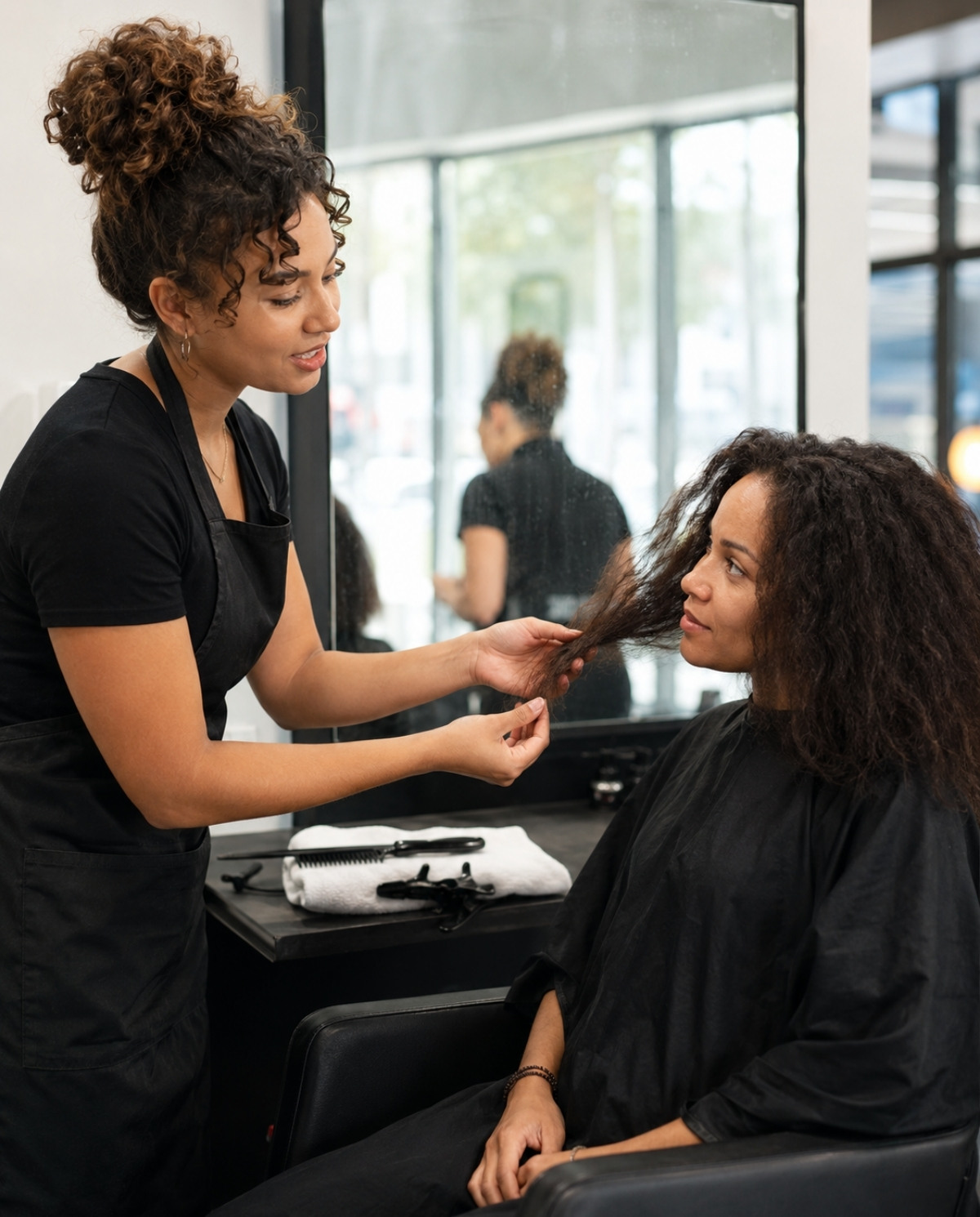
Cosmetology student examining a client's natural hair texture and ends while discussing the desired result during a pre-service consultation.

What Federal Employment Data Shows

According to the U.S. Bureau of Labor Statistics, employment of hairdressers, hairstylists, and cosmetologists is projected to grow 6% from 2024 through 2034. That projection is higher than the 3% growth rate BLS lists for all occupations combined.

Looking at the larger group of barbers, hairstylists, and cosmetologists, BLS expects approximately 84,200 openings per year on average during the decade.

Those openings should not be interpreted as 84,200 entirely new positions being created every year. BLS explains that many openings are expected because existing workers will change occupations, retire, or otherwise leave the labor force.

BLS also expects continued consumer demand for basic hair care, coloring, straightening, and advanced hair treatments.

For someone starting out, however, labor-market demand is only one part of the equation. A new license may help you enter the profession, but developing a sustainable career usually requires reliable technical results, professional customer service, repeat bookings, and enough client retention to build a consistently productive schedule.

What Cosmetology Income Can Really Look Like

Income in this industry is difficult to summarize with one number because cosmetologists work under several different business models. An employee earning an hourly wage may have a completely different financial structure from a booth renter, suite operator, or salon owner.

Understanding those differences is more useful than simply asking whether cosmetology is a “high-paying” or “low-paying” profession.

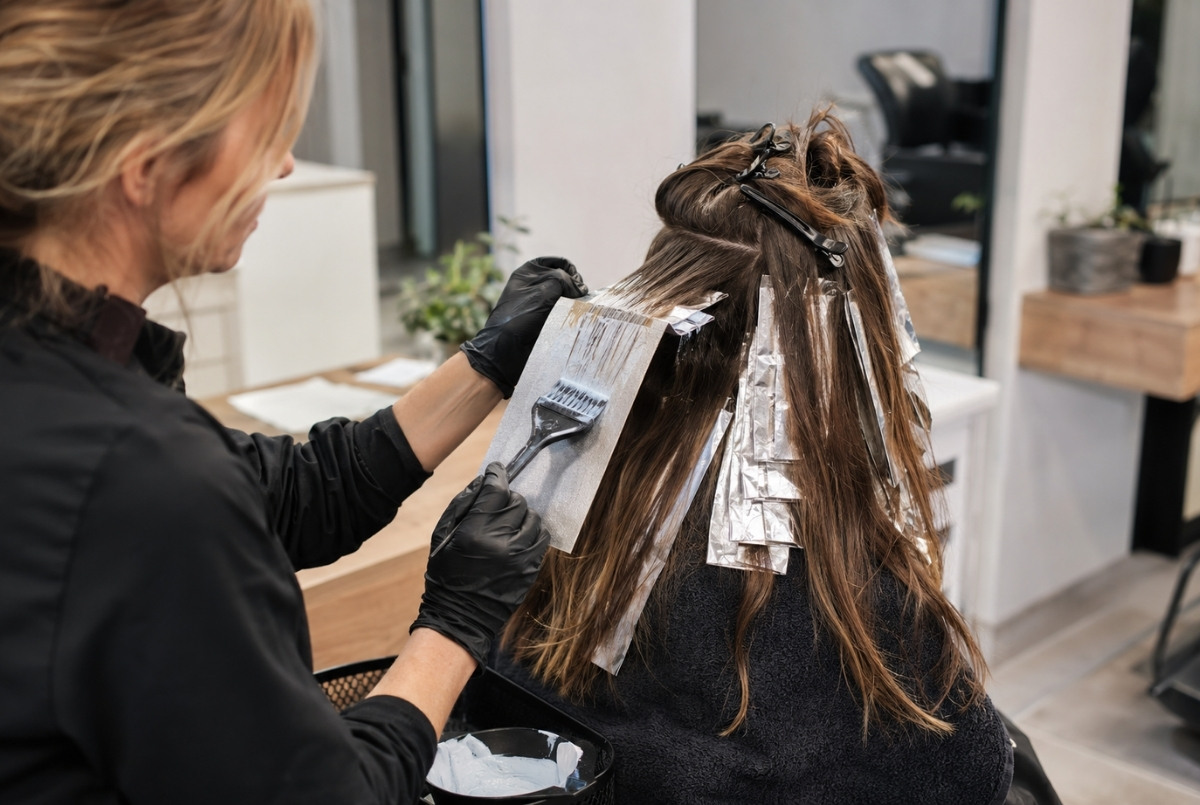
Experienced hairstylist carefully painting balayage highlights onto long brunette hair while separating treated sections with professional foils at a salon workstation.

Understanding Wages, Tips, and Self-Employment

The U.S. Bureau of Labor Statistics reported that the median hourly wage for employed hairdressers, hairstylists, and cosmetologists was $16.95 in May 2024.

The lowest 10% earned less than $11.82 per hour, while the highest 10% earned more than $33.76 per hour. BLS states that these wage figures include tips.

One major limitation is important to understand: approximately 48% of hairdressers, hairstylists, and cosmetologists were self-employed in 2024, and BLS occupational wage estimates do not include self-employed workers.

For employed professionals, compensation may involve several sources:

  1. Hourly Pay or Service Commission: A salon may pay an hourly wage, compensate the stylist based on service sales, or use another structured pay arrangement.
  2. Client Tips: Customers may leave cash or electronic gratuities in addition to the service price.
  3. Retail Incentives: Some businesses provide commissions or bonuses when stylists sell professional home-care products.

Independent professionals operate under a different financial model. The money collected from services is business revenue before expenses. Booth or suite rent, supplies, insurance, card-processing fees, marketing, taxes, licensing costs, and other operating expenses can substantially affect the amount that ultimately becomes personal income.

This helps explain why two stylists charging similar prices can still have very different take-home earnings.

Where Specialization Can Add More Appointment Value

Developing more advanced technical skills can create opportunities to offer higher-value services, although higher prices do not automatically mean higher profit. Product costs, service time, overhead, and local pricing all affect profitability.

Research from Deep Market Insights estimates that the worldwide hair salon service market reached approximately $215 billion in 2025. Hair coloring represented roughly 28% of service revenue, making it the largest service category identified in the report.

The research also connects advanced color work—including balayage, ombré, highlights, and creative color transformations—with higher average service ticket sizes.

That evidence supports the potential value of developing deeper color expertise. Other specialties such as extensions, texture services, corrective work, or advanced hair treatments may also broaden a stylist’s service menu, although their pricing and profitability vary by business and should not be assumed to follow the same economics as hair coloring.

Professional development therefore continues after graduation. BLS notes that cosmetologists may take advanced courses throughout their careers to remain current with techniques and trends.

Different Ways a Cosmetology Career Can Develop

One reason people are attracted to cosmetology is that a license does not necessarily lead to only one type of workplace or employment arrangement.

Your available options depend on state law, experience, technical ability, financial resources, and business goals.

Common Work Models in the Beauty Industry

Potential paths can include:

  • Employee or Commission Salons: Work within an established business that may already provide scheduling systems, products, equipment, marketing, and an existing customer base.
  • Booth or Suite Rental: Rent professional workspace while managing more of your own pricing, appointments, clientele, expenses, and business operations.
  • On-Location and Event Styling: Provide services for weddings, photo sessions, special events, or other assignments when allowed under applicable licensing rules.
  • Beauty Brand Education: Use technical and product knowledge in demonstration, training, education, or professional-product roles.

Independent work is a significant part of this occupation. The BLS reports that 48% of hairdressers, hairstylists, and cosmetologists were self-employed in 2024. It also notes that some professionals lease booth space, manage salons, or eventually open their own businesses.

Greater independence can provide more control, but it can also bring responsibilities such as bookkeeping, inventory management, marketing, customer communication, taxes, and scheduling.

You can explore additional possibilities through USA Beauty & Barber Academy’s overview of careers you can have with a cosmetology license.

Creativity, Client Relationships, and Hair-and-Scalp Specialties

Cosmetology is also deeply client-facing. Every appointment may involve different hair history, texture, styling preferences, maintenance habits, and personal goals.

That variety can make the work rewarding for people who enjoy combining technical problem-solving with regular human interaction. A stylist may help someone prepare for a wedding, interview, celebration, professional event, or simply maintain a look that helps them feel more comfortable and confident.

Hair and scalp care is another area receiving substantial consumer attention. Grand View Research valued the global hair and scalp care product market at approximately $88.2 billion in 2025 and projects it to reach roughly $150.5 billion by 2033.

Those figures describe consumer products rather than salon-service revenue, so they should not be treated as evidence that cosmetologists will earn a particular amount from scalp services. They do, however, demonstrate substantial consumer spending in categories related to hair and scalp care.

Georgia’s cosmetology curriculum includes hair and scalp analysis and treatments, but professional scope still has limits. A cosmetology license covers cosmetic services allowed under state law; it does not authorize medical diagnosis or medical treatment.

If a client presents a scalp or skin problem that appears to require medical evaluation, a cosmetologist should stay within the permitted cosmetic scope and direct the client toward an appropriate healthcare professional rather than attempting to diagnose the condition.

The Less Glamorous Side of Salon Work

Creative work and flexible career options are only part of the picture. Cosmetology can also involve prolonged standing, repetitive movement, chemical exposure, cleaning responsibilities, and close attention to sanitation.

Understanding those demands before enrollment can help you decide whether the profession fits you physically as well as creatively.

Standing, Repetition, and Body Mechanics

The U.S. Bureau of Labor Statistics notes that physical stamina is important because barbers, hairstylists, and cosmetologists remain on their feet for most of their work shifts.

Hair professionals also repeatedly use their hands, wrists, shoulders, neck, and back while cutting, coloring, drying, styling, shampooing, and positioning themselves around clients.

Research published in the Journal of Occupational Health identifies factors such as prolonged standing, repetitive movements, awkward postures, and long working periods as occupational contributors to musculoskeletal strain among hairdressers.

Ergonomic habits cannot guarantee that a stylist will avoid discomfort or injury. However, learning to improve working posture, positioning, equipment height, body mechanics, and repetitive-work habits may help reduce avoidable physical strain.

Product Safety and Workplace Responsibilities

Cosmetologists may regularly use hair colors, lighteners, permanent-wave products, chemical relaxers, disinfectants, and other professional formulations. That makes chemical knowledge and safe product handling an essential part of professional training.

The federal Modernization of Cosmetics Regulation Act of 2022 (MoCRA) expanded the FDA’s authority over cosmetic products.

Among its provisions are requirements involving serious adverse-event reporting, cosmetic-facility registration, product listing, safety substantiation records, FDA access to certain records, and mandatory recall authority under specified circumstances.

Those federal changes do not mean that potentially hazardous exposure has disappeared from salon environments.

The FDA warns that some hair-smoothing products may contain or release formaldehyde when heated. Exposure can affect the eyes, nose, throat, lungs, and skin, particularly when ventilation is inadequate.

The Occupational Safety and Health Administration also provides guidance for salons using hair-smoothing products that may release formaldehyde. Employers must comply with applicable workplace requirements, including OSHA’s formaldehyde and hazard-communication standards when those standards apply.

OSHA requirements are primarily workplace protections for employees. Client safety is also affected by responsible product selection, ventilation, sanitation, manufacturer instructions, and compliance with applicable state and local salon regulations.

A Practical Fit Check Before You Enroll

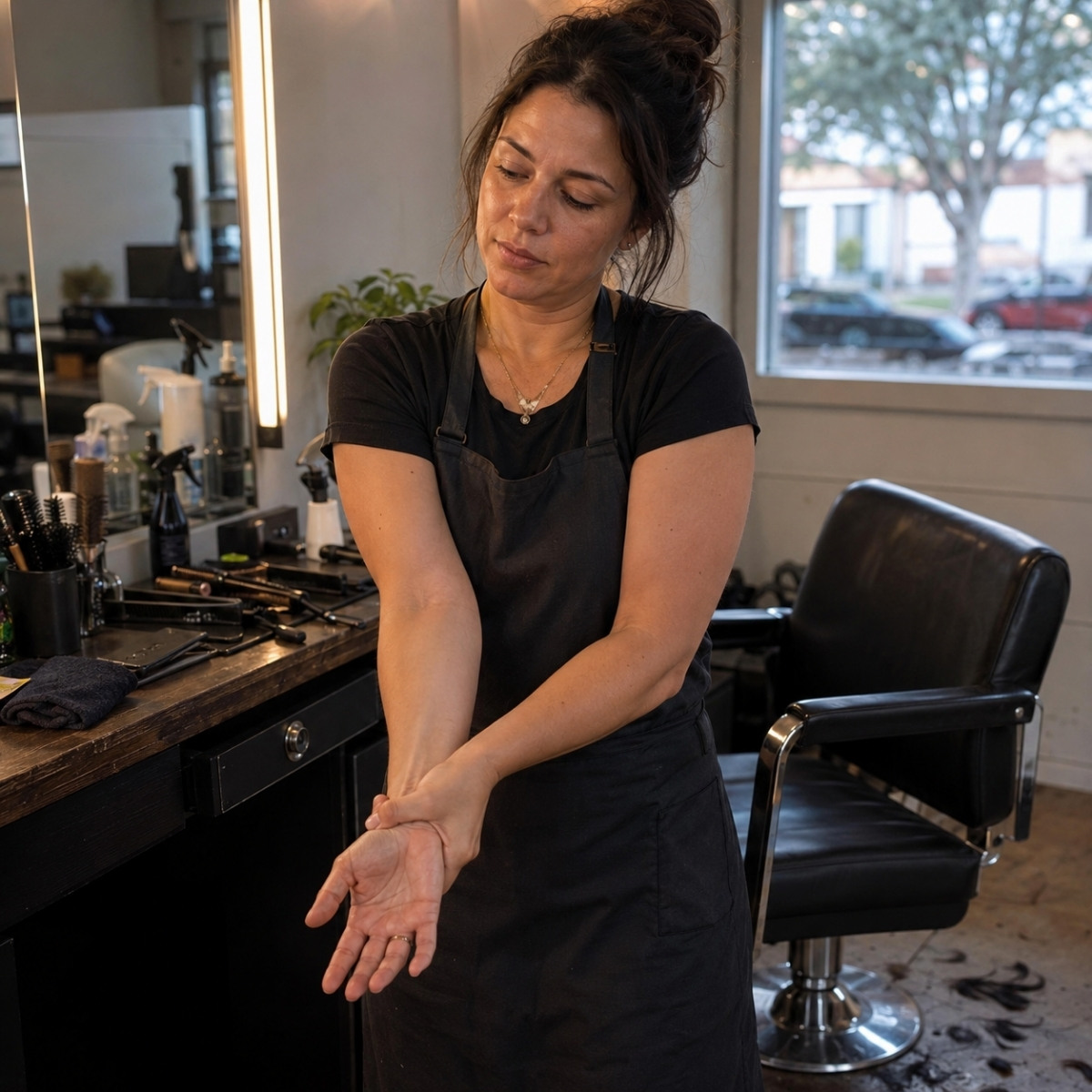
Hairstylist gently stretching her wrist beside a working salon station after completing several client appointments during a physically demanding workday.

No employment statistic can tell you whether you personally will enjoy working in cosmetology. Before making your decision, consider how well the realities of the profession match your own circumstances.

  • Budget Readiness: Have you considered tuition, supplies, transportation, financial-aid options, and your regular living expenses while completing training?
  • Client Interaction: Do you enjoy listening carefully, communicating expectations, and working closely with different personalities?
  • Physical Tolerance: Are you comfortable spending substantial time standing and repeatedly using your hands, shoulders, and arms?
  • Continued Education: Are you prepared to keep learning as products, techniques, safety practices, and consumer trends change?
  • Business Responsibility: Would you be comfortable learning about rebooking, customer retention, retail products, marketing, and basic business management if your career becomes more independent?
  • Real-World Exposure: Have you spoken with working cosmetologists or visited salons so you understand both the enjoyable and routine parts of an ordinary workday?

Thinking beyond graduation can also make the decision clearer. USA Beauty & Barber Academy’s guide to what comes after cosmetology school can help prospective students understand the transition from education to licensing and early career steps.

Frequently Asked Questions

How Much Time Should You Expect to Spend in Cosmetology School?

There is no universal nationwide completion period because required hours and scheduling structures vary by state.

In Georgia, the official Master Cosmetology school curriculum requires at least nine months and 1,500 training hours. A student’s actual calendar completion date depends on scheduled weekly hours, attendance, and the structure of the school’s program.

How Are Cosmetology and Esthetics Different?

The exact legal scope of both licenses depends on state law.

Cosmetology generally includes extensive hair-service education and may also include training related to skin and nails. Georgia’s Master Cosmetology curriculum, for example, covers haircutting, coloring, chemical services, hair and scalp treatments, skin care, and nail care.

Esthetics follows a more concentrated skin-focused licensing path. Under Georgia’s esthetician curriculum requirements, students study areas that include skin care, facials, hair removal, makeup, sanitation and disinfection, anatomy and physiology, chemistry, safety, business practices, and other professional subjects.

The important distinction is that esthetician training does not provide the broad hair-service curriculum associated with a full cosmetology program.

Can You Have a Salon Job Before You Graduate?

Yes, but the work you may legally perform depends on the position and the licensing rules in your state.

Students can potentially work in non-licensed positions such as reception, scheduling, retail, customer service, or administrative support while attending school.

Hands-on client services are different. In Georgia, cosmetology students must complete 250 hours of Level 1 training before moving to supervised clinical services on patrons within the approved school program.

Being enrolled in cosmetology school does not by itself allow someone to work independently as a licensed cosmetologist.

What Happens to Your License If You Relocate?

Moving to another state does not automatically mean your existing license transfers without additional steps.

Georgia states that it does not have reciprocity with other states. However, individuals who hold an active license in good standing in another state or U.S. territory may apply for Georgia licensure by endorsement.

Georgia also explains that applicants may still seek endorsement even when their previous education included fewer school hours than Georgia normally requires. Examination requirements can depend on which licensing examinations the applicant has already completed.

Arkansas uses its own process. Its cosmetology reciprocity information explains the conditions applicable to out-of-state license holders, including examination-related requirements.

Because transfer and endorsement rules can change, confirm the current requirements directly with the licensing board in the state where you intend to work before making relocation decisions.

See Whether USA Beauty & Barber Academy Fits Your Plan

Researching the profession before enrolling gives you a better chance of choosing training with realistic expectations about the workload, licensing process, income structure, and career possibilities.

USA Beauty & Barber Academy identifies its Master Cosmetologist program as a 1,500-hour program aligned with Georgia’s cosmetology licensing requirements.

If you decide the profession fits your goals, you can review the school’s current admission information through its Enrollment page.

You can also submit your information through the school’s contact form if you would like to ask additional admissions questions or learn more about visiting the training facility.
“`

Nail Tech Client Consultation Forms and Salon Policy Guide

What Nail Professionals Should Remember

  • Screen Before the Service: Consultation records give nail technicians a consistent way to identify allergies, relevant health concerns, previous nail damage, and other factors that may affect whether a service should proceed as planned.
  • Clear Policies Protect the Business: Written rules covering deposits, cancellations, lateness, payments, repairs, and client communication can prevent disputes while protecting valuable appointment time.
  • Know the Boundaries of Your License: Nail professionals provide cosmetic services rather than medical diagnosis or treatment. When skin or nails appear compromised, the appropriate response may be to adjust, postpone, or decline the service according to applicable state regulations.
  • Reduce Preventable Product Reactions: Proper consultation, careful application, manufacturer-approved curing practices, and keeping uncured nail products away from the skin can help lower the risk of Acrylate Allergic Contact Dermatitis. Nail technicians should also understand their state’s requirements concerning products such as Methyl Methacrylate (MMA).

Building a career in nail technology involves far more than learning how to create beautiful enhancements or intricate nail art. Once you begin serving real clients, situations involving allergies, damaged nails, late arrivals, payment disputes, and questionable skin or nail conditions become part of daily professional life. Creating a reliable consultation system, documenting important service information, and establishing firm business policies can make these situations easier to manage while helping clients understand that your services follow consistent professional standards.

Build Client Expectations Before the Appointment Starts

Nail technician explaining booking expectations to a client with a tablet calendar, deposit receipt, policy sheet, appointment card, and payment terminal visible.

Professional boundaries work best when clients understand them before arriving for their appointment. Policies covering cancellation deadlines, deposits, late arrivals, payment methods, repairs, communication, and service changes allow clients to know exactly what is expected while helping nail technicians protect both their schedule and income.

Written guidelines can also simplify communication with first-time clients. Someone booking detailed nail art, extensions, or an unfamiliar service may have questions about pricing, appointment length, deposits, repair policies, or whether inspiration photos should be submitted beforehand. When this information is already available, clients do not have to rely on repeated messages to understand the booking process.

Consistency is equally important. Applying the same written standards to no-shows, late arrivals, refunds, service adjustments, and repair requests helps prevent decisions from being made differently from one client to another. Developing these professional habits is one part of building a strong nail technician career foundation that combines practical skills, safety procedures, proper equipment, and professional preparation.

According to a Research and Markets industry report, the worldwide nail salon market is estimated at $14.08 billion in 2026, compared with $12.98 billion in 2025. The report also identifies greater attention to hygiene and safety standards as a developing industry trend. A separate Grand View Research analysis notes increasing consumer awareness regarding ingredient safety, environmental sustainability, and clean beauty nail products. These findings do not suggest that salons need to operate like medical facilities, but they do highlight why visible safety practices, structured consultations, and transparent policies can contribute to client confidence.

What Your Client Consultation Record Should Cover

Nail technician explaining booking expectations to a client with a tablet calendar, deposit receipt, policy sheet, appointment card, and payment terminal visible.

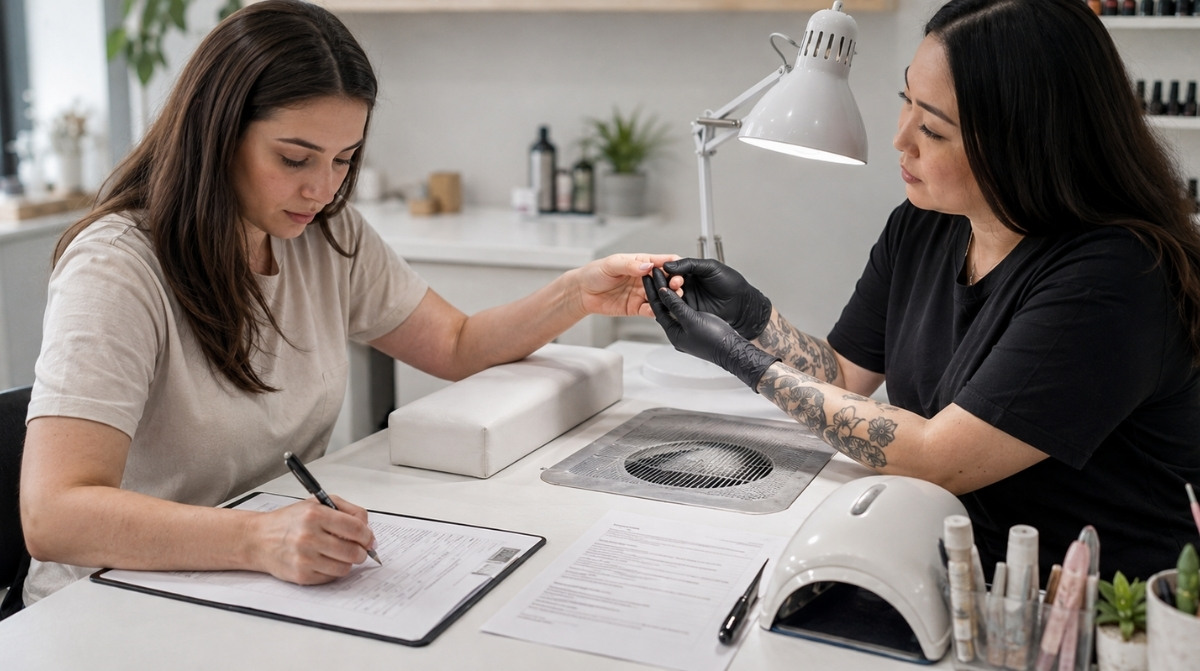
A client intake form provides a structured way to collect information that may affect a nail service. Written forms are not legally required in every state, but they can help technicians ask important questions consistently instead of relying entirely on memory or casual conversation. A first appointment can establish the client’s baseline information, while later records should be updated whenever allergies, medications, health history, nail condition, or previous product reactions change.

  • Previous Product Reactions: Ask clients whether they have experienced reactions to gel products, acrylic systems, adhesives, primers, solvents, or other products used during nail services. Acrylate and methacrylate monomers occur in many professional nail systems. Repeated exposure, improperly cured material, or uncured product touching the skin can contribute to sensitization and Acrylate Allergic Contact Dermatitis.
  • Health Factors That May Affect the Service: Diabetes, peripheral neuropathy, and circulation problems can influence service decisions, particularly during pedicures. The Centers for Disease Control and Prevention explains that diabetes can damage nerves and reduce blood flow to the feet, meaning injuries may go unnoticed and some wounds may heal more slowly. Nail technicians should not diagnose these complications, but disclosed health information may justify a more cautious service or referral when concerning signs are present.
  • Previous Nail Trauma: Ask about recent enhancement removal, injuries, aggressive filing, painful services, or artificial nails that were pulled or ripped off. These events can leave the natural nail thin, tender, or visibly compromised. Knowing what happened previously can help determine whether an enhancement should proceed normally, be modified, or be delayed.
  • Appointment Documentation: Client records can include the products or nail system used, visible changes in the nail or surrounding skin, reactions that occurred during the appointment, adjustments made to the planned service, and whether professional medical evaluation was recommended. Record observable facts rather than making a medical diagnosis.

Research published in PubMed / Nursing for Women’s Health describes Acrylate Allergic Contact Dermatitis as an increasing concern for both manicure clients and professionals. Repeated acrylate exposure and inadequate curing are identified as important risk factors. Possible reactions include redness, itching, swelling, dermatitis near the nails, and nail changes such as onycholysis. After sensitization occurs, later exposure to the same or related acrylates may produce additional reactions, making confirmed allergies important information for both the client and technician.

Acrylates are also used outside the beauty industry. A review examining acrylate exposure discusses their use in dentistry and multiple medical products, while other medical literature has identified acrylate allergens in certain adhesives and wearable glucose-monitoring devices. Having an acrylate allergy does not automatically prevent someone from receiving dental procedures, surgery, or using a medical device. A person with a confirmed allergy should, however, inform relevant healthcare professionals so the specific allergen and suitable material alternatives can be considered.

Marketing labels require similar caution. A product described as HEMA-free should not automatically be considered allergy-free because HEMA represents only one possible methacrylate sensitizer. In a laboratory study published in Contact Dermatitis and indexed by PubMed, researchers examined 31 gel nail products and six acrylic products. Methacrylates were identified in 32 of the 37 products, and all 32 showed differences between the methacrylates detected during testing and those disclosed on the packaging. HEMA itself was found in 20 of the 37 samples. The practical takeaway is that marketing terminology should never replace safe application practices. Avoid getting uncured product on the client’s skin, use compatible products within the intended system, and follow the manufacturer’s curing and application instructions.

Recognize When a Nail Service Should Not Continue

A professional nail license has defined legal limits. Nail technicians are trained and licensed to perform cosmetic nail services, not to diagnose diseases or provide medical treatment. Regulations differ among states, so professionals need to understand both their authorized scope of practice and the conditions under which services must be modified or refused.

Georgia’s legal definition of nail technology includes manicures, pedicures, trimming, filing, shaping and decorating nails, applying artificial nail extensions, and providing cosmetic care to another person’s nails. At the same time, Georgia State Board facility rules state that cosmetology services may only be performed on intact, healthy skin and nails.

The technician’s responsibility is to notice potentially concerning conditions without deciding what disease caused them. Depending on state rules and the circumstances, postponing, adjusting, or refusing a service may be appropriate when signs include:

  • Unusual discoloration, thickening, crumbling, lifting, or distortion of the nail that may be associated with trauma, infection, or another condition
  • Skin around the nail that is swollen, unusually hot, intensely red, painful, or producing drainage
  • Bleeding, open sores, broken skin, severe irritation, or a spreading rash within the planned service area
  • Green discoloration beneath a lifted enhancement or separated nail plate, which can be associated with bacterial colonization and should not simply be covered with another nail product

Professional documentation should describe visible conditions rather than labeling them medically. For example, a technician could record green discoloration beneath a lifted nail or swollen red skin with drainage instead of writing Pseudomonas, fungus, or paronychia unless that diagnosis has already been made by a qualified healthcare provider. When the condition falls outside normal cosmetic nail care, the service can be deferred and the client directed to a dermatologist, podiatrist, physician, or other appropriate healthcare professional.

Requirements differ from state to state, but restrictions on working over unhealthy or compromised tissue are common. Georgia limits cosmetology services to intact, healthy skin and nails. Arkansas regulations similarly restrict practitioners from knowingly working on clients with certain infectious or communicable conditions and prohibit massage over skin that is open, inflamed, irritated, infected, or affected by an eruption. These requirements can be reviewed through the Georgia State Board rules and the official Arkansas cosmetology regulations.

Nail professionals interested in serving clients with more complex health considerations may choose to explore medical nail technician education and certification. Additional private education can provide deeper knowledge of screening, infection prevention, and professional referral practices, but it does not enlarge the legal scope granted by a state nail license. A private certificate does not authorize medical diagnosis, wound treatment, or other healthcare procedures.

Declining a service does not have to become a confrontation. Explain the physical signs you can observe, clarify that working over the affected area may not be appropriate, and avoid speculating about the medical cause. Recommending evaluation by a podiatrist, dermatologist, or physician allows the client to seek proper guidance without the nail technician stepping beyond the cosmetic scope of practice.

Guidance from the Connecticut Department of Public Health illustrates how specific salon safety regulations can become. Connecticut prohibits skin-cutting tools such as Credo blades and razor-style callus shavers. Its guidance also states that UV light boxes are not accepted as infection-control devices; UV cabinets may be used only for dry storage after implements have already been properly disinfected. Georgia also prohibits razor-type callus shavers, including Credo blades.

Disinfection procedures should likewise follow the applicable state rules and the instructions printed on the disinfectant label. The U.S. Environmental Protection Agency explains that contact time refers to how long a surface must remain visibly wet for a disinfectant to perform as directed. Required contact times differ among products and targeted organisms. If a particular label requires the surface to remain wet for 10 minutes, then that full labeled time must be followed rather than applying a universal salon-wide contact time to every disinfectant.

Managing Client Conflicts and Industry Concerns Professionally

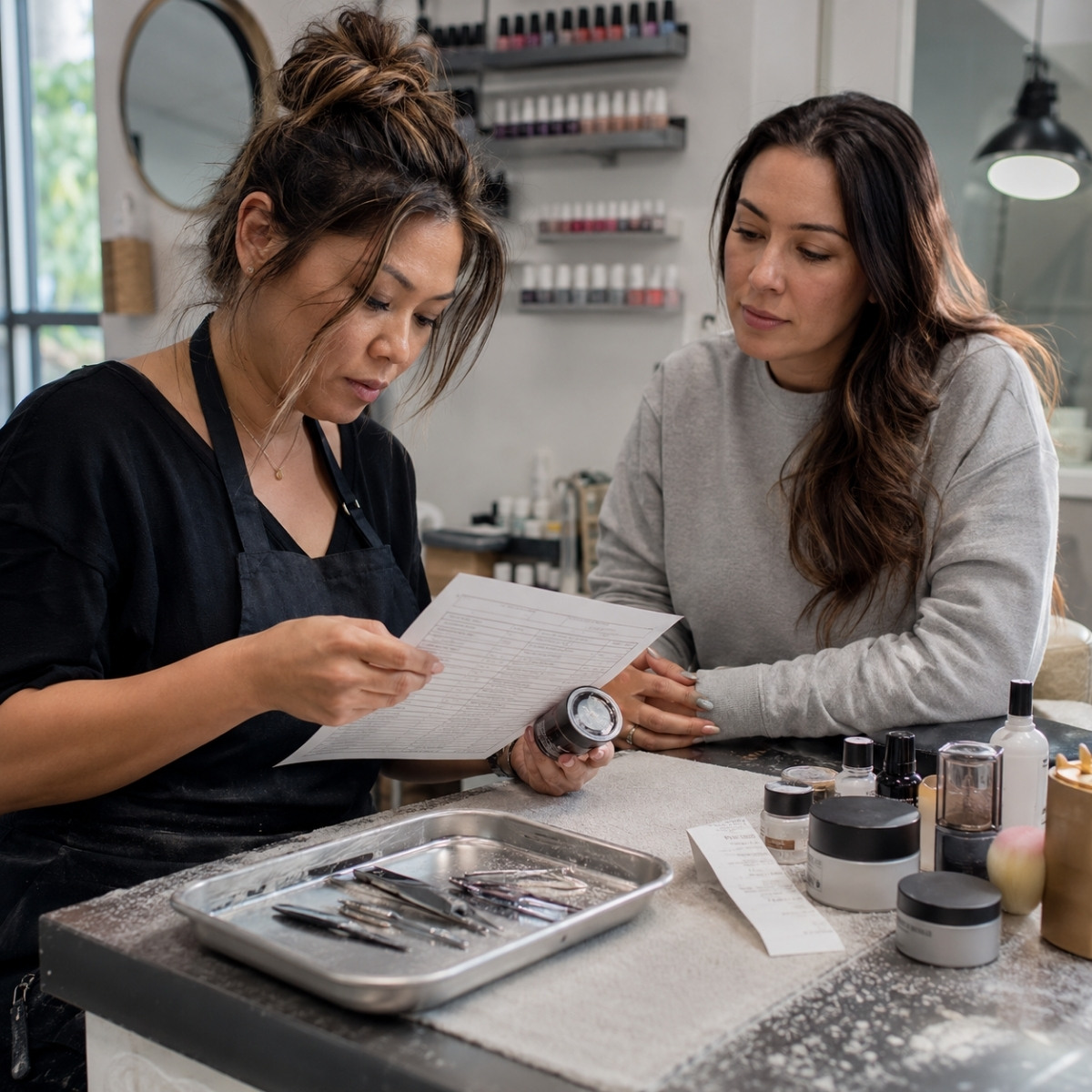
Nail technician reviews a client service record and nail product information while the client sits calmly nearby during a professional follow up.

As nail technicians gain experience, they may eventually deal with dissatisfied clients, difficult business relationships, or behavior within the industry that appears unsafe or unlicensed. Knowing which situations belong within ordinary salon communication and which may require formal reporting is an important professional distinction.

Clients sometimes leave one technician or salon because of sanitation concerns, unexpected charges, communication problems, or disappointing services. Understanding how these situations arise can help professionals create policies that make pricing, booking, repairs, cancellations, and service expectations easier to understand. Publishing common nail technician questions and answers can also give potential clients useful information before they book.

Client retention also depends heavily on confidence in cleanliness and service safety. Teaching clients about appropriate nail salon hygiene and professional aftercare can demonstrate how cross-contamination risks are managed during appointments while giving clients practical guidance for caring for their nails afterward.

Nail professionals should also know where to report suspected licensing or safety violations. Reports to a state cosmetology board should involve matters that actually fall within that board’s authority, such as possible unlicensed practice or violations of professional licensing and sanitation requirements. In Georgia, the State Board of Cosmetology and Barbers complaint process accepts written complaints involving suspected licensing violations and unlicensed activity. The Board also states that typical contractual and fee disputes generally do not fall within its jurisdiction, meaning that a disagreement about a refund or service price does not automatically constitute a licensing violation.

Methyl Methacrylate, commonly abbreviated MMA, is another regulatory issue nail technicians should understand carefully. MMA should not be described as universally prohibited under federal cosmetic law. The U.S. Food and Drug Administration states that there is no federal regulation specifically prohibiting methyl methacrylate monomer in cosmetic products. After receiving injury complaints associated with artificial-nail products containing 100% MMA monomer during the early 1970s, however, FDA pursued actions that included seizures, recalls, and court proceedings. Individual states may impose their own restrictions or prohibitions on MMA in professional nail services.

The Arizona Barbering and Cosmetology Board warns that MMA can cost approximately one-third of the price of other acrylic nail products and explains that Ethyl Methacrylate, or EMA, is an alternative monomer commonly used in artificial nail products. The Board also notes that MMA enhancements can become exceptionally hard and difficult to file or remove. Technicians should not attempt to identify MMA solely from salon pricing or assumptions about a particular business. A safer professional approach is to use traceable professional products, retain relevant product information, understand the restrictions in the state where services are performed, and report suspected regulatory violations through the appropriate agency.

Common Questions About Consultation Forms and Salon Policies

How long do nail technicians need to retain client consultation records? No single nationwide retention period applies to every nail salon or independent technician. Review applicable state requirements, the conditions of your professional liability insurance, and your own business record-retention procedures. Health and consultation information should be stored securely for whichever period applies and handled consistently across clients.

Can consultation paperwork be different for gel, extensions, and pedicure services? Yes. A general intake form can collect baseline information about allergies, health considerations, and previous reactions, while separate sections can address risks or information relevant to specific services such as hard gel, enhancements, or pedicures. Product information and significant changes to the client’s history can also be documented as services continue.

What happens when a client will not complete the consultation form? Explain that the consultation process is part of the salon’s approach to service planning and client safety. When a completed form is required by salon policy, applicable regulations, or insurance conditions, the service should not proceed without it. Even if state law does not specifically require a written intake form, a technician should postpone or refuse a service when there is insufficient information to determine whether the procedure can be performed appropriately within the licensed scope of practice.

Turn Professional Knowledge Into a Stronger Nail Career

Successful nail professionals need more than polished technical skills. Understanding professional boundaries, maintaining safe practices, communicating clearly with clients, and developing sound business habits are equally important parts of working in the industry.

At USA Beauty & Barber Academy, students develop practical skills and professional knowledge designed to help prepare them for real salon environments. Whether your goal is to work in an established salon, build your own nail business, or continue developing specialized skills, strong foundational training can help you enter the profession with greater confidence and preparation.

Explore the Enrollment information and complete the contact form to connect with the admissions team and learn more about beginning your training.