

Is Cosmetology a Good Career for You? What to Consider Before Enrolling
```html
Key Takeaways
- Consistent Career Demand: The U.S. Bureau of Labor Statistics projects about 84,200 openings for barbers, hairstylists, and cosmetologists each year from 2024 to 2034, while employment specifically for hairdressers, hairstylists, and cosmetologists is expected to increase 6%.
- Room to Grow Your Service Value: Hair coloring represented roughly 28% of global hair salon service revenue in 2025, and advanced color techniques have been associated with higher average service tickets.
- Multiple Ways to Work: Cosmetology careers can include employee positions, commission arrangements, booth or suite rental, business ownership, and professional beauty education. About 48% of U.S. hairdressers, hairstylists, and cosmetologists were self-employed in 2024.
- State-Specific Training Rules: Licensing requirements are not identical nationwide. Georgia's Master Cosmetology school curriculum requires 1,500 hours, making it important to check the rules in the state where you intend to become licensed.
- Safety Is Part of the Profession: Approved cosmetology training covers subjects such as sanitation, infection control, chemistry, chemical-service safety, and procedures designed to protect both professionals and clients.
Choosing whether to attend cosmetology school involves much more than deciding whether you enjoy hair, beauty, or creative work. You are committing tuition, months of training, and considerable personal energy to a career that has both rewarding possibilities and demanding realities.
Before enrolling, it helps to look beyond social-media highlights and examine what the education involves, how the labor market is performing, what income statistics actually mean, and what the work feels like over the long term. The goal is not to convince everyone to pursue cosmetology. It is to help you decide whether the profession fits your abilities, priorities, financial expectations, and preferred lifestyle.
What Cosmetology Training Looks Like Day to Day
Professional beauty education involves far more than experimenting with hairstyles or practicing occasionally on mannequins. State-approved schools combine technical theory, supervised practice, safety education, and repeated skill development so students learn how to perform services consistently within professional standards.
Previous salon experience is not necessarily required before beginning school. USA Beauty & Barber Academy's official Enrollment information focuses on its admission requirements rather than requiring applicants to arrive with prior professional cosmetology experience.
Skills and Subjects You Build During School
The exact curriculum depends on state licensing rules. Georgia's official Master Cosmetology curriculum requirements, for example, include subjects covering chemistry, cleansing and disinfection, infection control, hair-color chemistry, permanent waving, chemical relaxing, hair and scalp analysis, haircutting, physiology, skin care, nail care, and practical services.
A typical program develops knowledge across several areas:
- Hair Science and Chemistry: Learning about hair structure, color chemistry, chemical reactions, permanent waving, relaxing, and how professional products interact with the hair.
- Anatomy and Physiology: Building foundational knowledge of the hair, scalp, skin, and body systems that relate to cosmetology services.
- Sanitation and Infection Control: Practicing cleansing, disinfection, blood-exposure procedures, tool care, and other methods used to reduce cross-contamination.
- Supervised Practical Work: Developing technical skills through structured practice and, after meeting applicable state requirements, providing services to clients under school supervision.
Georgia divides the curriculum into training levels. Students must complete the first 250 hours of Level 1 instruction before moving into clinical services on patrons. That initial phase includes theory, sanitation, chemistry, mannequin practice, hair-color principles, chemical-service theory, and foundational hair and scalp instruction.
Hours, Scheduling, and Professional Expectations
Cosmetology school requires sustained attendance rather than occasional participation. Under Georgia's Master Cosmetology rules, the school curriculum is a minimum nine-month course totaling 1,500 hours.
Other states can structure their requirements differently. Arkansas demonstrates why prospective students should not assume that one nationwide hour requirement exists. Current Arkansas cosmetology law lists at least 1,200 hours of training as one prerequisite for admission to the cosmetologist examination, while a separate provision requires cosmetology schools to maintain a 1,500-hour school term.
That distinction matters. Examination eligibility rules, school-program requirements, apprenticeship pathways, and licensing conditions do not always use exactly the same hour threshold.
Your own graduation date will also depend on how many hours you attend each week, your attendance consistency, and the schedule offered by your school. A state may establish a minimum curriculum length without guaranteeing that every student will finish in exactly that amount of calendar time.
The training process also changes how you approach beauty services. Instead of concentrating only on the final appearance, you learn to work within appointment times, conduct consultations, maintain sanitation throughout the service, document formulas when useful, follow product instructions, and perform techniques consistently rather than occasionally getting a good result.
Is There Long-Term Demand for Cosmetologists?
Career stability is understandably one of the biggest concerns before committing to vocational education. The beauty industry changes constantly, but many core cosmetology services remain hands-on services performed directly for individual clients.
Haircuts, color applications, chemical texturizing, styling, and similar services generally require a professional and client to be physically present. That does not guarantee success for every stylist, but it helps explain why local service demand remains an important part of the occupation.
What Federal Employment Data Shows
According to the U.S. Bureau of Labor Statistics, employment of hairdressers, hairstylists, and cosmetologists is projected to grow 6% from 2024 through 2034. That projection is higher than the 3% growth rate BLS lists for all occupations combined.
Looking at the larger group of barbers, hairstylists, and cosmetologists, BLS expects approximately 84,200 openings per year on average during the decade.
Those openings should not be interpreted as 84,200 entirely new positions being created every year. BLS explains that many openings are expected because existing workers will change occupations, retire, or otherwise leave the labor force.
BLS also expects continued consumer demand for basic hair care, coloring, straightening, and advanced hair treatments.
For someone starting out, however, labor-market demand is only one part of the equation. A new license may help you enter the profession, but developing a sustainable career usually requires reliable technical results, professional customer service, repeat bookings, and enough client retention to build a consistently productive schedule.
What Cosmetology Income Can Really Look Like
Income in this industry is difficult to summarize with one number because cosmetologists work under several different business models. An employee earning an hourly wage may have a completely different financial structure from a booth renter, suite operator, or salon owner.
Understanding those differences is more useful than simply asking whether cosmetology is a "high-paying" or "low-paying" profession.
Understanding Wages, Tips, and Self-Employment
The U.S. Bureau of Labor Statistics reported that the median hourly wage for employed hairdressers, hairstylists, and cosmetologists was $16.95 in May 2024.
The lowest 10% earned less than $11.82 per hour, while the highest 10% earned more than $33.76 per hour. BLS states that these wage figures include tips.
One major limitation is important to understand: approximately 48% of hairdressers, hairstylists, and cosmetologists were self-employed in 2024, and BLS occupational wage estimates do not include self-employed workers.
For employed professionals, compensation may involve several sources:
- Hourly Pay or Service Commission: A salon may pay an hourly wage, compensate the stylist based on service sales, or use another structured pay arrangement.
- Client Tips: Customers may leave cash or electronic gratuities in addition to the service price.
- Retail Incentives: Some businesses provide commissions or bonuses when stylists sell professional home-care products.
Independent professionals operate under a different financial model. The money collected from services is business revenue before expenses. Booth or suite rent, supplies, insurance, card-processing fees, marketing, taxes, licensing costs, and other operating expenses can substantially affect the amount that ultimately becomes personal income.
This helps explain why two stylists charging similar prices can still have very different take-home earnings.
Where Specialization Can Add More Appointment Value
Developing more advanced technical skills can create opportunities to offer higher-value services, although higher prices do not automatically mean higher profit. Product costs, service time, overhead, and local pricing all affect profitability.
Research from Deep Market Insights estimates that the worldwide hair salon service market reached approximately $215 billion in 2025. Hair coloring represented roughly 28% of service revenue, making it the largest service category identified in the report.
The research also connects advanced color work—including balayage, ombré, highlights, and creative color transformations—with higher average service ticket sizes.
That evidence supports the potential value of developing deeper color expertise. Other specialties such as extensions, texture services, corrective work, or advanced hair treatments may also broaden a stylist's service menu, although their pricing and profitability vary by business and should not be assumed to follow the same economics as hair coloring.
Professional development therefore continues after graduation. BLS notes that cosmetologists may take advanced courses throughout their careers to remain current with techniques and trends.
Different Ways a Cosmetology Career Can Develop
One reason people are attracted to cosmetology is that a license does not necessarily lead to only one type of workplace or employment arrangement.
Your available options depend on state law, experience, technical ability, financial resources, and business goals.
Common Work Models in the Beauty Industry
Potential paths can include:
- Employee or Commission Salons: Work within an established business that may already provide scheduling systems, products, equipment, marketing, and an existing customer base.
- Booth or Suite Rental: Rent professional workspace while managing more of your own pricing, appointments, clientele, expenses, and business operations.
- On-Location and Event Styling: Provide services for weddings, photo sessions, special events, or other assignments when allowed under applicable licensing rules.
- Beauty Brand Education: Use technical and product knowledge in demonstration, training, education, or professional-product roles.
Independent work is a significant part of this occupation. The BLS reports that 48% of hairdressers, hairstylists, and cosmetologists were self-employed in 2024. It also notes that some professionals lease booth space, manage salons, or eventually open their own businesses.
Greater independence can provide more control, but it can also bring responsibilities such as bookkeeping, inventory management, marketing, customer communication, taxes, and scheduling.
You can explore additional possibilities through USA Beauty & Barber Academy's overview of careers you can have with a cosmetology license.
Creativity, Client Relationships, and Hair-and-Scalp Specialties
Cosmetology is also deeply client-facing. Every appointment may involve different hair history, texture, styling preferences, maintenance habits, and personal goals.
That variety can make the work rewarding for people who enjoy combining technical problem-solving with regular human interaction. A stylist may help someone prepare for a wedding, interview, celebration, professional event, or simply maintain a look that helps them feel more comfortable and confident.
Hair and scalp care is another area receiving substantial consumer attention. Grand View Research valued the global hair and scalp care product market at approximately $88.2 billion in 2025 and projects it to reach roughly $150.5 billion by 2033.
Those figures describe consumer products rather than salon-service revenue, so they should not be treated as evidence that cosmetologists will earn a particular amount from scalp services. They do, however, demonstrate substantial consumer spending in categories related to hair and scalp care.
Georgia's cosmetology curriculum includes hair and scalp analysis and treatments, but professional scope still has limits. A cosmetology license covers cosmetic services allowed under state law; it does not authorize medical diagnosis or medical treatment.
If a client presents a scalp or skin problem that appears to require medical evaluation, a cosmetologist should stay within the permitted cosmetic scope and direct the client toward an appropriate healthcare professional rather than attempting to diagnose the condition.
The Less Glamorous Side of Salon Work
Creative work and flexible career options are only part of the picture. Cosmetology can also involve prolonged standing, repetitive movement, chemical exposure, cleaning responsibilities, and close attention to sanitation.
Understanding those demands before enrollment can help you decide whether the profession fits you physically as well as creatively.
Standing, Repetition, and Body Mechanics
The U.S. Bureau of Labor Statistics notes that physical stamina is important because barbers, hairstylists, and cosmetologists remain on their feet for most of their work shifts.
Hair professionals also repeatedly use their hands, wrists, shoulders, neck, and back while cutting, coloring, drying, styling, shampooing, and positioning themselves around clients.
Research published in the Journal of Occupational Health identifies factors such as prolonged standing, repetitive movements, awkward postures, and long working periods as occupational contributors to musculoskeletal strain among hairdressers.
Ergonomic habits cannot guarantee that a stylist will avoid discomfort or injury. However, learning to improve working posture, positioning, equipment height, body mechanics, and repetitive-work habits may help reduce avoidable physical strain.
Product Safety and Workplace Responsibilities
Cosmetologists may regularly use hair colors, lighteners, permanent-wave products, chemical relaxers, disinfectants, and other professional formulations. That makes chemical knowledge and safe product handling an essential part of professional training.
The federal Modernization of Cosmetics Regulation Act of 2022 (MoCRA) expanded the FDA's authority over cosmetic products.
Among its provisions are requirements involving serious adverse-event reporting, cosmetic-facility registration, product listing, safety substantiation records, FDA access to certain records, and mandatory recall authority under specified circumstances.
Those federal changes do not mean that potentially hazardous exposure has disappeared from salon environments.
The FDA warns that some hair-smoothing products may contain or release formaldehyde when heated. Exposure can affect the eyes, nose, throat, lungs, and skin, particularly when ventilation is inadequate.
The Occupational Safety and Health Administration also provides guidance for salons using hair-smoothing products that may release formaldehyde. Employers must comply with applicable workplace requirements, including OSHA's formaldehyde and hazard-communication standards when those standards apply.
OSHA requirements are primarily workplace protections for employees. Client safety is also affected by responsible product selection, ventilation, sanitation, manufacturer instructions, and compliance with applicable state and local salon regulations.
A Practical Fit Check Before You Enroll
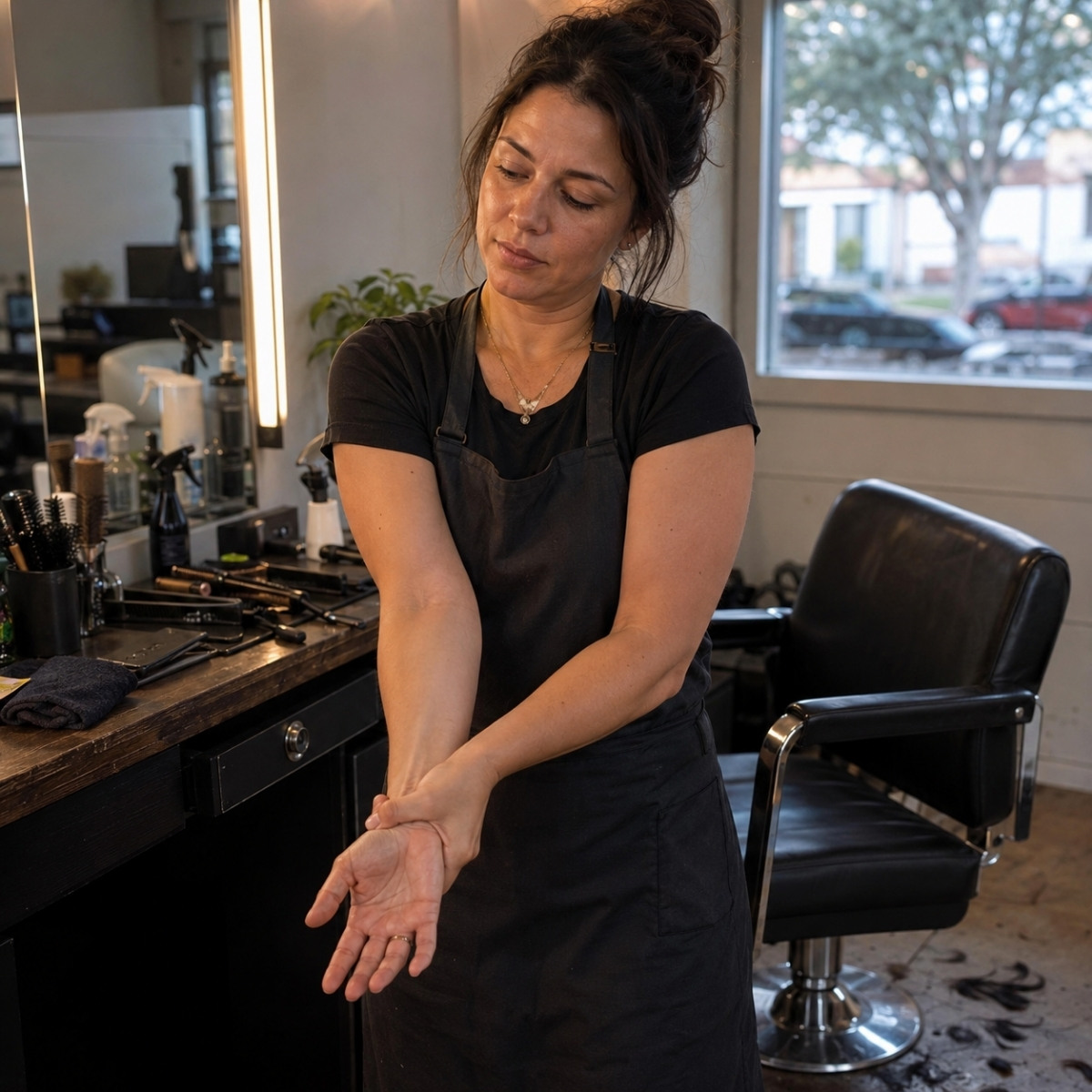
No employment statistic can tell you whether you personally will enjoy working in cosmetology. Before making your decision, consider how well the realities of the profession match your own circumstances.
- Budget Readiness: Have you considered tuition, supplies, transportation, financial-aid options, and your regular living expenses while completing training?
- Client Interaction: Do you enjoy listening carefully, communicating expectations, and working closely with different personalities?
- Physical Tolerance: Are you comfortable spending substantial time standing and repeatedly using your hands, shoulders, and arms?
- Continued Education: Are you prepared to keep learning as products, techniques, safety practices, and consumer trends change?
- Business Responsibility: Would you be comfortable learning about rebooking, customer retention, retail products, marketing, and basic business management if your career becomes more independent?
- Real-World Exposure: Have you spoken with working cosmetologists or visited salons so you understand both the enjoyable and routine parts of an ordinary workday?
Thinking beyond graduation can also make the decision clearer. USA Beauty & Barber Academy's guide to what comes after cosmetology school can help prospective students understand the transition from education to licensing and early career steps.
Frequently Asked Questions
How Much Time Should You Expect to Spend in Cosmetology School?
There is no universal nationwide completion period because required hours and scheduling structures vary by state.
In Georgia, the official Master Cosmetology school curriculum requires at least nine months and 1,500 training hours. A student's actual calendar completion date depends on scheduled weekly hours, attendance, and the structure of the school's program.
How Are Cosmetology and Esthetics Different?
The exact legal scope of both licenses depends on state law.
Cosmetology generally includes extensive hair-service education and may also include training related to skin and nails. Georgia's Master Cosmetology curriculum, for example, covers haircutting, coloring, chemical services, hair and scalp treatments, skin care, and nail care.
Esthetics follows a more concentrated skin-focused licensing path. Under Georgia's esthetician curriculum requirements, students study areas that include skin care, facials, hair removal, makeup, sanitation and disinfection, anatomy and physiology, chemistry, safety, business practices, and other professional subjects.
The important distinction is that esthetician training does not provide the broad hair-service curriculum associated with a full cosmetology program.
Can You Have a Salon Job Before You Graduate?
Yes, but the work you may legally perform depends on the position and the licensing rules in your state.
Students can potentially work in non-licensed positions such as reception, scheduling, retail, customer service, or administrative support while attending school.
Hands-on client services are different. In Georgia, cosmetology students must complete 250 hours of Level 1 training before moving to supervised clinical services on patrons within the approved school program.
Being enrolled in cosmetology school does not by itself allow someone to work independently as a licensed cosmetologist.
What Happens to Your License If You Relocate?
Moving to another state does not automatically mean your existing license transfers without additional steps.
Georgia states that it does not have reciprocity with other states. However, individuals who hold an active license in good standing in another state or U.S. territory may apply for Georgia licensure by endorsement.
Georgia also explains that applicants may still seek endorsement even when their previous education included fewer school hours than Georgia normally requires. Examination requirements can depend on which licensing examinations the applicant has already completed.
Arkansas uses its own process. Its cosmetology reciprocity information explains the conditions applicable to out-of-state license holders, including examination-related requirements.
Because transfer and endorsement rules can change, confirm the current requirements directly with the licensing board in the state where you intend to work before making relocation decisions.
See Whether USA Beauty & Barber Academy Fits Your Plan
Researching the profession before enrolling gives you a better chance of choosing training with realistic expectations about the workload, licensing process, income structure, and career possibilities.
USA Beauty & Barber Academy identifies its Master Cosmetologist program as a 1,500-hour program aligned with Georgia's cosmetology licensing requirements.
If you decide the profession fits your goals, you can review the school's current admission information through its Enrollment page.
You can also submit your information through the school's contact form if you would like to ask additional admissions questions or learn more about visiting the training facility.
```