

Nail Tech Client Consultation Forms and Salon Policy Guide

What Nail Professionals Should Remember
- Screen Before the Service: Consultation records give nail technicians a consistent way to identify allergies, relevant health concerns, previous nail damage, and other factors that may affect whether a service should proceed as planned.
- Clear Policies Protect the Business: Written rules covering deposits, cancellations, lateness, payments, repairs, and client communication can prevent disputes while protecting valuable appointment time.
- Know the Boundaries of Your License: Nail professionals provide cosmetic services rather than medical diagnosis or treatment. When skin or nails appear compromised, the appropriate response may be to adjust, postpone, or decline the service according to applicable state regulations.
- Reduce Preventable Product Reactions: Proper consultation, careful application, manufacturer-approved curing practices, and keeping uncured nail products away from the skin can help lower the risk of Acrylate Allergic Contact Dermatitis. Nail technicians should also understand their state's requirements concerning products such as Methyl Methacrylate (MMA).
Building a career in nail technology involves far more than learning how to create beautiful enhancements or intricate nail art. Once you begin serving real clients, situations involving allergies, damaged nails, late arrivals, payment disputes, and questionable skin or nail conditions become part of daily professional life. Creating a reliable consultation system, documenting important service information, and establishing firm business policies can make these situations easier to manage while helping clients understand that your services follow consistent professional standards.
Build Client Expectations Before the Appointment Starts

Professional boundaries work best when clients understand them before arriving for their appointment. Policies covering cancellation deadlines, deposits, late arrivals, payment methods, repairs, communication, and service changes allow clients to know exactly what is expected while helping nail technicians protect both their schedule and income.
Written guidelines can also simplify communication with first-time clients. Someone booking detailed nail art, extensions, or an unfamiliar service may have questions about pricing, appointment length, deposits, repair policies, or whether inspiration photos should be submitted beforehand. When this information is already available, clients do not have to rely on repeated messages to understand the booking process.
Consistency is equally important. Applying the same written standards to no-shows, late arrivals, refunds, service adjustments, and repair requests helps prevent decisions from being made differently from one client to another. Developing these professional habits is one part of building a strong nail technician career foundation that combines practical skills, safety procedures, proper equipment, and professional preparation.
According to a Research and Markets industry report, the worldwide nail salon market is estimated at $14.08 billion in 2026, compared with $12.98 billion in 2025. The report also identifies greater attention to hygiene and safety standards as a developing industry trend. A separate Grand View Research analysis notes increasing consumer awareness regarding ingredient safety, environmental sustainability, and clean beauty nail products. These findings do not suggest that salons need to operate like medical facilities, but they do highlight why visible safety practices, structured consultations, and transparent policies can contribute to client confidence.
What Your Client Consultation Record Should Cover
A client intake form provides a structured way to collect information that may affect a nail service. Written forms are not legally required in every state, but they can help technicians ask important questions consistently instead of relying entirely on memory or casual conversation. A first appointment can establish the client's baseline information, while later records should be updated whenever allergies, medications, health history, nail condition, or previous product reactions change.
- Previous Product Reactions: Ask clients whether they have experienced reactions to gel products, acrylic systems, adhesives, primers, solvents, or other products used during nail services. Acrylate and methacrylate monomers occur in many professional nail systems. Repeated exposure, improperly cured material, or uncured product touching the skin can contribute to sensitization and Acrylate Allergic Contact Dermatitis.
- Health Factors That May Affect the Service: Diabetes, peripheral neuropathy, and circulation problems can influence service decisions, particularly during pedicures. The Centers for Disease Control and Prevention explains that diabetes can damage nerves and reduce blood flow to the feet, meaning injuries may go unnoticed and some wounds may heal more slowly. Nail technicians should not diagnose these complications, but disclosed health information may justify a more cautious service or referral when concerning signs are present.
- Previous Nail Trauma: Ask about recent enhancement removal, injuries, aggressive filing, painful services, or artificial nails that were pulled or ripped off. These events can leave the natural nail thin, tender, or visibly compromised. Knowing what happened previously can help determine whether an enhancement should proceed normally, be modified, or be delayed.
- Appointment Documentation: Client records can include the products or nail system used, visible changes in the nail or surrounding skin, reactions that occurred during the appointment, adjustments made to the planned service, and whether professional medical evaluation was recommended. Record observable facts rather than making a medical diagnosis.
Research published in PubMed / Nursing for Women's Health describes Acrylate Allergic Contact Dermatitis as an increasing concern for both manicure clients and professionals. Repeated acrylate exposure and inadequate curing are identified as important risk factors. Possible reactions include redness, itching, swelling, dermatitis near the nails, and nail changes such as onycholysis. After sensitization occurs, later exposure to the same or related acrylates may produce additional reactions, making confirmed allergies important information for both the client and technician.
Acrylates are also used outside the beauty industry. A review examining acrylate exposure discusses their use in dentistry and multiple medical products, while other medical literature has identified acrylate allergens in certain adhesives and wearable glucose-monitoring devices. Having an acrylate allergy does not automatically prevent someone from receiving dental procedures, surgery, or using a medical device. A person with a confirmed allergy should, however, inform relevant healthcare professionals so the specific allergen and suitable material alternatives can be considered.
Marketing labels require similar caution. A product described as HEMA-free should not automatically be considered allergy-free because HEMA represents only one possible methacrylate sensitizer. In a laboratory study published in Contact Dermatitis and indexed by PubMed, researchers examined 31 gel nail products and six acrylic products. Methacrylates were identified in 32 of the 37 products, and all 32 showed differences between the methacrylates detected during testing and those disclosed on the packaging. HEMA itself was found in 20 of the 37 samples. The practical takeaway is that marketing terminology should never replace safe application practices. Avoid getting uncured product on the client's skin, use compatible products within the intended system, and follow the manufacturer's curing and application instructions.
Recognize When a Nail Service Should Not Continue
A professional nail license has defined legal limits. Nail technicians are trained and licensed to perform cosmetic nail services, not to diagnose diseases or provide medical treatment. Regulations differ among states, so professionals need to understand both their authorized scope of practice and the conditions under which services must be modified or refused.
Georgia's legal definition of nail technology includes manicures, pedicures, trimming, filing, shaping and decorating nails, applying artificial nail extensions, and providing cosmetic care to another person's nails. At the same time, Georgia State Board facility rules state that cosmetology services may only be performed on intact, healthy skin and nails.
The technician's responsibility is to notice potentially concerning conditions without deciding what disease caused them. Depending on state rules and the circumstances, postponing, adjusting, or refusing a service may be appropriate when signs include:
- Unusual discoloration, thickening, crumbling, lifting, or distortion of the nail that may be associated with trauma, infection, or another condition
- Skin around the nail that is swollen, unusually hot, intensely red, painful, or producing drainage
- Bleeding, open sores, broken skin, severe irritation, or a spreading rash within the planned service area
- Green discoloration beneath a lifted enhancement or separated nail plate, which can be associated with bacterial colonization and should not simply be covered with another nail product
Professional documentation should describe visible conditions rather than labeling them medically. For example, a technician could record green discoloration beneath a lifted nail or swollen red skin with drainage instead of writing Pseudomonas, fungus, or paronychia unless that diagnosis has already been made by a qualified healthcare provider. When the condition falls outside normal cosmetic nail care, the service can be deferred and the client directed to a dermatologist, podiatrist, physician, or other appropriate healthcare professional.
Requirements differ from state to state, but restrictions on working over unhealthy or compromised tissue are common. Georgia limits cosmetology services to intact, healthy skin and nails. Arkansas regulations similarly restrict practitioners from knowingly working on clients with certain infectious or communicable conditions and prohibit massage over skin that is open, inflamed, irritated, infected, or affected by an eruption. These requirements can be reviewed through the Georgia State Board rules and the official Arkansas cosmetology regulations.
Nail professionals interested in serving clients with more complex health considerations may choose to explore medical nail technician education and certification. Additional private education can provide deeper knowledge of screening, infection prevention, and professional referral practices, but it does not enlarge the legal scope granted by a state nail license. A private certificate does not authorize medical diagnosis, wound treatment, or other healthcare procedures.
Declining a service does not have to become a confrontation. Explain the physical signs you can observe, clarify that working over the affected area may not be appropriate, and avoid speculating about the medical cause. Recommending evaluation by a podiatrist, dermatologist, or physician allows the client to seek proper guidance without the nail technician stepping beyond the cosmetic scope of practice.
Guidance from the Connecticut Department of Public Health illustrates how specific salon safety regulations can become. Connecticut prohibits skin-cutting tools such as Credo blades and razor-style callus shavers. Its guidance also states that UV light boxes are not accepted as infection-control devices; UV cabinets may be used only for dry storage after implements have already been properly disinfected. Georgia also prohibits razor-type callus shavers, including Credo blades.
Disinfection procedures should likewise follow the applicable state rules and the instructions printed on the disinfectant label. The U.S. Environmental Protection Agency explains that contact time refers to how long a surface must remain visibly wet for a disinfectant to perform as directed. Required contact times differ among products and targeted organisms. If a particular label requires the surface to remain wet for 10 minutes, then that full labeled time must be followed rather than applying a universal salon-wide contact time to every disinfectant.
Managing Client Conflicts and Industry Concerns Professionally
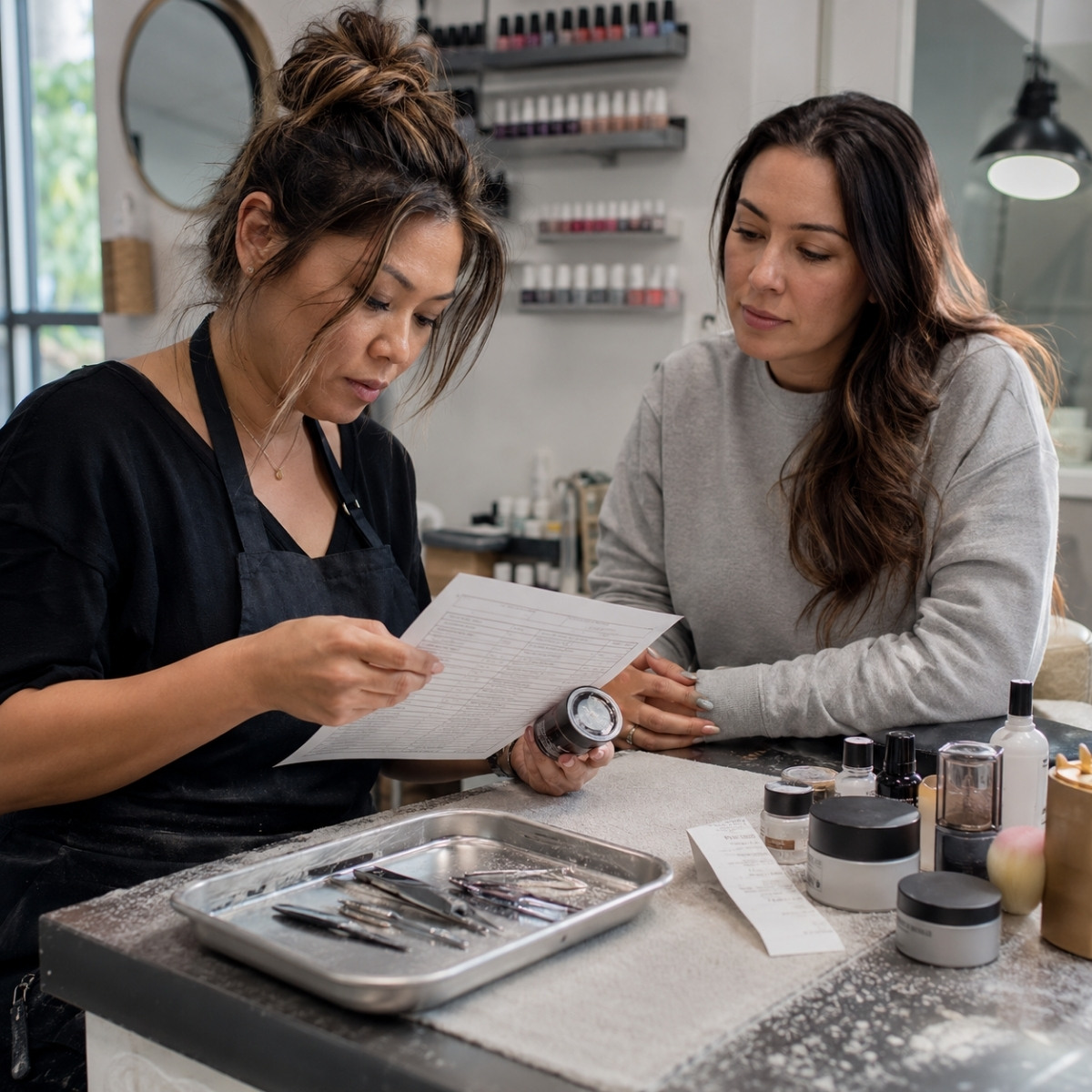
As nail technicians gain experience, they may eventually deal with dissatisfied clients, difficult business relationships, or behavior within the industry that appears unsafe or unlicensed. Knowing which situations belong within ordinary salon communication and which may require formal reporting is an important professional distinction.
Clients sometimes leave one technician or salon because of sanitation concerns, unexpected charges, communication problems, or disappointing services. Understanding how these situations arise can help professionals create policies that make pricing, booking, repairs, cancellations, and service expectations easier to understand. Publishing common nail technician questions and answers can also give potential clients useful information before they book.
Client retention also depends heavily on confidence in cleanliness and service safety. Teaching clients about appropriate nail salon hygiene and professional aftercare can demonstrate how cross-contamination risks are managed during appointments while giving clients practical guidance for caring for their nails afterward.
Nail professionals should also know where to report suspected licensing or safety violations. Reports to a state cosmetology board should involve matters that actually fall within that board's authority, such as possible unlicensed practice or violations of professional licensing and sanitation requirements. In Georgia, the State Board of Cosmetology and Barbers complaint process accepts written complaints involving suspected licensing violations and unlicensed activity. The Board also states that typical contractual and fee disputes generally do not fall within its jurisdiction, meaning that a disagreement about a refund or service price does not automatically constitute a licensing violation.
Methyl Methacrylate, commonly abbreviated MMA, is another regulatory issue nail technicians should understand carefully. MMA should not be described as universally prohibited under federal cosmetic law. The U.S. Food and Drug Administration states that there is no federal regulation specifically prohibiting methyl methacrylate monomer in cosmetic products. After receiving injury complaints associated with artificial-nail products containing 100% MMA monomer during the early 1970s, however, FDA pursued actions that included seizures, recalls, and court proceedings. Individual states may impose their own restrictions or prohibitions on MMA in professional nail services.
The Arizona Barbering and Cosmetology Board warns that MMA can cost approximately one-third of the price of other acrylic nail products and explains that Ethyl Methacrylate, or EMA, is an alternative monomer commonly used in artificial nail products. The Board also notes that MMA enhancements can become exceptionally hard and difficult to file or remove. Technicians should not attempt to identify MMA solely from salon pricing or assumptions about a particular business. A safer professional approach is to use traceable professional products, retain relevant product information, understand the restrictions in the state where services are performed, and report suspected regulatory violations through the appropriate agency.
Common Questions About Consultation Forms and Salon Policies
How long do nail technicians need to retain client consultation records? No single nationwide retention period applies to every nail salon or independent technician. Review applicable state requirements, the conditions of your professional liability insurance, and your own business record-retention procedures. Health and consultation information should be stored securely for whichever period applies and handled consistently across clients.
Can consultation paperwork be different for gel, extensions, and pedicure services? Yes. A general intake form can collect baseline information about allergies, health considerations, and previous reactions, while separate sections can address risks or information relevant to specific services such as hard gel, enhancements, or pedicures. Product information and significant changes to the client's history can also be documented as services continue.
What happens when a client will not complete the consultation form? Explain that the consultation process is part of the salon's approach to service planning and client safety. When a completed form is required by salon policy, applicable regulations, or insurance conditions, the service should not proceed without it. Even if state law does not specifically require a written intake form, a technician should postpone or refuse a service when there is insufficient information to determine whether the procedure can be performed appropriately within the licensed scope of practice.
Turn Professional Knowledge Into a Stronger Nail Career
Successful nail professionals need more than polished technical skills. Understanding professional boundaries, maintaining safe practices, communicating clearly with clients, and developing sound business habits are equally important parts of working in the industry.
At USA Beauty & Barber Academy, students develop practical skills and professional knowledge designed to help prepare them for real salon environments. Whether your goal is to work in an established salon, build your own nail business, or continue developing specialized skills, strong foundational training can help you enter the profession with greater confidence and preparation.
Explore the Enrollment information and complete the contact form to connect with the admissions team and learn more about beginning your training.