What Jobs Can You Do With an Esthetician License? Exploring Every Path from Spas to Medical Offices

I remember the feeling of finally finishing my hours and realizing that the piece of paper in my hand was the key to a whole new world. If you are at that same crossroads, you are probably asking yourself what you can do with an esthetician license once the celebration is over. It is a smart question to ask because the industry is evolving fast. In 2026, skincare has moved far beyond just “beauty”—it is now deeply rooted in wellness and long-term skin health. While it is a creative field, the most successful people I know are those who treat it like a science and respect the legal boundaries of their craft. If you are still in the early stages of planning, reading through a guide on the path to licensure can help you turn that initial spark into a real business plan.

The Big Picture: Career Growth and Opportunities

  • A Growing Field: According to the U.S. Bureau of Labor Statistics, the demand for skincare specialists is expected to grow by 7% between 2024 and 2034. That is significantly higher than the average for most other professions.
  • Diverse Environments: I love that this career doesn’t tie you to a single type of room. You can find jobs with an esthetician license in luxury resorts, clinical medical offices, high-end retail, or even your own studio.
  • Financial Potential: The BLS reported a median wage of $19.98 per hour in 2024. Roles in physician offices reported a higher median wage of $23.40 per hour, and the highest performers, specialists, and business owners may earn more over time. However, the $70,000 to $100,000 range should be treated as a possible upper-tier outcome, not a guaranteed or typical salary.
  • The Entrepreneurial Path: A huge number of people in this field are self-employed. However, if you are thinking about starting an esthetics business from home, you have to be careful about local zoning, insurance, sanitation, business licensing, facility rules, and state board requirements.
  • Professional Bridges: There is a growing trend of RNs and cosmetologists adding aesthetics training to their skill set, though these paths are always governed by specific state medical and licensing regulations.

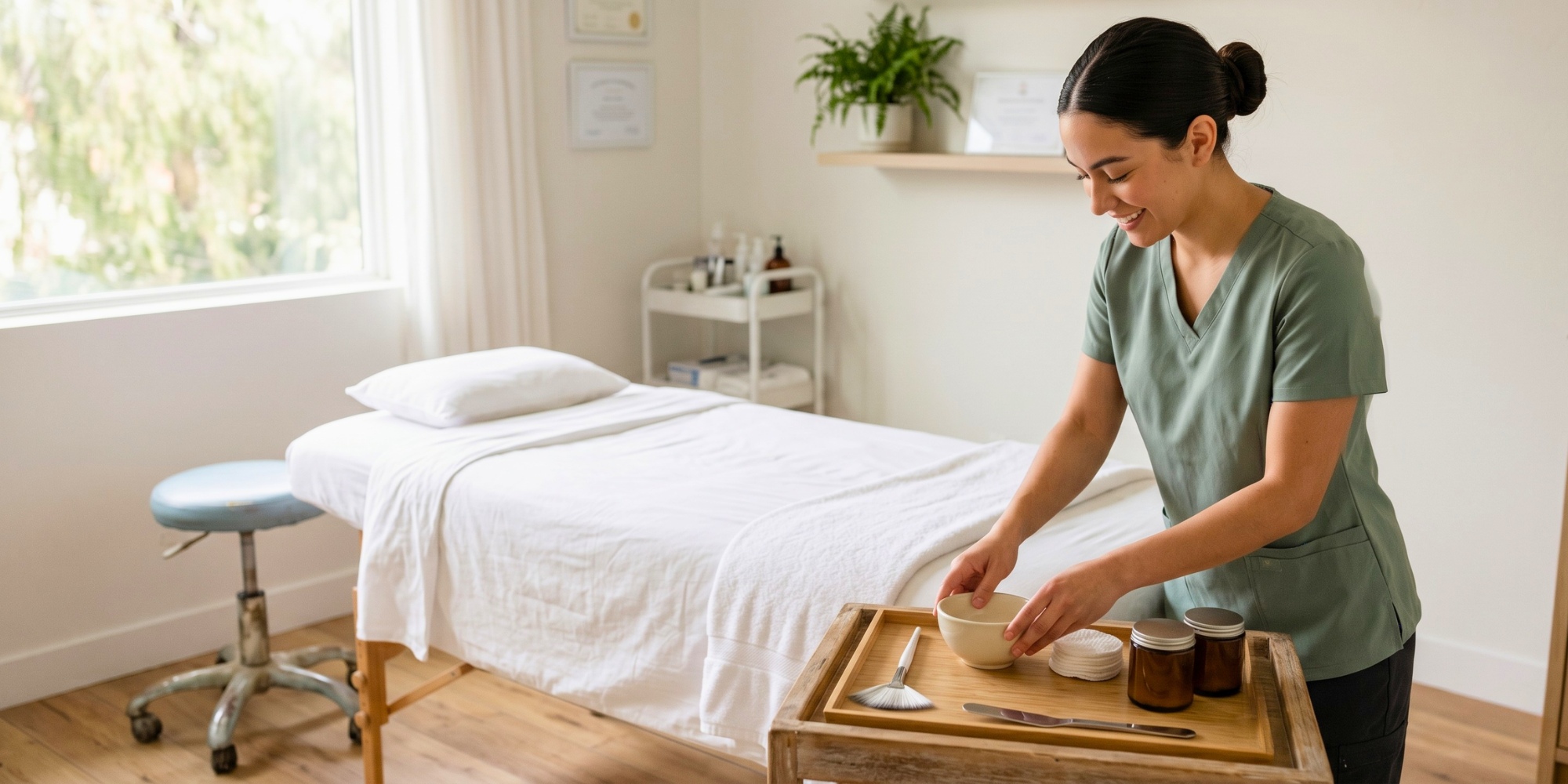
A smiling esthetician holding her graduation certificate while standing at a clean treatment station in a professional spa setting.

Knowing Your Limits: What Does an Esthetician Do Daily?

To really understand your value, you have to understand your scope of practice. I believe a great esthetician is more than just a service provider; you are a specialist who understands skin chemistry and safety. The BLS notes that skincare specialists are responsible for things like evaluating skin conditions, disinfecting tools, performing facials, removing unwanted hair using approved methods, recommending products, and referring serious skin concerns to another specialist such as a dermatologist.

If you are working in Georgia, these rules are very specific. Georgia law includes things like facial massage, brow shaping, lash services, waxing, threading, cleansing, beautifying, and cosmetic skin care in our scope, but it explicitly states that esthetics does not include diagnosing or treating dermatological conditions, medical aesthetics, or the use of lasers. I always tell my students that knowing when to refer a client to a dermatologist or medical provider is just as important as knowing how to do a perfect extraction. If you want to see what that training actually looks like, I’ve broken down what to expect during your time in school so you can visualize the day-to-day experience.

The Shift Toward Bio-Aesthetics

The market is moving toward what I call “Bio-Aesthetics.” This is a more comprehensive way of looking at skin health that focuses on supporting the lipid barrier rather than just doing a quick 60-minute facial. It is not a separate legal license category, but it is a useful way to describe the direction of the market. We are often the bridge between basic retail products and medical-adjacent skin environments. By staying within our legal scope while providing expert barrier support, we help clients work toward long-term results that they can’t get at home.

A Pivot Toward Longevity

According to McKinsey’s wellness research, up to 60% of consumers across markets view healthy aging as a top or very important priority. This is great news for us because it means clients are looking for consistency and prevention, not just one-off treatments. When you build your career on trust and product knowledge, you aren’t just selling a service; you are guiding someone on a skin journey.

Where to Work: Finding Your Niche

One of the best things about this license is that you have options. Depending on your personality, you might prefer a fast-paced retail floor or a quiet, clinical office.

Interior of a professional treatment room featuring an empty massage bed, a lit magnifying lamp, a rolling cart with sanitized tools and skincare bottles, two snake plants, and a diffuser.

1. Retail and Product Experts

Places like Sephora and Ulta are often where to work after esthetician school if you love the education side of beauty. Ulta’s career page highlights salon and beauty-service opportunities, while Sephora’s careers section includes store roles where beauty advisors guide clients through products and routines. These are excellent jobs for beginners because you get to see how real people shop and what questions they actually have about their skin.

2. Clinical and Medical Settings

Working with a dermatologist or plastic surgeon is often called medical esthetics. While “medical esthetician” is usually just a job title rather than a separate license, it is a great place to learn about sequential treatment planning. A 2026 Allergan Aesthetics survey showed that 78% of beauty-involved consumers said they would feel more satisfied with their aesthetic journey if they worked with a practitioner toward an agreed long-term plan. This is exactly the kind of structured planning you may see in a medical-adjacent setting.

3. Travel and Luxury Resorts

If you have a bit of a travel bug, you might look into esthetician jobs on a cruise ship. Companies like OneSpaWorld hire wellness professionals to work at sea. It is hard work, but the global experience and resort environment can be an incredible way to jumpstart your professional life.

Talking Numbers: Esthetician Salary Realities

I get asked about the average salary for an esthetician all the time, and the truth is that it varies. While the BLS provides a solid national baseline of around $19.98 per hour, the reality is that your schedule, tips, and commissions play a huge role.

Data shows that skincare specialists in physician offices earned a median of $23.40 per hour in May 2024, while those in personal care services earned a median of $18.55 per hour. When you are looking at how much commission do estheticians make, you have to factor in your ability to rebook clients and sell retail. Industry salary guides sometimes describe experienced medical estheticians or advanced specialists as reaching the $70,000 to $100,000 range, but that should be viewed as an upper-tier possibility rather than a guaranteed salary. High performers who specialize in things like lash artistry, advanced skincare, waxing, corrective facials, or medical-adjacent support may push their yearly salary higher than the national average, depending on location, employer type, tips, commission, and client retention.

The Solo Dream: Working from Home

I know many of you are interested in going solo after esthetician school. It is a common goal, but you have to act like a business owner from day one. You can’t just set up a table in your living room and call it a day.

In Georgia, the Secretary of State makes it clear that a salon or shop license is separate from a standard business license. You also have to think about safety for things like microneedling. The FDA has guidance explaining when a microneedling product is considered a medical device, and federal regulations classify microneedling devices for aesthetic use as Class II devices. Always check your state scope, supervision requirements, device status, sanitation protocols, and insurance coverage before you offer advanced services in a home-based setting.

A cozy home based esthetics room with a cream treatment bed, a white supply cart holding skincare products, and soft light from a window.

Landing Your First Job

When you are looking for how to get a job as an esthetician with no experience, your resume should focus on your clinic hours and your soft skills. Most hiring managers will ask you to perform a “practical interview” where they watch you set up a station and consult with a client. They want to see your sanitation discipline and your ability to stay calm under pressure. Be ready to explain when you would stop a service to refer a client to a doctor—it shows you are a reliable professional.

Building Your Legacy at USA Beauty & Barber Academy

The school you choose is the foundation of everything that comes next. You want a place that treats you like a professional from the very first day. At USA Beauty & Barber Academy, I’ve seen how our focus on practical, real-world skills helps students bridge the gap between the classroom and a professional service environment. We focus on the sanitation standards, client communication, and safety protocols that will make you stand out to employers.

If you are ready to take that next step, I encourage you to check out our Enrollment page to see how we can help you reach your goals. You can also fill out the contact form we have at the end of this article to get in touch with our team directly. We are here to help you figure out which path in this amazing industry is right for you.

Common Questions About the Career

How hard is it to get a job after graduation?
The job outlook is actually strong. The BLS projects employment for skincare specialists to grow 7% from 2024 to 2034, which is much faster than the average for all occupations. Because of that growth, there are usually opportunities in spas, salons, retailers, and specialty studios for those who are professional and ready to work. For more on the specifics of the license, you can check out our guide on state requirements and exam prep.

Does an esthetician need a degree for medical work?
You generally don’t need a four-year college degree, but you absolutely need your state license. While “medical esthetician” is a common term, it is usually a specialty designation based on where you work, not a separate license category. A standard esthetician license does not automatically allow medical procedures, injectables, diagnosis, treatment of disease, lasers, or services outside your state’s scope.

What industry do we fall under?
We are usually grouped under “Human Services” or “Personal Care.” Newer career-cluster language may place related work under Healthcare & Human Services, which reflects the overlap between personal care, wellness, and client support. However, esthetics is not automatically a healthcare license, and medical services remain controlled by state scope-of-practice rules.

How to Get Your Esthetician License: State Requirements and Exam Prep

Stepping into the professional skincare world requires more than just mastering facials and product knowledge. I find that navigating the legal side of the beauty industry often confuses newcomers because the rules change dramatically depending on where you live. Before you take on clients, you have to complete state-approved schooling, pass rigorous exams, and secure your credentials. Let me walk you through exactly what to expect regarding training, testing, and legal practice without the overwhelming jargon.

Key Takeaways

  • Hours Vary Sharply by State: Required training can be as low as 220 hours in Florida for a Facial Specialist registration and as high as 1,000 hours in Alabama and Georgia.
  • Online Theory Exists, But Hands-On Training Still Matters: Some schools offer theory online, but you still need in-person practical training at an approved program to qualify for your credentials.
  • NIC Exam Prep Still Revolves Around Safety: The standard theory exam contains 110 items, with 100 scored, and the NIC notes that blood exposure procedures are being updated beginning March 2026.
  • Portability Is Improving, But It Is Not Automatic: Many states allow endorsement pathways, but the Cosmetology Licensure Compact is not yet active and currently applies to cosmetologists, not as a live shortcut for skincare specialists.

An adult esthetics student organizes white towels and cleanser bottles on a stainless steel cart in a bright classroom.

What Does It Actually Take to Become a Licensed Professional?

Required Training Hours and Why They Vary

You cannot legally perform professional skin care services without official schooling. When you look at the esthetician license requirements by state, the first thing you will notice is the huge gap in training hours. Boards define training standards and scope of practice differently.

You must carefully review the esthetician hour requirements by state before enrolling anywhere. Here is a look at verified current requirements from several major locations:

  • Florida: 220 hours for a Facial Specialist registration, which is the local term for the credential.
  • New York: 600 hours plus both the written and practical examinations.
  • Arizona: 600 hours for the standard credential.
  • Texas: 750 hours are needed to test.
  • Alabama: 1,000 hours of training.
  • Georgia: 1,000 hours of schooling.

When figuring out how many hours you need for esthetician training, keep in mind that this count is just the legal minimum for testing.

The Truth About Distance Learning and Tuition

Juggling work and school makes people wonder if they can get an esthetician license online. Some programs let you complete the theory portion digitally. However, the path to a license still centers on hands-on practice and board-required testing. While digital coursework helps, you cannot become a licensed esthetician online entirely.

According to recent distance learning standards, theory classes might be remote. But the physical training is what truly prepares you for clients.

Tuition usually ranges from $4,000 to $12,000. If you are mapping out your long-term goals and want a broader look at the complete guide to esthetician school, license, and cost, view tuition as the baseline investment for your future business.

Passing the State Board: Practice Tests and Exam Preparation

An open notebook with blue pen notes sits on a wooden desk next to a laptop, white gloves, and a cup of tea.

Surviving the Written Theory Exam

Your written test focuses heavily on safety, sanitation, infection control, and scientific fundamentals. You will need to understand microbiology, skin structure, and local laws.

Students always ask how many questions are on the esthetician state board exam. If your state uses the NIC theory format, the current bulletin states that the exam contains 110 items, with 100 weighted toward your final score. Because testing structures vary by location, always confirm the current bulletin for your specific board.

Relying on a frequently updated esthetician written exam practice test is essential. Taking the time for consistent esthetics theory exam practice helps you lock down the infection control details.

The Hands-On Practical Exam

The practical exam for esthetics is where the pressure hits. Evaluators want to see safe procedures, proper organization, and strict sanitation discipline.

Understanding what esthetician school is like day-to-day helps you build the muscle memory needed to perform these steps smoothly.

As detailed in the NIC exam resources, blood exposure procedures are being updated beginning in March 2026. Infection control remains central to passing, so drill these procedures constantly. The passing score for the esthetics exam depends entirely on your state and testing provider, so check your candidate bulletin for the exact numbers.

Submitting Your Application and Background Checks

How to Apply After Passing Your Exams

Passing the tests does not mean you can start working right away. You still need to finish the final application process.

For example, New York lets you apply and schedule exams through its online system, while Florida handles applications through the DBPR portal. You will need to gather your transcripts, proof of training, and ID. If you need to know how to apply for an esthetician license after passing the exam, always go directly to your official state portal.

Navigating Criminal History and Background Checks

Many prospective professionals worry about past records and wonder if they can get an esthetician license with a felony.

The answer depends on the state. For instance, Texas reviews criminal history on a case-by-case basis and offers a criminal history evaluation process so you can request a review before you even apply. Be honest on your application, as boards review the nature of the offense and the time passed to see if it impacts public safety.

Moving States and Building an Independent Career

A serene skincare treatment room features a white spa bed, a supply cart with facial tools, and neutral wall art under soft afternoon light.

Understanding Reciprocity, Endorsement, and Transfers

If you plan to relocate, you have to understand how to transfer an esthetician license to another state. Most places handle this through licensure by endorsement, meaning they review your current training hours and exam record rather than making you start over.

For example, New York allows endorsement for applicants licensed elsewhere. Virginia and its licensing requirement summary also show that out-of-state applicants may qualify depending on their experience. Transfer rules are real but not identical everywhere.

Also, keep in mind that the Cosmetology Licensure Compact has reached the legislative threshold but is not yet active for licensees, and it is primarily designed for cosmetologists anyway.

Renewing Your Credentials and Going Solo

Maintaining your legal status means keeping up with your esthetician license renewal cycle. For example, Florida renews facial specialist registrations every other year. If your legal details change, use formal update procedures like California’s name change process to keep everything current.

Securing your credentials gives you real career flexibility. The Bureau of Labor Statistics skincare specialist profile points out that while many work in salons and spas, plenty are self-employed.

Ready to Start Your Skincare Journey?

You now have a solid grasp on how to get an esthetician license and navigate the legal requirements. Finding the right education partner is your next big move.

At USA Beauty & Barber Academy, I focus on giving you the real-world skills and confidence needed to build a profitable career in this space. Our training prepares you for everything from clinic sanitation to advanced client communication.

If you are ready to explore your options and take the next step, find out more in Enrollment.

Please fill out the contact form below to connect with our team so we can help you map out your future in the beauty industry.

Frequently Asked Questions

Do you need a license to be an esthetician?
Yes, you generally need the appropriate state credential to perform professional services legally. Titles vary, like how Florida uses a Facial Specialist registration.

How many questions are on the written exam?
If your area uses the standard NIC theory format, the exam contains 110 items, with 100 scored. Formats vary, so check your local bulletin.

How do I look up where to take my test?
Your state board handles scheduling. New York manages exams through its own system, while Georgia directs candidates to PSI.

How do I find specific requirements for my state?
Always go directly to the official regulatory board. For instance, if you want an esthetics license in NY, check the New York Department of State. If you are transferring into Virginia, review the Virginia Board for Barbers and Cosmetology.

What Is Esthetician School Like? A Real Look at Training and Prep

Transitioning from a skincare enthusiast to a licensed professional is a significant life shift. Moving into a treatment room is a different world compared to your bathroom mirror. This path turns a hobby into a career that requires clinical knowledge, high sanitation standards, and hands-on expertise.

This guide walks you through what the daily reality of a modern esthetics education looks like so you can feel confident before you start.

Key Takeaways

  • Market Demand: The Bureau of Labor Statistics expects jobs for skincare specialists to grow 7% between 2024 and 2034.
  • Scientific Core: Training focuses heavily on skin barrier health, product ingredients, and keeping clients safe through sanitation.
  • Regulatory Updates: Regulations like MoCRA have made safety and clear labeling even more important across the beauty industry.
  • Program Length: Depending on where you live, training can range from 220 hours to 1,000 hours.
  • Earning Potential: Median wages sit around $19.98 per hour, though specialized roles often pay much more.

What Is Esthetician School Like in Reality?

An esthetics student in grey scrubs and blue gloves folds a white towel on a treatment chair while a supervisor observes in a professional training room.

Many people ask what esthetician school is like before they sign up. It often feels more like working in a professional clinic than sitting in a lecture hall. A good program combines theory with a lot of repetition. You might spend your morning studying skin anatomy and your afternoon practicing in a supervised student clinic.

During your esthetician training, you learn how to handle consultations, identify skin issues within your scope, and perform services safely. This includes learning the rhythm of a professional workspace, from setting up your room to documenting treatment notes. If you want to dive deeper into the basics of starting this career, you should check out this guide on how to become an esthetician.

The Shift Toward Quick Services

The U.S. Bureau of Labor Statistics reports that the industry is growing quickly. This growth is partly because more people want fast, affordable treatments like mini-facials. Understanding what an esthetician does on a daily basis helps show that efficiency and safety are just as important as the actual skin treatment.

The Curriculum: From Biology to Technique

Some students feel a bit nervous about the science side of esthetics, but this foundation is what makes you a professional. You need to understand the why behind every treatment to keep your clients safe.

An open skincare textbook with anatomy diagrams sits on a classroom desk next to a facial brush, cotton rounds, and protective gloves.

Understanding the Science

One of the first things you learn is that pH matters because it affects the health of the skin barrier. You will also spend time learning why knowledge of skin conditions is valuable for an esthetician. This helps you recognize when a client has a concern that needs a doctor’s attention rather than a facial.

Developing Your Practical Skills

Your esthetician classes can cover everything from manual facial techniques to hair removal and makeup. You will learn specific facial steps so your results are safe and consistent. Extractions are often one of the most useful parts of training because learning how to clear pores safely helps prevent unnecessary skin damage.

Whether you are attending esthetician school for facial work, lash services, or waxing, you will learn to use professional tools precisely. You also get to know different skincare lines and the types of products estheticians use in real treatment settings.

Hours, States, and Schedules

The length of your program depends on your state’s rules. This is the biggest logistical factor in how quickly you can start working.

  • Texas: You will need to complete 750 hours for an esthetician license.
  • Florida: Requires 220 hours for a facial specialty or 400 hours for a full specialist.
  • Georgia: Requires 1,000 hours of training.
  • Arizona: Usually requires 600 hours under current standards.

If you are wondering how long it takes to complete esthetician school, a full-time program often takes a few months. For those with busy schedules, looking for weekend or night classes can make the transition much easier. While you can sometimes handle the theory portion from home, the practical work always happens in person.

Safety and Compliance in 2026

The Modernization of Cosmetics Regulation Act (MoCRA) has changed how the beauty industry looks at safety. As a student, you focus on following state board rules, recognizing reaction signs, and documenting adverse reactions appropriately. This level of responsibility is what separates a professional from an amateur.

Planning Your Education Costs

Tuition prices can vary based on your location and the supplies included in your kit. It is smart to check whether your school offers financial aid options, payment plans, or other funding support.

When you look at the price of esthetician school, consider the value of the career you are building. Some people look for an esthetician school under 10k, but you should also weigh the quality of the training and the job placement support the school offers.

Preparation for the State Board Exam

A wooden table holds a stainless steel tray with facial tools, a stack of white towels, a digital timer, and a handwritten checklist in a beauty school classroom.

Before your first day, make sure you know the requirements to get into esthetician school in your state. Most places require you to be a certain age and have a high school education. If you are wondering whether you can attend esthetician school with a GED or without a high school diploma, the answer usually depends on your specific state board.

Once you start, you will likely receive an esthetician kit for school. This usually includes items like facial brushes, extraction tools, textbooks, and other classroom supplies. You may also use beginner esthetics textbooks and workbooks during your training.

The State Board: Your Final Hurdle

The final step is the state board. Most students spend their last weeks reviewing safety rules, service procedures, infection control, and state-law requirements. Knowing what is on the esthetician state board exam is vital for success.

The Bureau of Labor Statistics notes that median pay is around $19.98 per hour, but Beauty Insurance Plus points out that specialized roles can earn much more. Your license is the key that opens these doors.

Take the Next Step at USA Beauty Academy

Finding a school that fits your goals is more important than just hitting an hour requirement. You want a place that prepares you for the daily rhythm of a real spa. Having the right mentors and a supportive environment can make a major difference in building professional confidence.

If you are ready to learn more about starting your journey, you can find details in the school’s Enrollment section. You can also explore the esthetics program and learn more about training at USA Beauty Academy.

Please fill out the contact form at the bottom of this article to get in touch with us. We can help you schedule a tour or answer any questions you have about upcoming start dates.

FAQ: Common Questions About Esthetics

Is esthetician school hard to get into? Admission is generally straightforward. You typically just need to meet the age and education requirements for your state.

Can I do esthetician school online? You might find theory offered in an online or hybrid format, but you must complete your practical training hours in person to get licensed.

Is there an esthetician school for nurses? Yes. Many nurses choose to attend an esthetician program to move into skincare-focused or medically adjacent beauty settings, though their allowed services depend on state regulations.

What is an esthetician trade school vs a community college? A trade school usually focuses exclusively on beauty and can be a faster route, while a community college might offer a broader academic experience alongside the program.

Do I need a license for a home-based studio? In almost every state, you must have a license to perform skin services for money, even at home. You also have to follow local zoning and sanitation laws.

How To Become An Esthetician: Your Guide To School, License, And Cost

Starting a career in skincare is an exciting move that combines your love for beauty with real scientific skill. I know that choosing a path can feel overwhelming, especially when you are trying to figure out the best way to enter the workforce. Transitioning into a professional role means you need to look past the products and understand the chemistry of skin health.

I want to help you figure out how to become an esthetician by breaking down the school process, license requirements, and the actual cost. This guide is here to act as your mentor while you navigate your education for an esthetician and prepare for your new career.

Important Career Highlights

  • Speed to Career: Most students can finish their training for an esthetician in 4 to 12 months, which is much faster than a four-year degree.
  • Job Growth: The Bureau of Labor Statistics projects a 7% growth rate for skincare specialists through 2034.
  • Salary Potential: While a typical esthetician salary is around $45,374, Master Estheticians can earn over $66,900.
  • New Regulations: The Modernization of Cosmetics Regulation Act (MoCRA) has updated the standards for safety and professional accountability as of early 2026.

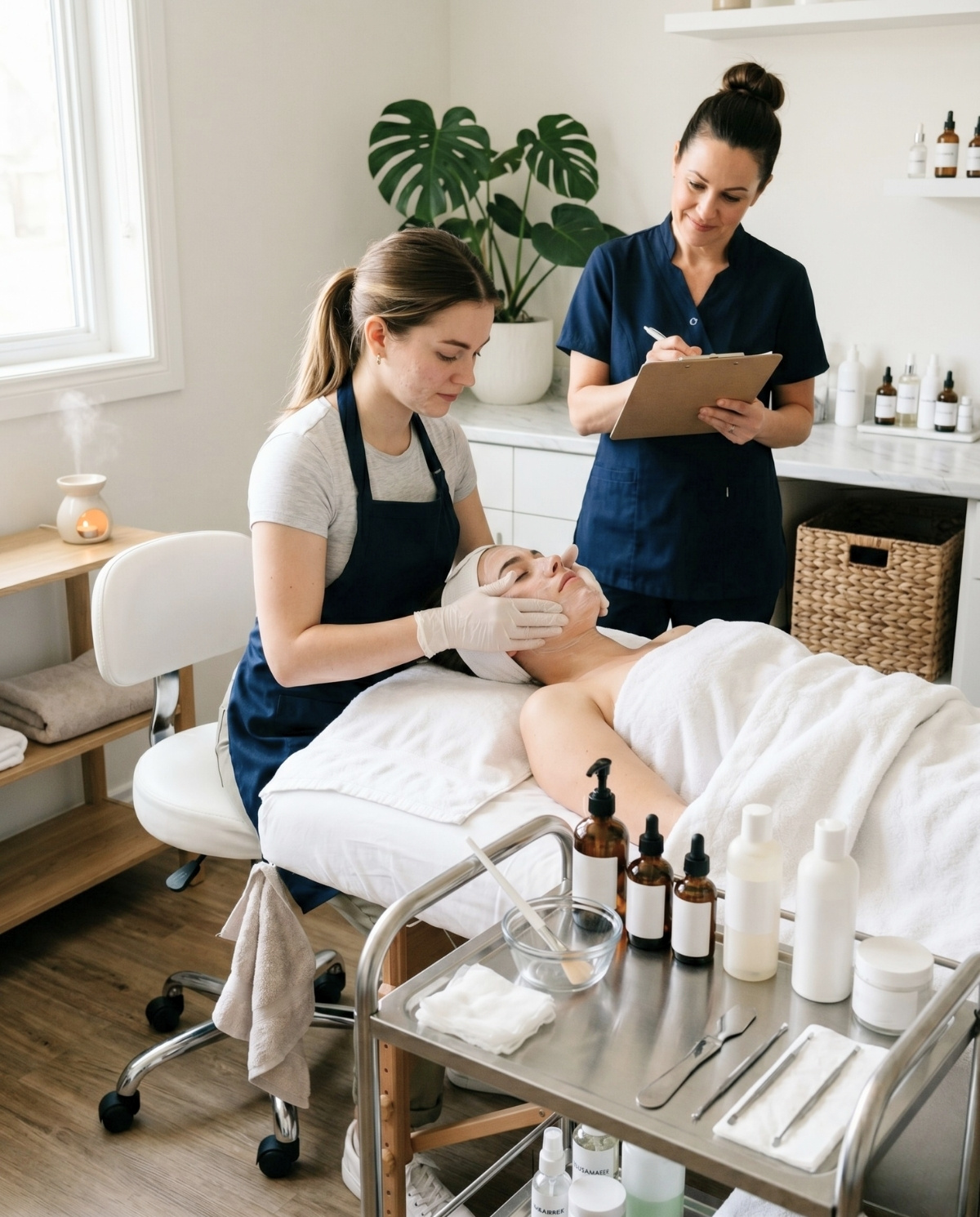
An esthetics student practices a facial treatment on a peer while an instructor observes in a bright beauty academy.

The Modern Skin Professional

The beauty industry has changed recently, moving toward what Mintel analysts call Metabolic Beauty. This shift means your future clients will expect you to understand how their internal health affects their skin. Your primary goal as a professional is to protect the lipid barrier, which is the skin’s natural shield against bacteria and moisture loss.

I have seen that the most successful professionals use clinical-grade exfoliation and advanced technology to help the skin repair itself. Modern clients are moving away from basic products and looking for bio-intelligent actives that react to the skin in real-time. Finding an esthetician school that focuses on this biotechnology will put you ahead of the competition.

Requirements to be an Esthetician

Before you look for an esthetician program, you need to meet a few basic requirements. Most states require you to be at least 16 or 17 years old and have a high school diploma. If you are wondering if you can be an esthetician with a GED, the answer is yes. Almost all state boards accept a GED for enrollment.

The path for how to become an esthetician after high school is very direct:

  1. Find a reputable esthetician school.
  2. Complete the training to be an esthetician required by your state.
  3. Pass your state board exams.
  4. Apply for your license.

In-Person Training vs. Online Classes

When you search for the quickest way to become an esthetician, you might see ads for an online esthetician course. I think it is important to be realistic about this. You can learn the theory through online classes for an esthetician, but you cannot learn the physical skill of a chemical peel through a screen.

Most states require hundreds of hands-on hours in a student clinic. If a program says you can graduate without in-person training, they are likely not accredited. This would prevent you from getting a license for an esthetician, which makes the online-only route a waste of time.

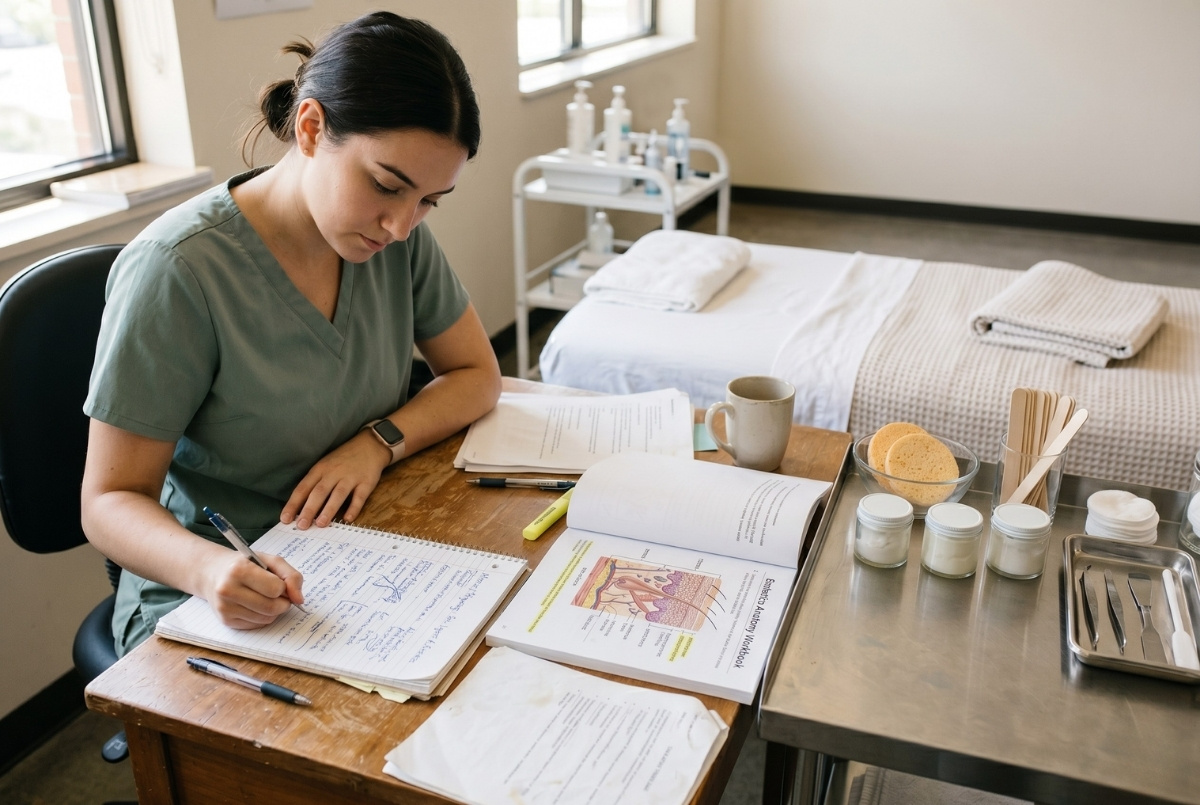
An esthetics student writes notes at a desk featuring a skin anatomy workbook and facial treatment tools with a spa bed in the background.

How Long is School for an Esthetician?

If you want to know how many years of school for an esthetician you need, the answer is usually measured in months. While the Bureau of Labor Statistics explains that skincare specialists must complete a state-approved program, your local state board decides the specific hour requirements.

Most states fall into a range of 600 to 1,000 hours. Here is how that usually looks:

  • Full-time: Many students finish in 4 to 6 months.
  • Part-time: These programs often take 9 to 12 months.
  • State variations: Florida may only require 260 hours for a facial specialty, while states like Georgia require 1,000 hours.

This fast schedule allows you to transition into your career quickly. You spend less time in a classroom and more time in a student clinic, which helps you build the confidence needed to be salon-ready.

The Cost to Become an Esthetician

Your education is a serious investment. You should expect the esthetician school cost to range from $3,000 at a community college to over $15,000 at a specialized private academy. I know this can be a hurdle, but there are several ways to pay for school.

You can use several financial tools:

  • FAFSA for esthetician school: You can apply for federal aid if the school participates in Title IV programs.
  • Grants: Some institutions offer money that does not need to be repaid.
  • VA Benefits: If you or a family member served, the VA pays for esthetician school at many qualifying locations.

When calculating your budget, remember to include kit fees. These cover the professional tools you will use during training and take with you to your first job.

Getting Your Esthetician License

Once you finish your esthetician course, you have one final step. This is the official state recognition of your skills. The Modernization of Cosmetics Regulation Act (MoCRA) has made professional standards more rigorous recently.

Licensing exams vary by state. Many states require a written exam, and some also require a practical exam.

  • Theory Exam: A written test covering skin biology, sanitation, safety, and state law.
  • Practical Exam: In states that still require it, this is a hands-on test where you perform services on a mannequin or model to show your technique is safe.

While California has removed the practical portion to simplify things, Georgia still maintains high testing standards. You will also need to pay for your application and testing fees, which usually total between $100 and $250.

Career Opportunities and Salaries

So, what can you do with an esthetician license? The options are broader than most people realize. You can work in:

  • Medical Spas: Performing advanced treatments alongside medical professionals where allowed by state law.
  • Luxury Resorts: Working in high-end environments.
  • Self-Employment: Managing your own clients and specializing in niche services.

Data from ZipRecruiter in early 2026 shows the average salary for an esthetician is around $45,374. However, becoming a Master Esthetician with advanced training can increase your yearly salary to over $66,900. Your pay will grow as you master high-ticket services and build a client base.

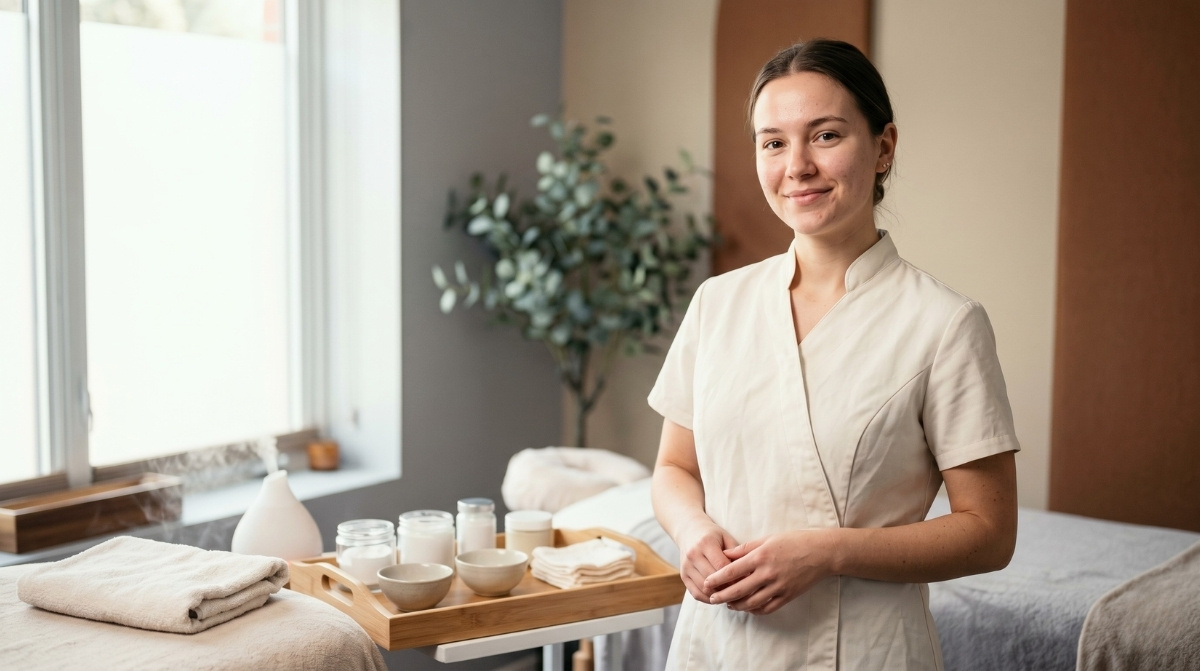
Confident newly trained esthetician standing in a clean spa treatment room beside a treatment bed and tray with skincare bowls, jars, folded towels, cotton cloths, and a diffuser.

Start Your Journey at USA Beauty Academy

I believe that where you learn is just as important as what you learn. At USA Beauty Academy, we focus on making sure every graduate is salon-ready. We provide a professional environment where you can build practical skills and prepare for a career in the beauty industry.

Our team is dedicated to helping you navigate the requirements for an esthetician and launch your career successfully. You can find more details on our Enrollment page. If you have questions about how to get started, please fill out the contact form below. I look forward to helping you reach your goals in the beauty industry.

FAQ: Common Questions

Is it hard to get a job as an esthetician? The demand for experts is high. Employers look for graduates who understand modern safety and have strong hands-on skills. Choosing a reputable school makes the job hunt much easier.

Can you be an esthetician without going to school? No. Every state requires you to finish an approved number of hours from a licensed school before you can take the exam.

Do you need a degree to be an esthetician? You do not need a four-year college degree. You only need a diploma or GED and the completion of a state-approved esthetician program.

Why Professional Nail Salon Hygiene and Aftercare Advice for Nail Technology are Game Changers in 2026

The beauty landscape is shifting quickly in 2026, and a great manicure is now defined by more than just a pretty finish. People are becoming much more interested in the science behind their services, and safety has truly become the new standard for luxury. If you are just starting your path, I suggest looking into our professional nail technician guide to understand the basics of the trade. Sharing expert aftercare advice for nail technology is one of the best ways to prove you are a reliable consultant who understands nail health.

Key Takeaways for Future Professionals

  • Microbiology Knowledge: Success starts with knowing how to stop infections before they begin. Even high-end salons can face safety issues if they ignore basic biology.
  • Equipment Limits: Standard salon lamps are not medical devices. You must understand exactly what your tools can and cannot achieve for a client.
  • Advanced Credentials: Earning a medical nail technician certificate allows you to safely help high-risk clients who need specialized care.
  • Smart Aftercare: The industry is moving toward healing delivery systems, like hydrogel and matrix support, instead of just covering up imperfections.

The Invisible Side of the Desk: Mastering Salon Biology

In any high-quality training program, the first lesson should focus on bio-burden. This term refers to the number of microorganisms living on tools or surfaces. To keep your station safe, every professional must be able to list the four types of organisms that are pertinent to nail technology: bacteria, fungi, viruses, and parasites.

Understanding these categories helps you navigate a busy salon safely. Bacteria can settle into a tiny skin tear very quickly, while fungi often thrive in moisture trapped under a lifting acrylic nail. Proper infection control requires mechanical debridement, which is the act of physically scrubbing away the sticky layer of bacteria before you use any disinfectant. If you skip that step, your chemicals might not reach the germs hiding underneath. According to the 2026 Sunset Review Report by the California Board of Barbering and Cosmetology, poor disinfection remains a major cause of infections even in upscale environments. Maintaining high safety standards is your best competitive advantage in today’s market.

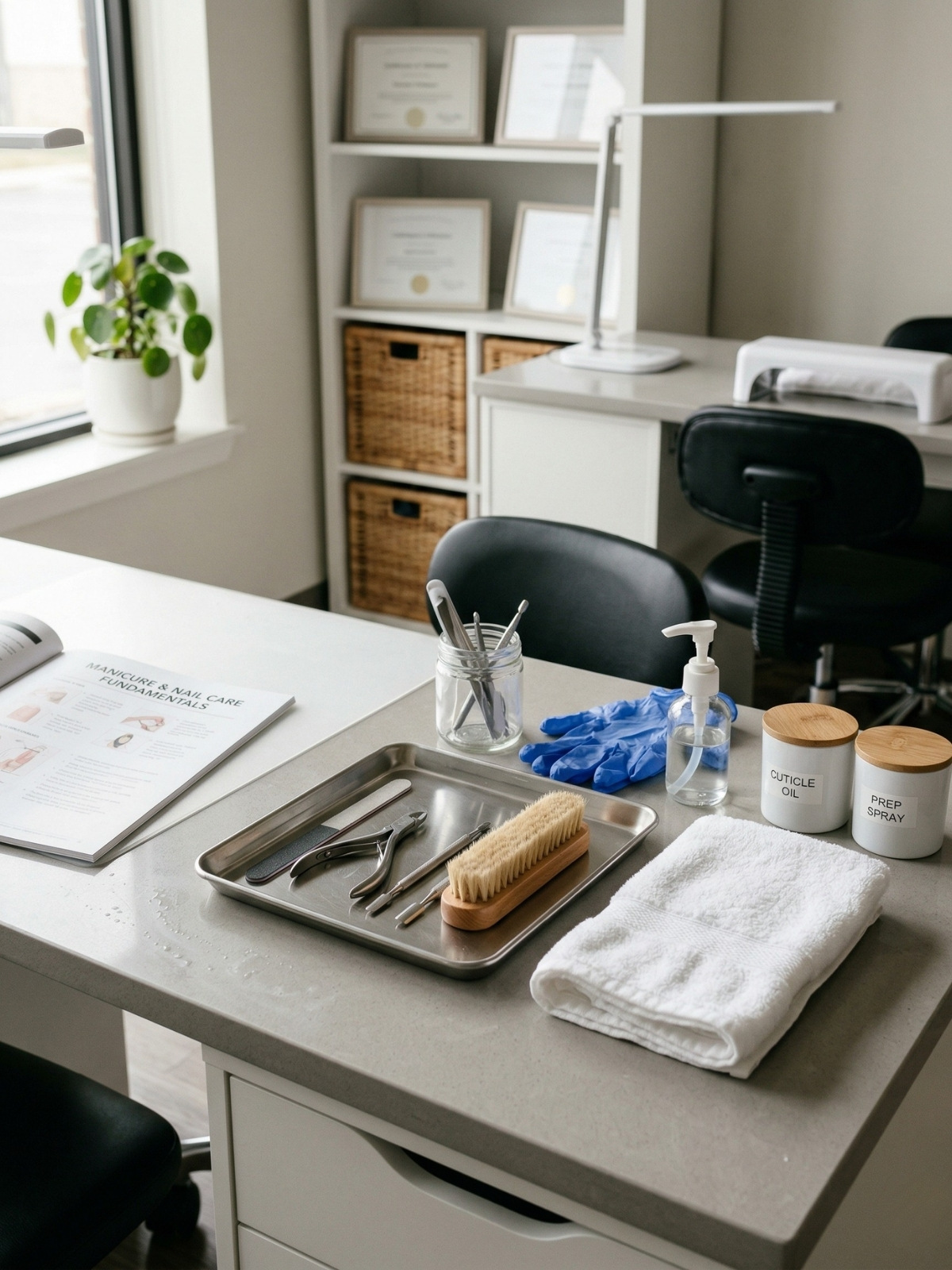
A professional manicure workstation with tools, a nail brush, cuticle oil and prep spray canisters, blue gloves, a towel, and a nail care manual in a clean studio.

The Science of High-Tech Anti-Fungal Tools

Clients are very health-conscious now, and they often ask about the latest medical gadgets. One of the most common questions is: Does UV technology kill nail fungus?

Understanding UV Light in the Salon

You have to distinguish between sanitizing a tool and actually treating a medical condition. While there is UV technology that fights nail fungus in clinical settings, it uses specific wavelengths and power levels that a standard curing lamp does not have. Putting gel polish over an active infection can actually make the problem worse by trapping moisture and blocking out oxygen. The CT.gov Infection Control Guidelines state that UV boxes are only for dry storage and are not a valid way to sterilize tools.

The Reality of Lasers

Clients also ask many questions about laser technology for nail fungus. Based on the Medical Policy SURG.00138 from Healthy Blue Louisiana, lasers are usually considered an adjunct therapy. This means they help other treatments work better by using heat to slow down fungal activity, but they rarely solve the problem entirely on their own. Understanding whether laser technology works for nail fungus in a specific case helps you manage expectations and tell clients when they should see a doctor.

Advanced Aftercare: Protecting the Investment

The weeks between salon visits are when most nail damage occurs. If a client does not protect the natural lipid barrier in their skin and nails, your work will not last very long.

Next-Generation Solutions

Traditional drops often have a hard time soaking through the thick layers of the nail. To solve this, fungal nail patches with hydrogel technology can be a helpful option. These patches keep the nail hydrated, which makes the keratin fibers swell and allows the protective ingredients to soak in much better than products that simply evaporate.

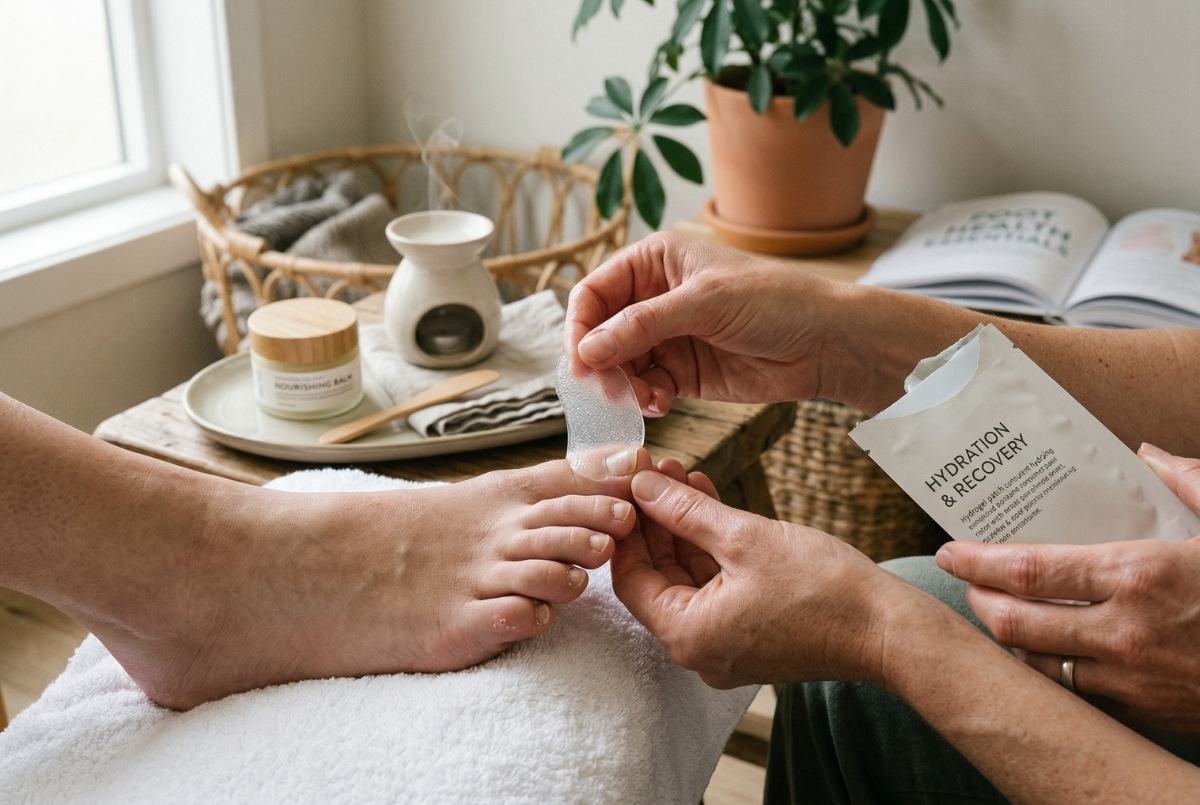
Professional hands apply a clear hydrogel patch to a client's natural-looking foot resting on a soft white towel in a clean spa environment.

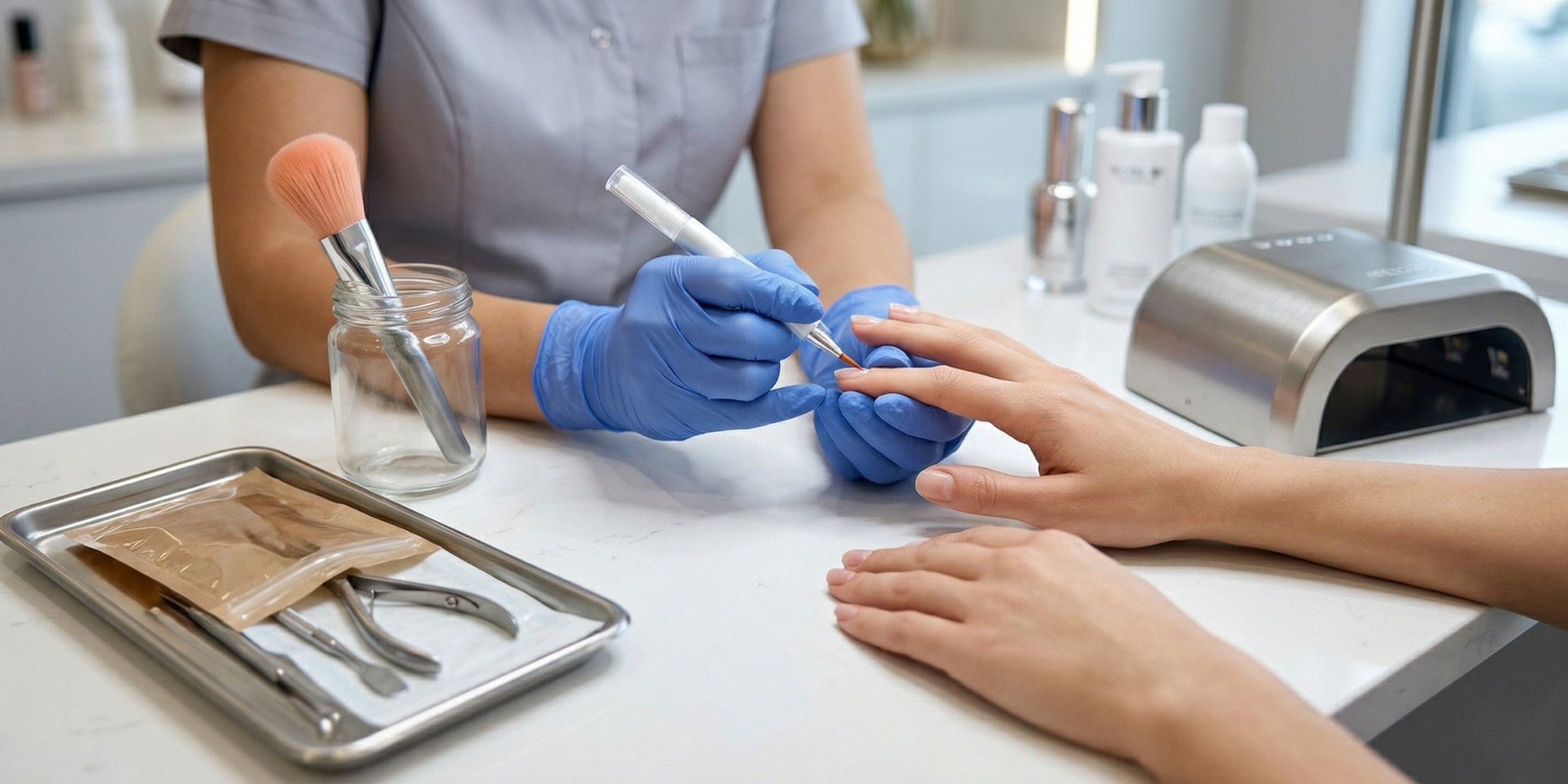
It is also important to focus on the growth area of the nail, which is called the matrix. A nail care pen with Nail Matrix Technology is a great tool for daily use. These pens deliver nutrients directly to the tissue where new nail cells are formed, creating a much stronger foundation for future services.

Professional Hygiene at Home

The tools clients use at home are just as important as the ones used in the salon. While advanced hygiene is the focus here, you should also become familiar with the professional starter kit and nail tech skills checklist for 2026 to build a stronger foundation for daily success. Using a Salmon hygiene technology nail brush is a much safer choice than using traditional wooden brushes. These brushes use special filaments that resist bacterial growth, so the client is not spreading germs around when cleaning under the nails. Research from Research Nester (2026) shows that the market for these functional products is growing because people want results backed by clinical data.

Moving From Technician to Specialist

A standard license is a great start, but specialized training helps you reach the top of the beauty industry. If you want to work with higher-paying clients or those with health issues like diabetes, obtaining a medical nail technician certificate is a fantastic goal.

This level of training allows you to offer more advanced services and helps your business join a Healthy Nail Salon Recognition Program. Being part of a Healthy Nail Salon Recognition Program shows your community that you take safety and air quality seriously. This is very important because the FDA’s 2026 General Wellness Framework makes it clear that you need legitimate backing to make claims about hygiene and health in your marketing.

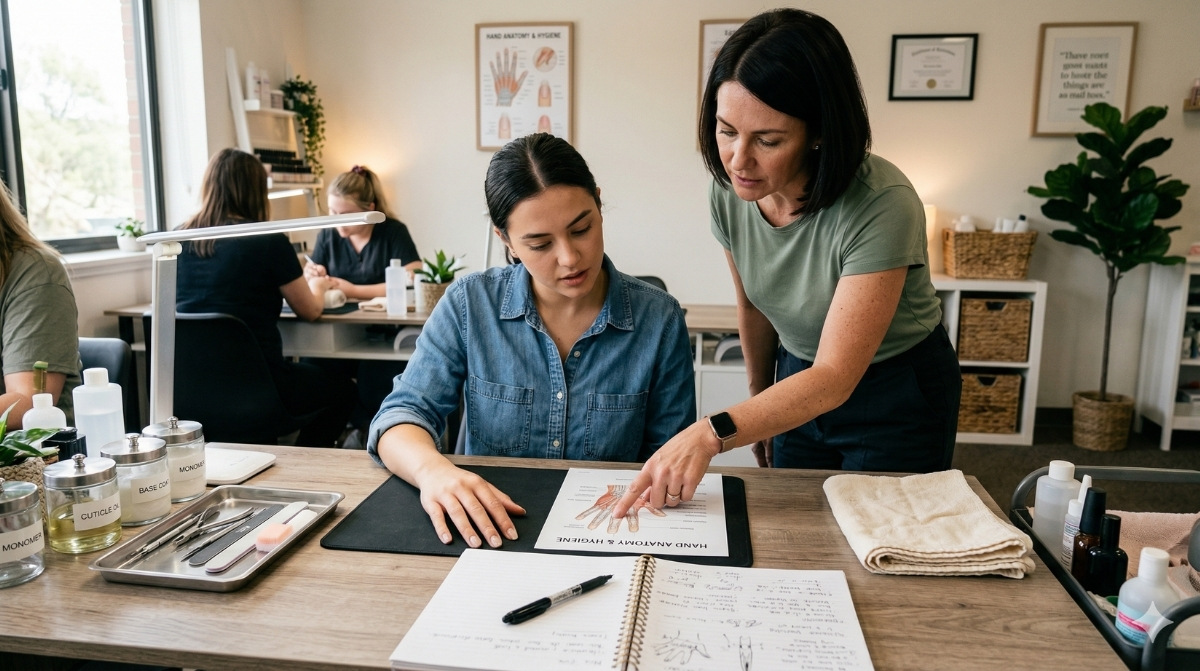
A female nail instructor points to a hand anatomy diagram for a seated student wearing a denim shirt, with manicure tools and a notebook on the desk in a professional training classroom.

Start Your Journey at USA Beauty and Barber Academy

Choosing the right school is one of the most important decisions you will make for your future. At USA Beauty and Barber Academy, we prepare our students to become leaders in the industry. We focus on the clinical-grade safety and advanced techniques that clients are looking for in 2026.

We have a 20-year legacy of excellence in helping people turn their passion into a career. Our experience ensures that you learn the high standards required to succeed in a modern salon. To find out more about how you can join us, please visit our Enrollment page.

If you have questions or want to see our campus, please fill out the contact form right below this article. We look forward to helping you take that first step toward your professional future and showing you what our two decades of experience can offer.

Common Questions

Is a standard salon lamp enough to treat an infection? No. While there is UV technology for nail fungus used in medical settings, salon lamps are only for curing gel. They do not have the strength to kill fungal spores.

How is a matrix pen different from cuticle oil? A nail care pen with Nail Matrix Technology is designed to soak deep into the growth center of the nail. Regular oils usually stay on the surface and do not reach the area where new cells are created.

Why should I look for a Healthy Nail Salon Program? Joining a Healthy Nail Salon Recognition Program gives you an official way to prove your safety standards. This builds a lot of trust with clients who prioritize hygiene.