If you’ve been scrolling through social media dreaming of a career in the beauty world, you’ve probably hit a crossroads: should you go for the full-spectrum training of a cosmetology program or dive deep into the world of a nail technician program? It’s a big decision that really defines how you’ll spend your days and how quickly you can start building your own brand.
I’ve seen so many people struggle with this choice, but it usually comes down to whether you want to be a versatile artist who can do it all or a specialized expert who owns a specific niche. In 2026, the beauty industry is rewarding those who have a solid technical foundation, so let’s break down the difference between cosmetology and nail technology to help you figure out where you belong.
Quick Career Facts for Your Journey
- Speed to License: If you want to get behind the desk fast, a nail technology program is typically a 600-hour commitment in Georgia, making it the quickest bridge to entrepreneurship.
- Market Demand: Specialized services are seeing massive growth. Reports from Technavio (2025) show the nail salon market expanding at a 10.7% CAGR, which is actually outperforming many general beauty sectors.
- Pro-Level Safety: Modern training is about more than just aesthetics. With federal updates like MoCRA and strict OSHA guidelines, I believe knowing your chemical safety and sanitation is what separates a true professional from a hobbyist.
- Income Potential: While a generalist has more variety, a specialist often commands premium pricing by offering high-end, detailed services that general salons simply can’t match.

Choosing Your Path: Generalist or Specialist?
When I talk to prospective students, I always suggest looking at how you want to work rather than just what you want to do.
Cosmetology is the broader pathway. In Georgia, this requires 1,500 hours because it prepares you to handle hair, skin, and nails. I like to think of this as having “Chair Sovereignty” – it gives you the freedom to pivot your service menu whenever the market shifts. You get trained in the chemical mechanics of hair and the physiology of the skin alongside basic nail care. If you want to explore the variety of careers you can have with a cosmetology license, you’ll see it opens doors from editorial styling to high-level brand education.
On the other hand, a nail technology program is an intensive deep-dive. You spend those 600 hours focused entirely on the hands and feet. This path is for the professional who wants to master the technical details of nail structure, product chemistry, and advanced artistry. For a closer look at what this specialty actually looks like today, you can check out this guide on what manicuring and nail technology really look like in 2026.
Regulatory Awareness in 2026
The beauty world is seeing more federal oversight than ever with the MoCRA regulations, which require manufacturers to report serious adverse events to the FDA. Additionally, OSHA requires all salons to keep Safety Data Sheets for hazardous products. A professional school helps you understand these complex rules so you can protect yourself and your future clients.
Defining Your Brand: Technician vs. Artist
I often notice a gap between being a licensed professional and being a sought-after creator. While the license is your legal foundation, your branding is what sets your earning ceiling.
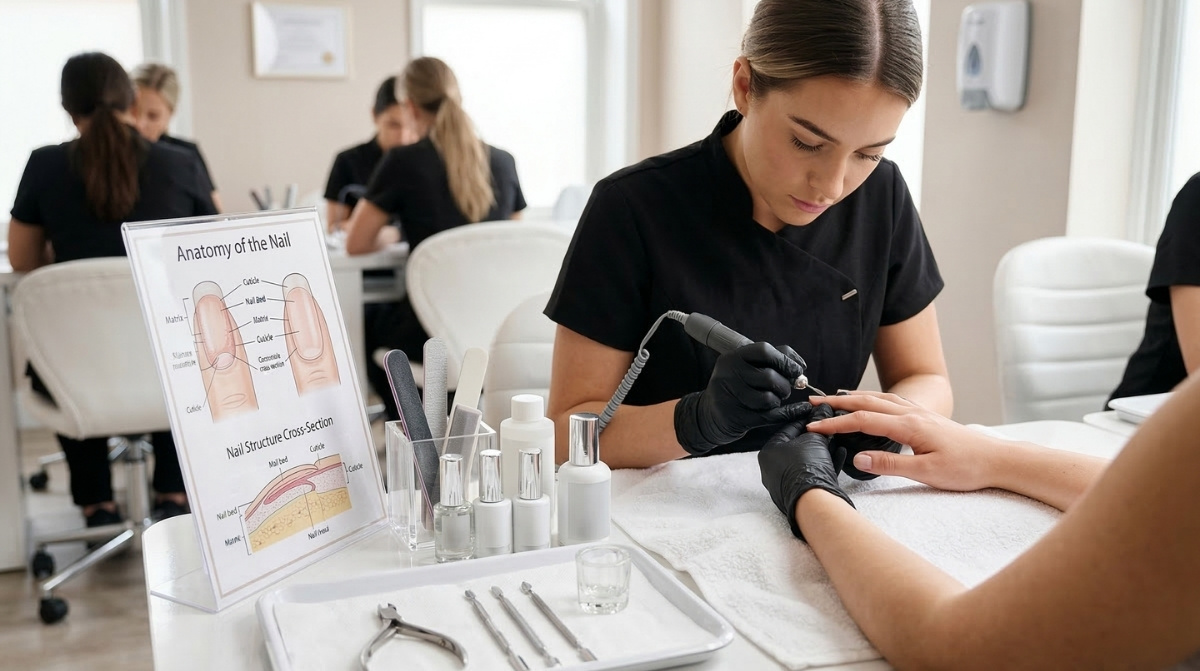
In a professional school environment, you learn the “why” behind the “how.” You study the biological integrity of the nail to avoid common mistakes like over-filing. While a technician provides a standard service, a nail artist provides a complete transformation. Today, the most successful graduates are the ones who use their technical training to launch high-end niche studios.
The ROI of Your Time
If you are looking for the fastest way to start earning, a nail tech program definitely wins on speed. You can often finish your boards and be working in under six months. This lower “opportunity cost” is perfect for entrepreneurs who want to start their own salon suite or brand without the time commitment of a year-long course.
However, don’t ignore the long-term safety net that cosmetology provides. Even though it takes longer to finish, you are rarely affected by niche-specific downturns because you can always switch to hair or skin services. If you’re interested in how different licenses compare for earning potential, you might also want to look into barber license requirements to see which path fits your goals best.
The Rise of Specialty Boutiques
The market is currently going through a “premiumization” trend. According to the Technavio 2025-2029 Nail Salon Market Report, consumers are increasingly looking for specialty boutiques over all-in-one salons. This shift means that being a specialist is more profitable than it used to be.
Science-Backed Beauty and Wellness
A professional education in 2026 isn’t just about painting; it’s about clinical care. For example, research in Skin Appendage Disorders has shown how specific professional formulations can significantly improve nail hardness.
Furthermore, recent literature on Advanced Dry Manicure Techniques suggests that these protocols can reduce the risks associated with water-soaking, like nail plate expansion. This evidence-based approach is what helps you provide services that prioritize nail preservation and predictable results.
Which Path Will You Take?
Choosing between a cosmetology or nail technician program is ultimately about where you want to focus your energy.
- Choose Cosmetology if you want the “Grand Tour” of beauty and the freedom to work across hair, skin, and nails as the market changes.
- Choose Nail Technology if you have a “macro eye” for detail, a love for chemistry, and a desire to launch your own specialized studio quickly.
I believe your future isn’t defined by the license you hold, but by the level of mastery you claim.

Ready to Start Your Career?
The beauty industry in 2026 is looking for visionaries who can bridge the gap between the classroom and the high-end professional world. It’s about being “Salon Ready” from the moment you graduate, which is why choosing a school with a long legacy of excellence is so important.
If you’re ready to see the difference for yourself, I invite you to explore more about our process on our Enrollment page.
Stepping inside a modern facility and meeting the instructors is the best way to feel the energy of a campus. If you’re ready to take that first step, just fill out the contact form we’ve left at the end of this article, and we can help you figure out which program is the right fit for your dream.
FAQ: The Reality Check
What happens if I get a Nail Tech license but want to do hair later?
You will generally need to re-enroll in a full cosmetology program. While some hours may transfer, you usually have to complete the hair modules from scratch. This is why I only recommend the specialist path if you’re sure hair isn’t your passion.
Is the nail tech market too full in 2026?
The U.S. Bureau of Labor Statistics projects 7% growth for manicurists through 2034. In my experience, there is always room for professionals who focus on high-quality service and client retention.
Does a cosmetology license let me work in a med-spa?
It’s a great foundation, but med-spa work is very specific. You may need additional esthetics training or separate certifications depending on your state’s laws regarding medical supervision and laser treatments.