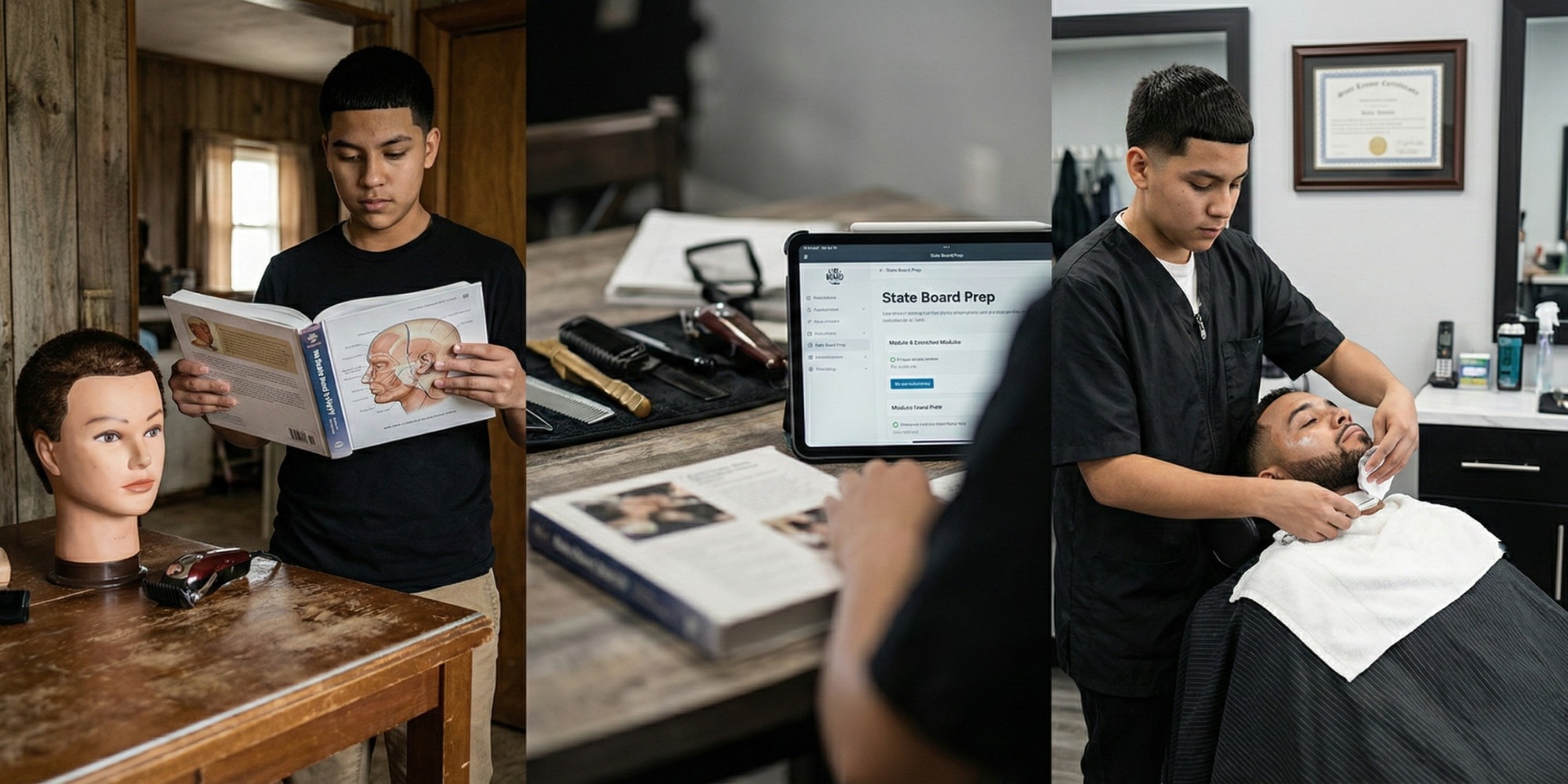
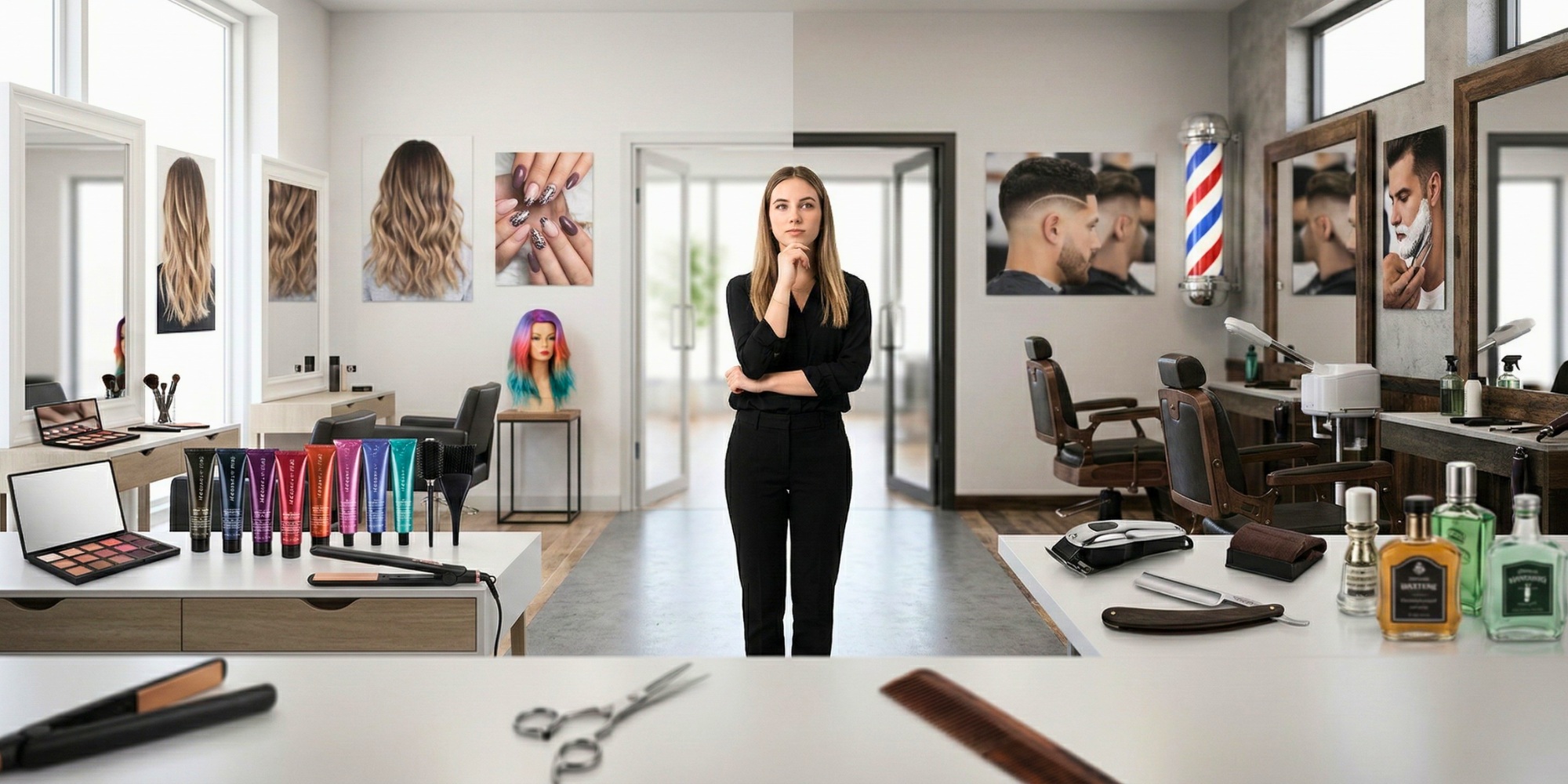
You’ve probably spent some time thinking about where you fit in the beauty industry, and it usually comes down to one big question: do you want to master the art of the razor fade or the chemistry of the perfect balayage? It’s a huge decision, and I’ve seen so many people worry that choosing barbering or cosmetology will somehow limit their future.
In 2026, the old-school idea that the barbershop and salon difference is just about “men vs. women” is pretty much over. Today, it’s all about your technical specialty. Whether you’re leaning toward the architectural precision of a straight-razor shave or the complex world of hair color, the first step is knowing which license gives you the most leverage for the career you actually want to build.
Key Takeaways for Future Beauty Pros
- The Rise of the Hybrid: The most successful pros I see right now are “Hybrid Specialists.” They are blending high-end skincare with precision barbering to offer a full wellness experience.
- National Licensing: Thanks to the Cosmetology Compact, moving between states is easier than ever. If your state is part of it, you can take your career across state lines without the headache of re-testing.
- A Growing Market: We’ve seen a 21% jump in male-focused grooming enrollments lately. Barbering isn’t just a quick trim anymore; it’s a high-ticket luxury category.
- The Crossover Path: If you start in one field and realize you want both, most states let you “cross over” with just 200 to 400 extra hours of training.
The Legal Side: Is Barbering Part of Cosmetology?
One of the most frequent questions I get is whether barbering falls under cosmetology in a legal sense. While they are definitely “cousins,” they are governed by different sets of rules. Your state board is very specific about which tools you’re allowed to touch.
Because a cosmetology license covers such a broad range of skills, the range of careers you can have with a cosmetology license is massive. You could find yourself working in a high-end spa, on a movie set, or even in a medical aesthetics office. However, if you want to use a straight razor for a traditional shave, you’ll usually need that specific barbering credential.
Staying legal also means staying on top of barbering and cosmetology license renewal. In 2026, this isn’t just about paying a fee; it often involves specialized continuing education to keep your skills sharp. If you decide to go for a dual license, you’ll have a bit more work to do for renewals, but I’ve found that the marketability you gain is worth it. You basically become the professional who never has to say “no” to a client’s request.
💡 Expert Insight: The 2026 Multistate Compact
The era of being “stuck” in one state is finally over. According to the latest updates from the Alabama Board of Cosmetology & Multi-State Regulatory Update, the Cosmetology Compact is officially live. This landmark agreement allows professionals in participating states like Arizona, Colorado, and Kentucky to maintain a multistate license. This gives you the freedom to move your career across state lines without the bureaucratic nightmare of starting your education over.
Skills and Training: Where the Paths Split
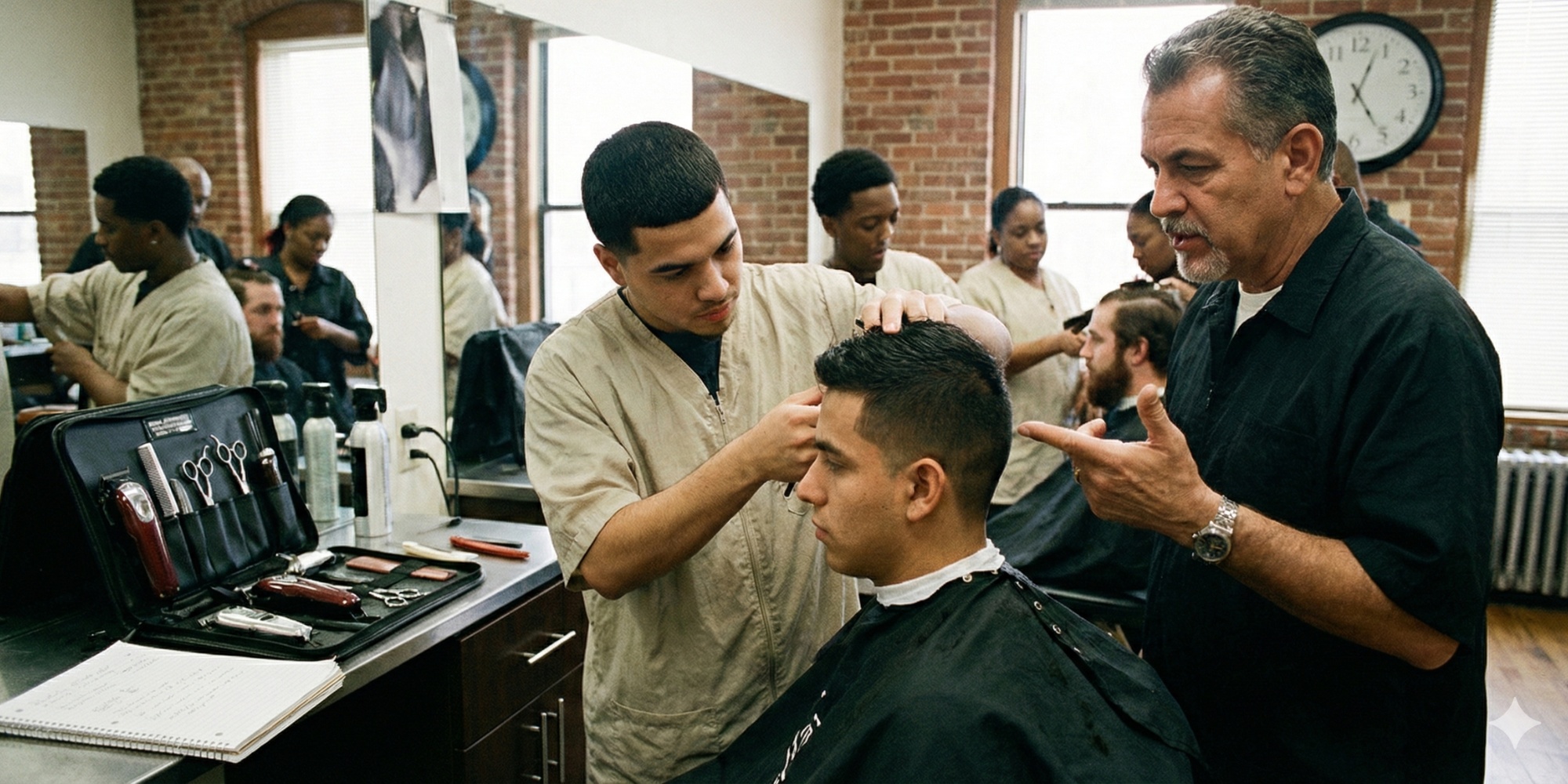
Inside a barbering and cosmetology school, the curricula diverge pretty quickly. I like to think of a cosmetology program as a “head-to-toe” doctorate in aesthetics. You’ll study the science of the skin’s lipid barrier and the complex pH levels of hair color. It’s not just about aesthetics; it’s about the clinical-grade health of the hair and skin.
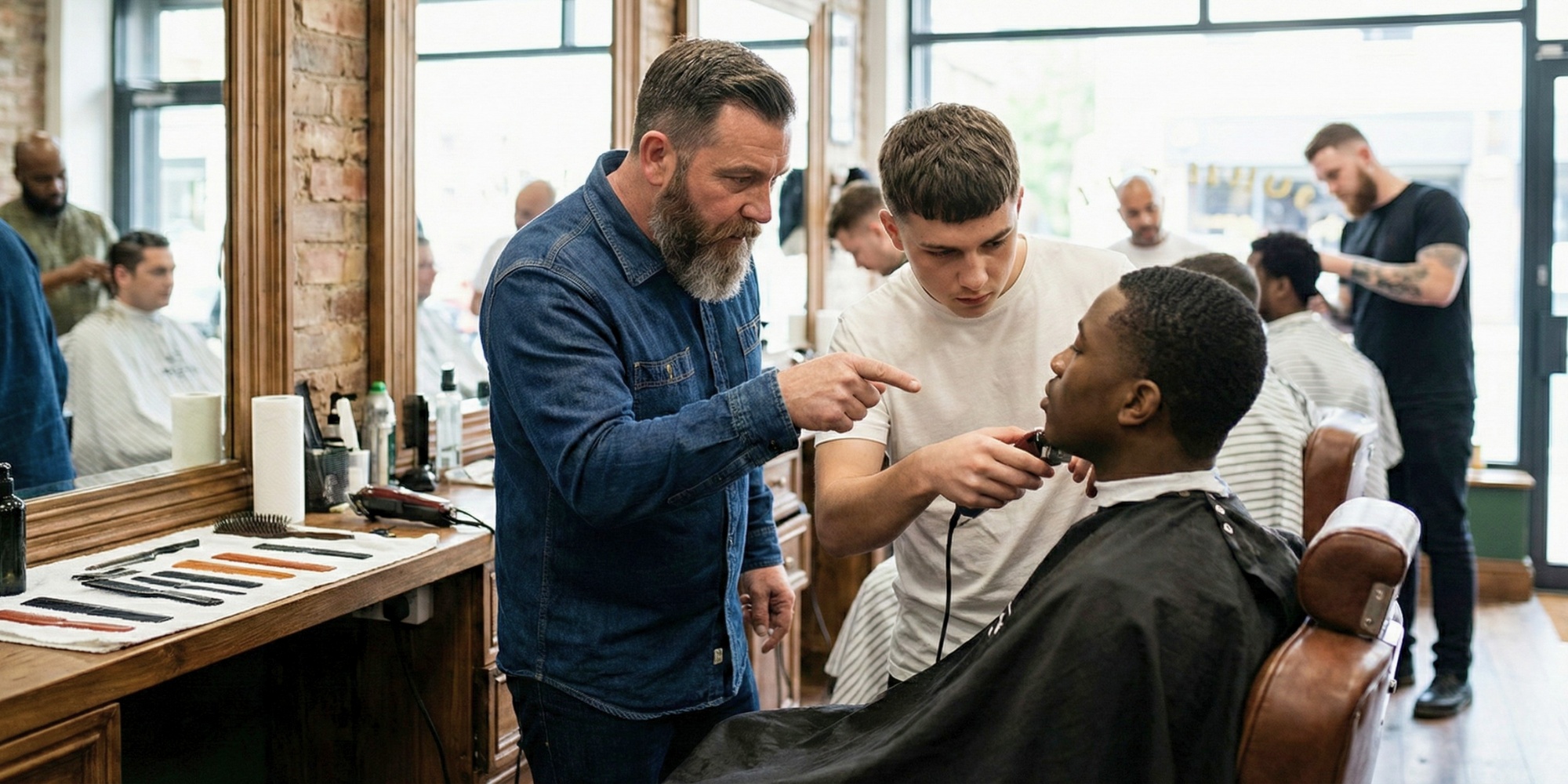
On the flip side, the barbering vs haircut distinction is really about the tool. Barbering is the art of the blade. It focuses on the architecture of the face and specific male-pattern hair growth.
I’ve noticed a massive shift in who is signing up for these classes lately. Research from Global Growth Insights shows that male-focused grooming is now a major revenue driver in the industry. If the precision of a clipper fade or a straight-razor line is what speaks to you, it’s a good idea to check out this step-by-step guide on how to become a barber to see how those skills translate into a professional roadmap.
The “Hybrid” Power Move
The most lucrative professionals I know in 2026 are the ones who refuse to limit themselves. A common question I hear is: can you be a barber with a cosmetology license? The answer is generally “yes” for cutting hair, but “no” if you want to perform a traditional straight-razor shave.
This legal gap is exactly why so many pros look into getting a barber license after cosmetology. If you’re already licensed in one, don’t worry about “sunk costs.” “Crossover” programs allow you to apply your existing hours toward a second credential, typically requiring only 200–400 additional hours. This “bridge” strategy is the fastest way to ensure you can legally provide every service from a balayage to a hot-towel shave.
💡 Expert Insight: The Shift Toward Scalp Health
The 2026 market has shifted from “beauty” to “wellness.” Reports from America’s Beauty Show highlight that scalp health treatments – like biotech serums and peptide infusions – are the fastest-growing revenue streams in the industry. Clients are now willing to pay a premium for scalp health that goes beyond a standard shampoo. Mastering this “clinical” side of the chair is what separates a standard stylist from a high-earning specialist.
Salon vs. Barbershop: What’s Your Vibe?
The barbershop and salon difference is ultimately about the environment you want to work in every day. Barbershops often thrive on high-energy, social vibes and “walk-in” culture. Salons are typically more appointment-based, focusing on long-form transformations that can take hours.
The data backs up this specialized approach. The Bureau of Labor Statistics (BLS) 2025 Update indicates that while median wages are strong, the real growth is in specialization. By combining the precision of barbering and hairdressing with the depth of cosmetology, you position yourself in the highest-earning bracket of the industry.
Take the Next Step in Your Career
Choosing a career in the beauty world is about more than just learning to cut hair – it’s about finding a place where you can grow and build a legacy. At USA Beauty & Barber Academy, we’ve spent over 80 years helping students in Georgia turn their passion into a real profession.
I’ve seen firsthand how a solid foundation can change everything. Whether you are aiming for the high-ticket transformations of a salon or the precision-driven culture of a modern grooming lounge, our goal is to make sure you are “Salon Ready” the moment you graduate. Our legacy is built on your success, and we focus on balancing technical precision with the business savvy you need to thrive.
I’d love for you to see what our community is all about. If you’re ready to stop wondering and start doing, you can find out more about how to get started on our Enrollment page. We also have a contact form at the end of this article – feel free to reach out with any questions. I’m here to help you map out exactly how to reach your 2026 career goals.
Common Questions I Get Asked
Q: Can I use a straight razor if I only have a cosmetology license?
A: In most states, no. Open-blade shaving is usually restricted to licensed barbers. As a cosmetologist, you’re generally limited to shears or safety razors.
Q: How long does a “Crossover” program take?
A: If you already have your cosmetology license, a bridge program for barbering of cosmetology usually takes about 8 to 12 weeks. It’s a much faster route than starting over from scratch!
Q: Is this industry actually stable?
A: Personal care is famously resilient. Even when people cut back on other luxuries, they still want to look and feel good. It’s one of the most “recession-proof” careers out there.
Q: What is the benefit of the new 2026 Multistate Compact?
A: It’s a game-changer. It means you don’t have to pay for multiple licenses or retake exams if you move to another state that’s part of the compact, saving you a ton of time and money.