Building Your Career: A Professional Starter Kit and Nail Tech Skills Checklist for 2026

Starting a career in the professional beauty world is such a rewarding shift, but it definitely comes with a learning curve. I remember when I first moved from just being a fan of nail art to actually studying the science of the craft. It is less about just making things look pretty and more about mastering the specific nail technology procedures that keep everything safe and structurally sound.

In 2026, our industry has really embraced what we call medical-grade manicuring. This focus on health and chemistry is what separates a hobbyist from a true professional. If you are still trying to figure out how to navigate this new standard, I suggest reading this guide to what nail technology really looks like in 2026 to get some clarity. With data from Business Research Insights showing that nearly a third of clients now deal with chemical sensitivities, focusing on a health-first approach is the smartest way to build your brand.

Major Industry Insights for 2026

  • Market Growth: The industry is projected to reach $122.7 billion by 2035, specifically as clients seek out skin-first and high-safety services.
  • Regulatory Standards: Under the latest MoCRA updates, technicians are now legally responsible for understanding product chemistry and FDA safety regulations.
  • Structural Trends: Success today is built on using Builder-in-a-Bottle (BIAB) and precision electric filing rather than old-fashioned, heavy applications.
  • Clinical Science: We are seeing bioactive ingredients like calcium silicate that are proven to increase nail thickness by 39%, helping us act as health consultants.

The 2026 Starter Kit Checklist

I know that the initial cost of entering a new field can feel a bit overwhelming. To help you plan your budget and your education, I recommend checking out this guide to licensing and costs so you have a clear path forward. When you are ready to assemble your nail technology kit, I find it easiest to organize your tools into these four pillars:

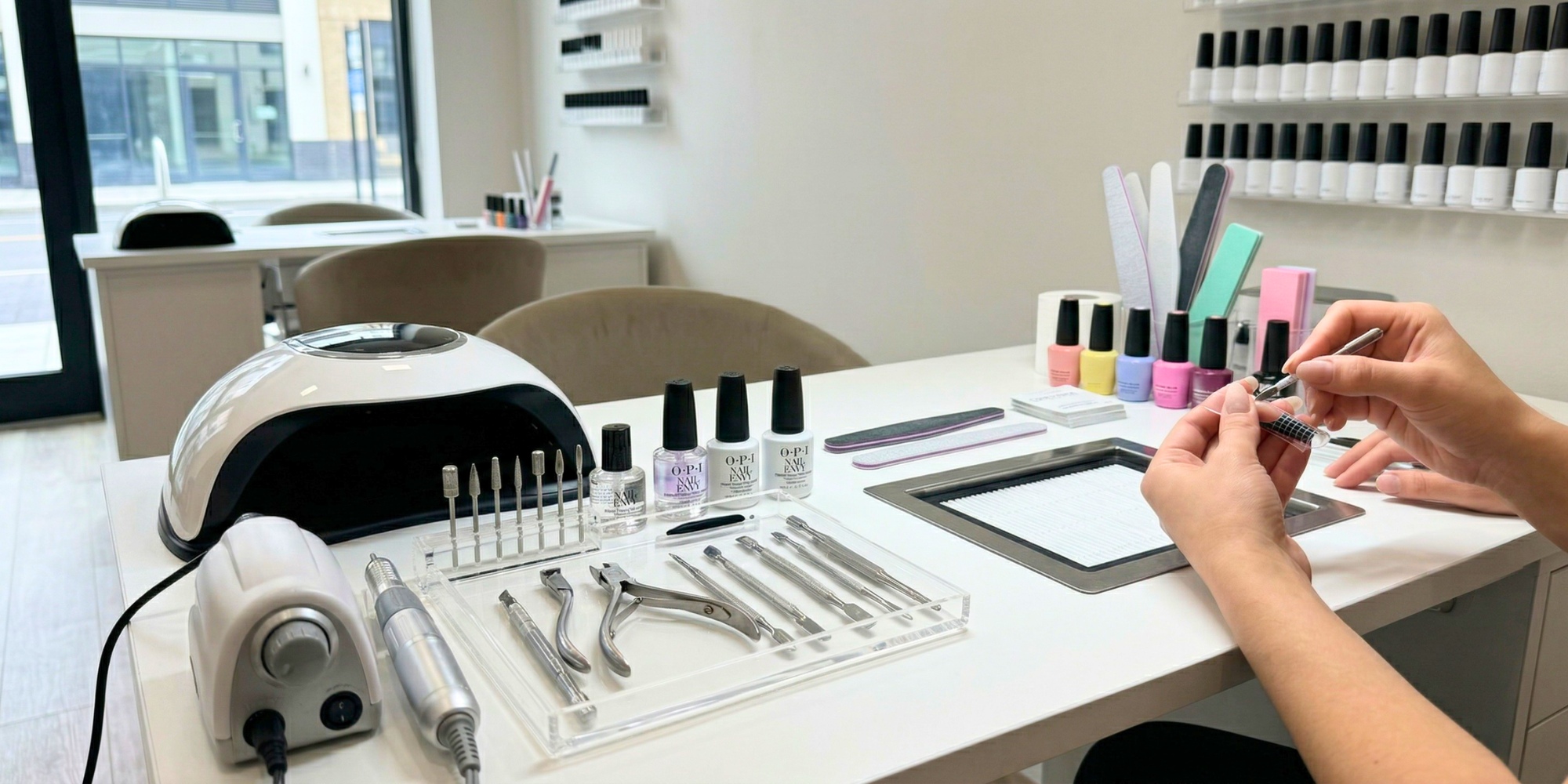
  1. Equipment: These are your permanent assets, such as UV/LED lamps and high-torque E-files.
  2. Implements: These are multi-use metal tools like nippers and pushers.
  3. Materials: These are your consumables, including files, buffers, and wipes.
  4. Professional Products: This covers the chemistry – your dehydrators, primers, and structured gels.

When I think about what do beginner nail techs need to stay healthy, a HEPA-filtered dust extraction system is at the top of the list. In 2026, this is no longer just an option; it is a critical requirement for a long and healthy career in the salon.

The Core Architecture of Professional Tools

One of the biggest mistakes I see beginners make is overspending on dozens of gel colors while neglecting the high-quality tools that actually generate income. To be successful, you need to know which tools nail technicians use to create a flawless foundation every time.

Defining Permanent Items in the Salon

In a professional setting, we often discuss the items that stay at your station for years. If you are wondering what are permanent items utilized in nail technology known as, they are officially categorized as Equipment and Multi-use Implements. These represent your long-term business investments. I always recommend buying autoclave-ready stainless steel to ensure you meet the strict clinical standards for sanitation we expect today.

Specialized Hygiene and Sanitation

Modern sanitation has moved far beyond just a quick soak. I now use a salmon hygiene technology nail brush because the bristles are specifically engineered to resist bacteria while providing a deep clean. Using technology-backed hygiene tools is a simple way to show your clients that they are in safe, professional hands.

The Impact of MoCRA Regulations

Based on the latest FDA’s Modernization of Cosmetics Regulation Act (MoCRA) updates, knowing your products is now a legal safety requirement. In 2026, the FDA has the authority to recall products quickly, so understanding the chemistry of the products used in nail technology is a necessary part of your professional practice.

The Geometry of Structural Mastery

Advanced Procedures and Nail Architecture

The hallmark of a great tech in 2026 is the ability to create extensions that look virtually indistinguishable from natural nails. This requires mastering two main pillars of nail structure: the C-curve and the Apex.

  • The C-curve is the arch of the nail when viewed from the tip. It provides the structural vault needed to prevent the nail from being flat and weak.
  • The Apex is the highest point of the nail from a side view. By placing your product correctly here at the stress point, you ensure the nail can handle daily impact without breaking.

The Secret of the Nail Form

I believe that learning how to put a nail form on correctly is one of the most important skills a student can develop. Unlike plastic tips, a form allows you to sculpt a custom extension based on the unique geometry of the client’s finger. If you are trying to figure out how to put nail form templates in place so they don’t gap, the key is ensuring a flush fit to prevent structural failure.

Structural Integrity with Builder Gels

Once your form is set, the choice of material makes all the difference. Many pros are now using specialized products like diva nail technology builder gel or other Builder-in-a-Bottle (BIAB) systems. These manicures are in high demand because they protect the natural nail while offering extreme durability, often allowing for price increases of 20-30% per service.

Precision Technology and Bioactive Care

Mastering the Electric File

I know that learning how to use an e-nail can be intimidating at first. However, it is really a tool for micro-exfoliation rather than just drilling. Using diamond bits at low speeds allows you to clean the cuticle area with surgical precision, which is one of the most important tools nail technicians use to ensure a long-lasting gel application.

The Move Toward Nail Health

We are currently in a skin-first era where we prioritize the biological health of the nail plate. I am a big fan of using systems like OPI Nail Envy with Tri-Flex Technology for clients who need extra strength. Whether you use the OPI Nail Envy original strengthener with Triflex technology or other restorative treatments, the goal is to mimic the nail’s natural keratin structure.

I also utilize a nail care pen with nail matrix technology to support the growth center under the cuticle. Even things like press-on nail technology have improved significantly. When people ask what are nail press-ons today, I explain that they are now custom-fitted, hand-painted gel mandates that offer a professional look with much more flexibility.

Evidence of Success

A 2025 study in MDPI proved that bioactive formulas containing calcium silicate can increase nail thickness by nearly 40% in just a few weeks. When you can explain the science behind the nail technology products you use, you transition from being a service provider to a trusted health consultant.

Aftercare and Your Professional Growth

The service doesn’t end when the top coat is dry. I always provide specific after care advice for nail technology to help my clients manage mechanical stress. Teaching them why they shouldn’t use their nails as tools ensures your work stays pristine, which leads to the great reviews that grow your career.

By choosing a pathway that emphasizes these advanced nail tools and uses, you are positioning yourself in the high-value tier of the market. The industry is growing fast, and there is a massive opportunity for specialists who understand these modern techniques.

Take the Next Step in Your Career

The shift toward medical-grade services and bioactive health is a huge opportunity for the next generation of technicians. At USA Beauty Academy, I believe in a hands-on approach that prepares you to lead the industry. You will have the chance to work with the same professional-grade nail technology tools and high-end products that the best salons demand.

If you are ready to see what your future looks like, I invite you to find out more on our Enrollment page.

You can also use the contact form at the bottom of this article to get in touch with us. Whether you want to schedule a tour of the campus or just have questions about getting started, we are here to help you build something beautiful.

FAQ: Navigating the Industry

What tools do you need to do nails in a professional salon?
A professional kit is quite different from what you would use at home. You will need a full nail care nail equipment list that includes high-torque E-files and specialized LED lamps to ensure every product is cured safely.

How do I choose the best nail care equipment with names I can trust?
I always recommend staying with a single system for your base, color, and top coats. This ensures the chemistry is compatible, which is the best way to prevent the peeling or lifting that can frustrate clients.

What are the 4 types of nail technology tools needed for a safe workstation?
A professional setup includes permanent equipment like lamps, multi-use metal implements, disposable materials, and professional-grade chemical products. Knowing exactly what tools do you need to be a nail technician is the first step toward a successful, long-term career.


Do You Actually Need a Certificate to Be a Nail Technician? A Guide to Licensing, Schooling, and Costs

I often see people spending hours mastering complex nail art in their own time and wondering if they truly need a formal credential to turn that talent into a paycheck. It makes sense to ask, especially in a world where everyone seems to have a side hustle. But as we move through 2026, the industry is seeing a major shift toward stricter safety standards and a client base that values professional accountability more than ever. Taking your skills from a hobby to a high-end salon isn’t just about how well you apply gel – it is about following the legal requirements for nail technicians so your business is built on a solid foundation. If you are just starting your research, I find it really helpful to look at what manicuring and nail technology really look like in 2026 to get some perspective on the modern landscape.

Key Takeaways

  • License vs. Certificate: A certificate marks an educational goal, but a nail technology license is what you legally need to charge clients in 2026.
  • The Safety Standard: About 22% of clients now pick their technicians based specifically on their medical-grade sanitation training.
  • Investment Clarity: At USA Beauty & Barber Academy, we focus on a “Salon Ready” model that covers your tuition, professional tools, and all necessary student fees.
  • Federal Rules: The full enforcement of MoCRA in 2026 means all professionals must be experts in product safety and chemical handling.

A realistic professional nail technician workstation in a modern training salon featuring sanitized metal tools on a towel, unbranded pump bottles, a client consultation form on a clipboard, and an open training manual under soft natural lighting.

The Legal Blueprint: Why a Certificate Isn’t a License

One of the most expensive mistakes I see new artists make is assuming a diploma is the same thing as a permit to work.

Educational Milestones vs. Permission to Practice

When I’m asked if someone can do nails with a certificate, the answer really depends on what they mean by “doing nails.” If you want to practice on friends after an online workshop, a certificate in nail technology is a great way to show you’ve learned the basics. However, to legally exchange your services for money in a professional setting, you must hold a nail technology license issued by your state’s Board of Cosmetology.

A certificate proves you finished a course; a license proves you are legally compliant with health and safety codes. If you graduate from a state approved nail technician program, your credentials often have more flexibility. For instance, the Interstate Cosmetology Compact is a big deal in 2026, allowing licensed pros to move between participating states much more easily without having to retake every single board exam.

Federal Oversight: The 2026 Safety Shift

The industry landscape changed significantly this year because the Modernization of Cosmetics Regulation Act (MoCRA) is now in full effect. The FDA now requires professional-use products to meet much higher safety standards.

According to the U.S. Food & Drug Administration, federal rules now demand that technicians understand the chemical composition of the products they use. Being a certified professional in 2026 means you aren’t just an artist; you are also a safety officer. Operating without a state-issued license now comes with much higher liability than it used to.

The Education Path: Hours, Chemistry, and the Final Test

Choosing a nail technology program is really your first big business decision. Before you commit your time, I always suggest that students compare a specialized nail tech program against a full cosmetology license to see which path fits their specific career goals.

A focused nail technology student practicing gel application on a silicone mannequin hand at a professional training workstation with study notes and a digital exam tablet.

Clock Hours and Training

How long is a nail program? In 2026, most states use a competency-based model, but you are still generally looking at a commitment of 300 to 600 hours. If you are trying to figure out how long it takes to train as a nail technician in Georgia, the state requires 525 hours of dedicated training. This usually means a 3-month sprint for full-time students or a 6-month journey for those working part-time.

Some people look into a nail technician apprenticeship as an alternative. I usually tell them to be careful here: apprenticeship hours are often double what you would spend in a manicuring school, and you might miss out on the structured nail technology theory – like learning how to protect the skin’s lipid barrier – that is vital for passing your exams.

Preparing for the State Board

To get past the final hurdle, the best schools now use AI-driven nail technology state board practice tests. These simulators mimic the 2026 exam format, focusing heavily on things like chemical storage and blood exposure incidents. If your nail technology school doesn’t offer this kind of rigorous prep, you are essentially flying blind into your nail technology exam.

The Financial Blueprint: Tuition and Long-Term Value

I know that the nail program cost is often the biggest source of anxiety for new students.

Calculating Your Total Investment

A common mistake I see is people looking only at the tuition and forgetting about the other essentials they need to actually graduate. For a high-quality education, you really need to look at the Total Cost of Attendance (COA).

At USA Beauty & Barber Academy, we believe in being completely transparent about what it takes to get started. Our program is designed to be a “Salon Ready” bundle. This includes your core tuition for expert-led instruction, but it also covers your professional kit and books. Having high-quality tools that meet school standards from day one is essential, and buying them individually can be a huge hidden cost. By integrating them into the COA, we make sure you aren’t hit with unexpected bills later.

Ways to Fund Your Career Move

To make this transition easier, there are more funding options in 2026 than ever before:

  • Expanded Pell Grants: The federal landscape is changing. Under the Workforce Pell framework, the U.S. Department of Education is expanding access to short-term career training. While this is rolling out through July 2026, I recommend talking to a financial aid office now to see how these rules might apply to your enrollment.
  • Industry Scholarships: Many of my students look at organizations like Beauty Changes Lives. They offer a variety of scholarships for nail technology students to help the next generation enter the field with less debt.
  • Flexible Payment Plans: I know that paying everything at once isn’t always possible. Most reputable academies offer internal installment plans to help you maintain your lifestyle while you study. This allows you to pay for your education in steady increments as you work toward your license.

The 2026 Career Outlook: High-Earning Potential

The market today isn’t looking for the cheapest manicure; it is looking for the safest one. According to data from Business Research Insights, 22% of consumers now specifically seek out licensed technicians because they care about salon hygiene. This “Safety Premium” is a huge driver of revenue in modern salons.

A professional nail technician performing a detailed manicure service on a client’s hand in a bright, modern salon. The client's hand rests on a soft cream towel on a dark wood table, surrounded by unbranded polish bottles, a small plant, and a ceramic cup. The scene is lit by soft natural daylight, emphasizing the glossy blush pink nails and a clean, sophisticated atmosphere.

The Reality of Your Earnings

When I look at what you can actually earn in 2026, the trend is definitely going up for licensed pros. Based on Indeed’s data from March 2026, here is a look at the financial landscape:

  • National Average: The average base salary for a nail technician in the US is currently about $23.68 per hour.
  • The Range: While entry-level roles might start lower, top-tier professionals are commanding rates as high as $50.73 per hour.
  • Luxury Markets: In high-traffic boutique areas, I’ve seen hourly rates go as high as $94.94 per hour.
  • Total Income: Don’t forget that these numbers are just the base. Your take-home pay is often much higher once you add in tips, product commissions, and specialized service premiums.

Building Your Professional Legacy

I’ve seen how much the industry has changed over the years, and I know that the right foundation makes all the difference. At USA Beauty & Barber Academy, our instructors have over 80 years of collective expert experience. We’ve seen every trend come and go, but our focus on student success has always stayed the same.

We know that things like “imposter syndrome” can feel very real when you are just starting out. That is why our approach focuses on the transition from the classroom to the chair. We want to help you master chemical literacy, speed, and business sovereignty so you can lead the industry with confidence.

If you are ready to see our experience in action and feel the energy of our clinic floor, you can find out more in Enrollment. We also have a contact form right at the bottom of this article – fill it out, and I would love to help you map out your path to career freedom.

FAQ: Common Questions

What is the difference between a Level 2 and Level 3 nail technician certificate? A Level 2 certificate in nail technology usually covers the basics of manicures and standard enhancements. Level 3 is focused on mastery, covering things like electric filing, advanced chemical composition, and medical-grade sanitation.

Can I go to nail school online in 2026? Hybrid models are very common now. You can often do your nail technology theory online, but you must complete your hands-on hours in a physical manicuring school or salon to qualify for your license.

How does the Interstate Compact work? This 2026 initiative makes your nail technology license a mobile asset. It allows licensed techs to work in multiple participating states without having to retake the state board exam, which is a huge advantage for anyone who might move in the future.

Understanding the Difference Between Cosmetology and Nail Technology: Specialist vs. Generalist

If you’ve been scrolling through social media dreaming of a career in the beauty world, you’ve probably hit a crossroads: should you go for the full-spectrum training of a cosmetology program or dive deep into the world of a nail technician program? It’s a big decision that really defines how you’ll spend your days and how quickly you can start building your own brand.

I’ve seen so many people struggle with this choice, but it usually comes down to whether you want to be a versatile artist who can do it all or a specialized expert who owns a specific niche. In 2026, the beauty industry is rewarding those who have a solid technical foundation, so let’s break down the difference between cosmetology and nail technology to help you figure out where you belong.

Quick Career Facts for Your Journey

  • Speed to License: If you want to get behind the desk fast, a nail technology program is typically a 600-hour commitment in Georgia, making it the quickest bridge to entrepreneurship.
  • Market Demand: Specialized services are seeing massive growth. Reports from Technavio (2025) show the nail salon market expanding at a 10.7% CAGR, which is actually outperforming many general beauty sectors.
  • Pro-Level Safety: Modern training is about more than just aesthetics. With federal updates like MoCRA and strict OSHA guidelines, I believe knowing your chemical safety and sanitation is what separates a true professional from a hobbyist.
  • Income Potential: While a generalist has more variety, a specialist often commands premium pricing by offering high-end, detailed services that general salons simply can’t match.

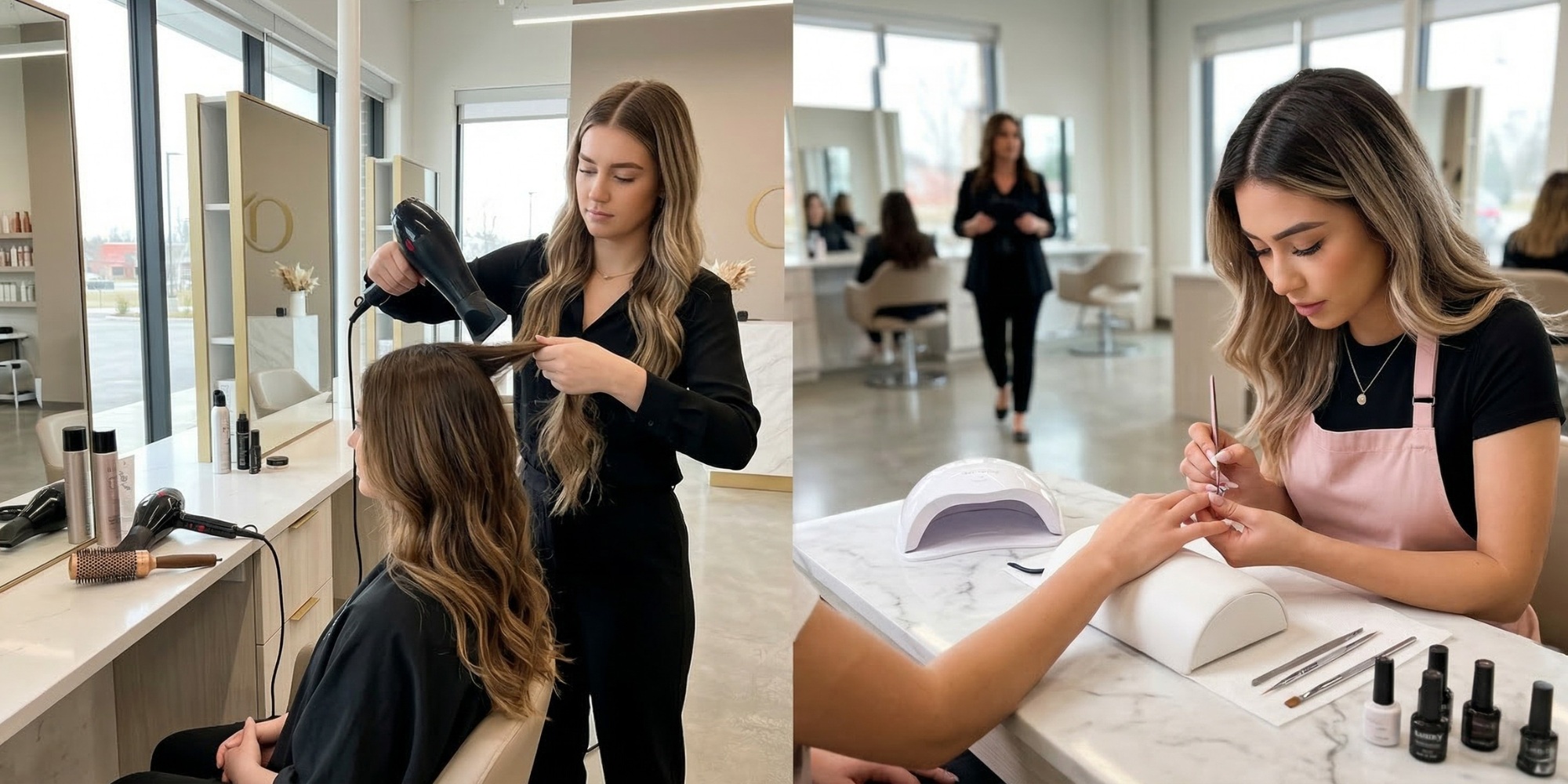
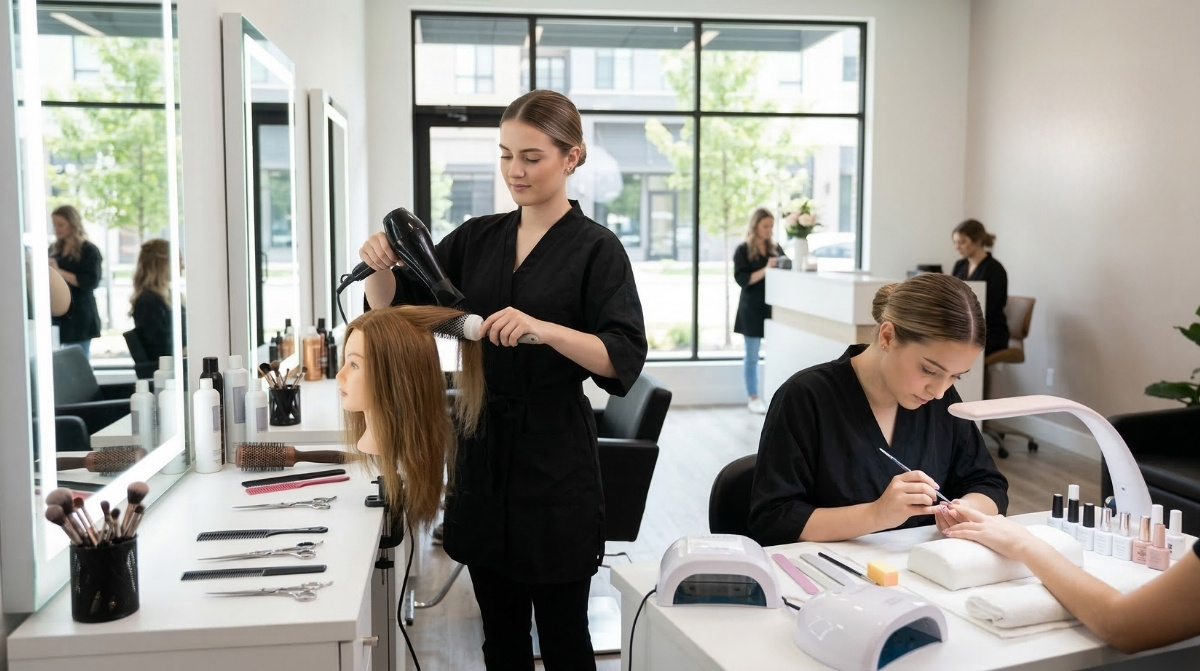
A cosmetology student styling hair at a professional salon station next to a nail technology student performing detailed manicure work in a bright, modern beauty academy.

Choosing Your Path: Generalist or Specialist?

When I talk to prospective students, I always suggest looking at how you want to work rather than just what you want to do.

Cosmetology is the broader pathway. In Georgia, this requires 1,500 hours because it prepares you to handle hair, skin, and nails. I like to think of this as having “Chair Sovereignty” – it gives you the freedom to pivot your service menu whenever the market shifts. You get trained in the chemical mechanics of hair and the physiology of the skin alongside basic nail care. If you want to explore the variety of careers you can have with a cosmetology license, you’ll see it opens doors from editorial styling to high-level brand education.

On the other hand, a nail technology program is an intensive deep-dive. You spend those 600 hours focused entirely on the hands and feet. This path is for the professional who wants to master the technical details of nail structure, product chemistry, and advanced artistry. For a closer look at what this specialty actually looks like today, you can check out this guide on what manicuring and nail technology really look like in 2026.

Regulatory Awareness in 2026

The beauty world is seeing more federal oversight than ever with the MoCRA regulations, which require manufacturers to report serious adverse events to the FDA. Additionally, OSHA requires all salons to keep Safety Data Sheets for hazardous products. A professional school helps you understand these complex rules so you can protect yourself and your future clients.

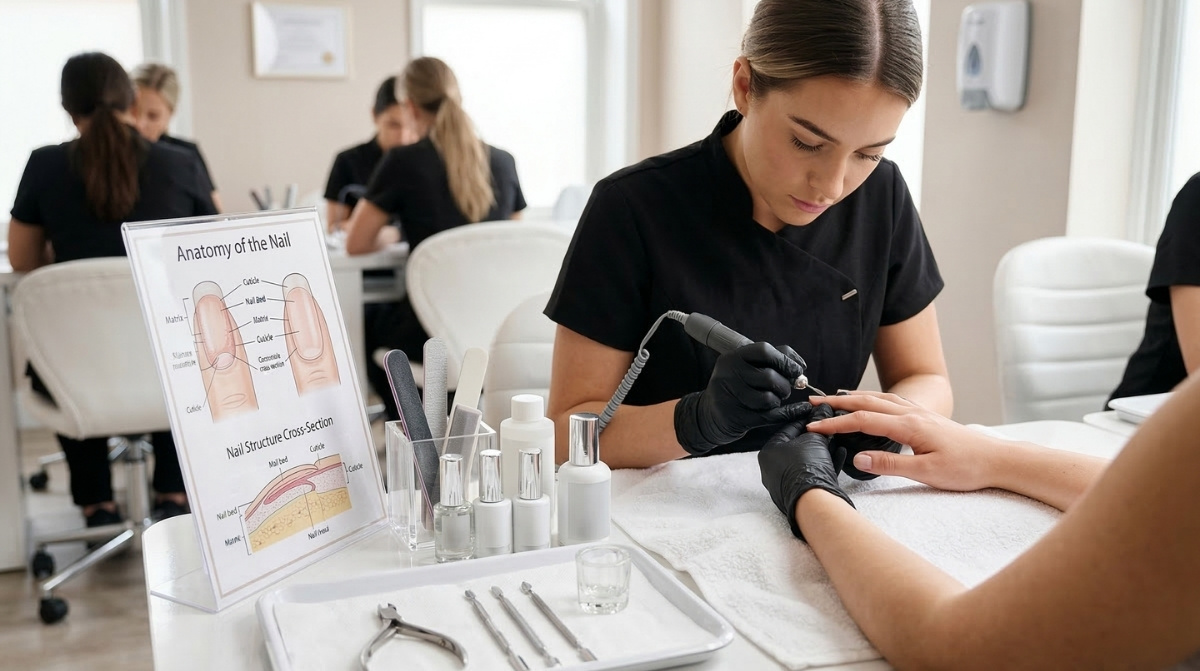
A nail technology student in professional attire practicing precision techniques on a model hand at a clean, sanitized workstation featuring a nail anatomy chart and manicure tools.

Defining Your Brand: Technician vs. Artist

I often notice a gap between being a licensed professional and being a sought-after creator. While the license is your legal foundation, your branding is what sets your earning ceiling.

In a professional school environment, you learn the “why” behind the “how.” You study the biological integrity of the nail to avoid common mistakes like over-filing. While a technician provides a standard service, a nail artist provides a complete transformation. Today, the most successful graduates are the ones who use their technical training to launch high-end niche studios.

The ROI of Your Time

If you are looking for the fastest way to start earning, a nail tech program definitely wins on speed. You can often finish your boards and be working in under six months. This lower “opportunity cost” is perfect for entrepreneurs who want to start their own salon suite or brand without the time commitment of a year-long course.

However, don’t ignore the long-term safety net that cosmetology provides. Even though it takes longer to finish, you are rarely affected by niche-specific downturns because you can always switch to hair or skin services. If you’re interested in how different licenses compare for earning potential, you might also want to look into barber license requirements to see which path fits your goals best.

The Rise of Specialty Boutiques

The market is currently going through a “premiumization” trend. According to the Technavio 2025-2029 Nail Salon Market Report, consumers are increasingly looking for specialty boutiques over all-in-one salons. This shift means that being a specialist is more profitable than it used to be.

Science-Backed Beauty and Wellness

A professional education in 2026 isn’t just about painting; it’s about clinical care. For example, research in Skin Appendage Disorders has shown how specific professional formulations can significantly improve nail hardness.

Furthermore, recent literature on Advanced Dry Manicure Techniques suggests that these protocols can reduce the risks associated with water-soaking, like nail plate expansion. This evidence-based approach is what helps you provide services that prioritize nail preservation and predictable results.

Which Path Will You Take?

Choosing between a cosmetology or nail technician program is ultimately about where you want to focus your energy.

  • Choose Cosmetology if you want the “Grand Tour” of beauty and the freedom to work across hair, skin, and nails as the market changes.
  • Choose Nail Technology if you have a “macro eye” for detail, a love for chemistry, and a desire to launch your own specialized studio quickly.

I believe your future isn’t defined by the license you hold, but by the level of mastery you claim.

A confident female beauty professional consulting with a client in a minimalist luxury nail studio featuring high-end decor, warm lighting, and a modern salon suite atmosphere.

Ready to Start Your Career?

The beauty industry in 2026 is looking for visionaries who can bridge the gap between the classroom and the high-end professional world. It’s about being “Salon Ready” from the moment you graduate, which is why choosing a school with a long legacy of excellence is so important.

If you’re ready to see the difference for yourself, I invite you to explore more about our process on our Enrollment page.

Stepping inside a modern facility and meeting the instructors is the best way to feel the energy of a campus. If you’re ready to take that first step, just fill out the contact form we’ve left at the end of this article, and we can help you figure out which program is the right fit for your dream.

FAQ: The Reality Check

What happens if I get a Nail Tech license but want to do hair later?
You will generally need to re-enroll in a full cosmetology program. While some hours may transfer, you usually have to complete the hair modules from scratch. This is why I only recommend the specialist path if you’re sure hair isn’t your passion.

Is the nail tech market too full in 2026?
The U.S. Bureau of Labor Statistics projects 7% growth for manicurists through 2034. In my experience, there is always room for professionals who focus on high-quality service and client retention.

Does a cosmetology license let me work in a med-spa?
It’s a great foundation, but med-spa work is very specific. You may need additional esthetics training or separate certifications depending on your state’s laws regarding medical supervision and laser treatments.

Beyond the Polish: What Manicuring and Nail Technology Really Look Like in 2026

I’ve noticed so many people lately spending their weekends practicing intricate designs at home and wondering if their talent could actually be a full-time job. It’s a great question to ask in 2026 because the beauty industry has shifted significantly. What used to be seen as a simple trade has grown into a highly specialized field involving cosmetic chemistry and hand health.

When people ask me what is nail technology in the current market, I’m not just talking about aesthetics. I am describing a career that requires you to understand everything from human anatomy to the science of polymers. I want to help you bridge the gap between being a talented hobbyist and becoming a licensed specialist who can thrive in a modern salon.

Important Insights for Future Professionals

  • Career Growth: This field is projected to grow by about 7% through 2034. It is officially listed as a Bright Outlook career because the precision and human connection we provide are things AI just can’t replicate.
  • Income Potential: In high-demand beauty hubs, I have seen specialized technicians earning between $34 and $94 per hour, especially when they focus on luxury or medical-grade services.
  • New Safety Standards: As of 2026, the industry has moved toward TPO-free and HEMA-free chemistry. This makes a formal education essential so you can understand the toxicology behind the products you use every day.

The Evolution of the Craft: Where Science Meets Beauty

To really grasp the nail technology meaning today, you have to look past the polish bottle. I like to think of modern technicians as surface chemists. Every service involves a chemical reaction called polymerization. When you understand how UV light interacts with photoinitiators to create a durable bond without damaging the natural nail, you are operating at a true professional level.

The Professional Role: What Are Nail Techs in 2026?

If you’ve ever wondered what are nail techs exactly, I view them as the primary care providers for the hands. Beyond the artistic side, your job is to identify silent pathologies. A pro can tell the difference between a simple bruise and something more serious like subungual melanoma. You are often the first person to notice a fungal infection that might need a medical referral, making your training a vital part of public safety.

Expert Insight: The Toxicology Shift

As noted in the latest industry updates on the New Rules of Nail Care from StyleSpeak, the global ban on TPO has really separated the amateurs from the pros. A modern education doesn’t just teach you how to apply a product; it teaches you how to read a Safety Data Sheet (SDS) to ensure you are using biocompatible, safe formulas.

If you want to dive deeper into these technical details, I recommend looking at resources like HONA’s Knowledge Hub, which covers the essential sections of product chemistry you should master before your first day in a salon.

Choosing Your Path: Licenses and Economics

The difference between manicuring vs nail technology is something that often confuses people starting out. In most jurisdictions, your manicuring license is what gives you the legal right to work for pay. However, your nail technology training is what gives you a competitive edge. While a manicurist handles basic maintenance, a nail technologist acts as an engineer who builds structures and balances extensions to prevent trauma to the natural nail.

Starting Out: Longevity and Ergonomics

For anyone looking into nail technology for beginners, I always emphasize the importance of ergonomic longevity. I’ve seen many self-taught artists leave the industry after only a few years because of neck strain or carpal tunnel. A professional program teaches you the biomechanics of your own body – like how to sit and how to hold an e-file – so you can enjoy a 30-year career rather than burning out early.

Salary Expectations and Job Security

According to the U.S. Bureau of Labor Statistics, this is a very secure field with tens of thousands of job openings projected every year. This security comes from the fact that these roles require high manual dexterity that machines cannot replicate.

When it comes to the manicuring and nail technology salary, recent trends from Indeed show that entry-level averages don’t tell the whole story. Technicians who focus on specialized areas like architectural enhancements or clinical care are seeing six-figure potential in high-demand areas, with those top-tier rates of $34 to $94 per hour becoming much more common.

The 2026 Landscape: Quiet Luxury and Digital Tools

The biggest trend this year is a move away from flashy art and toward soft minimalism. As Vogue Scandinavia mentioned in their recent report, the Cloud Dancer milky white is the color of the year. This trend prioritizes clinical-grade health and perfect natural nail shapes.

We are also seeing technology become a huge partner in the salon. Analysis from SNS Chairs on market trends shows that the AR device market is growing fast. Many high-end salons now use Augmented Reality to let clients see a finished look before the service even starts, which really helps with client satisfaction and prevents service regret.

Start Your Journey at USA Beauty Academy

I know that seeing all this data can be overwhelming, but it also shows just how much potential there is if you have the right foundation. At USA Beauty Academy, my goal is to help you bridge that gap between being a student and becoming a professional who is ready for the real world.

I believe that training in an environment that mimics a real salon is the best way to master the techniques that 2026 clients are looking for. You shouldn’t just graduate with a license; you should graduate with a portfolio and the business knowledge to navigate the most lucrative parts of the beauty industry.

If you are ready to move your talent from the kitchen table to a professional setting, I encourage you to see what is possible. You can find more information about how to get started in Enrollment to see our current path for future specialists. Also, if you have specific questions, feel free to use the contact form at the bottom of this page to reach out. I would love to help you get your career started.

Frequently Asked Questions

Can I perform medical services with a standard license?

A standard license is for cosmetic services. If you want to work in a medical capacity, you should look into getting an Advanced Nail Technician certification, which focuses on aseptic techniques for high-risk clients.

How long does it take to finish a manicuring program in California?

In California, the Board of Barbering and Cosmetology requires 400 hours of school training for a manicurist license. Depending on your schedule, this usually takes a few months to complete at a dedicated beauty school.

Is the market too crowded for new technicians?

The lower end of the market can be busy, but there is actually a shortage of specialists who understand toxicology and clean beauty. Clients are actively looking for pros who prioritize health over speed.

What is the soft minimalism trend?

It is a focus on the architecture of the nail – things like the perfect C-curve and clean lines. It is less about painting pictures and more about sculpting a healthy, sophisticated look that emphasizes natural beauty.

Barbering and Cosmetology: Understanding the Difference in Training and Careers

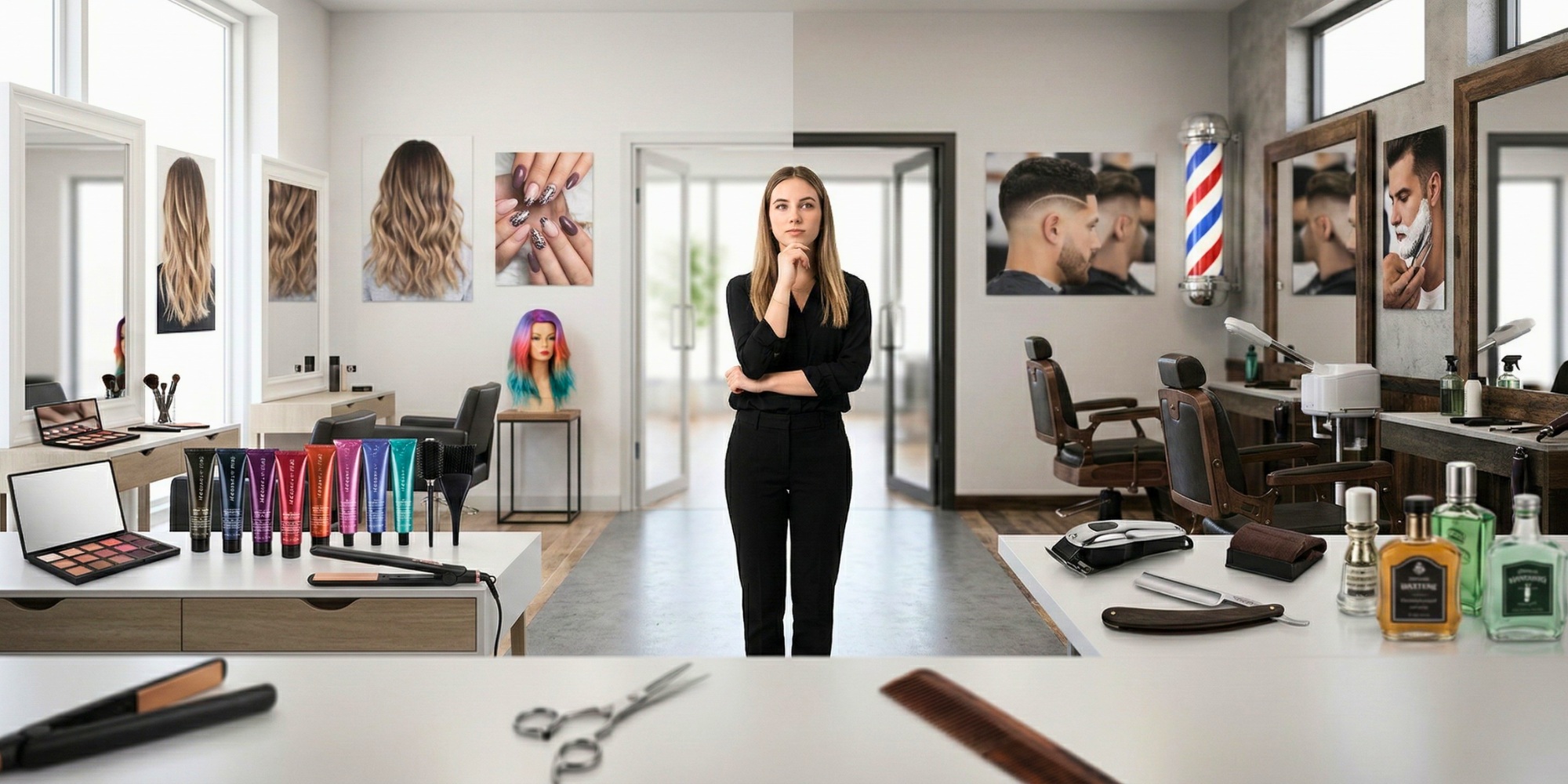
You’ve probably spent some time thinking about where you fit in the beauty industry, and it usually comes down to one big question: do you want to master the art of the razor fade or the chemistry of the perfect balayage? It’s a huge decision, and I’ve seen so many people worry that choosing barbering or cosmetology will somehow limit their future.

In 2026, the old-school idea that the barbershop and salon difference is just about “men vs. women” is pretty much over. Today, it’s all about your technical specialty. Whether you’re leaning toward the architectural precision of a straight-razor shave or the complex world of hair color, the first step is knowing which license gives you the most leverage for the career you actually want to build.

Key Takeaways for Future Beauty Pros

  • The Rise of the Hybrid: The most successful pros I see right now are “Hybrid Specialists.” They are blending high-end skincare with precision barbering to offer a full wellness experience.
  • National Licensing: Thanks to the Cosmetology Compact, moving between states is easier than ever. If your state is part of it, you can take your career across state lines without the headache of re-testing.
  • A Growing Market: We’ve seen a 21% jump in male-focused grooming enrollments lately. Barbering isn’t just a quick trim anymore; it’s a high-ticket luxury category.
  • The Crossover Path: If you start in one field and realize you want both, most states let you “cross over” with just 200 to 400 extra hours of training.

The Legal Side: Is Barbering Part of Cosmetology?

One of the most frequent questions I get is whether barbering falls under cosmetology in a legal sense. While they are definitely “cousins,” they are governed by different sets of rules. Your state board is very specific about which tools you’re allowed to touch.

Because a cosmetology license covers such a broad range of skills, the range of careers you can have with a cosmetology license is massive. You could find yourself working in a high-end spa, on a movie set, or even in a medical aesthetics office. However, if you want to use a straight razor for a traditional shave, you’ll usually need that specific barbering credential.

Staying legal also means staying on top of barbering and cosmetology license renewal. In 2026, this isn’t just about paying a fee; it often involves specialized continuing education to keep your skills sharp. If you decide to go for a dual license, you’ll have a bit more work to do for renewals, but I’ve found that the marketability you gain is worth it. You basically become the professional who never has to say “no” to a client’s request.

💡 Expert Insight: The 2026 Multistate Compact

The era of being “stuck” in one state is finally over. According to the latest updates from the Alabama Board of Cosmetology & Multi-State Regulatory Update, the Cosmetology Compact is officially live. This landmark agreement allows professionals in participating states like Arizona, Colorado, and Kentucky to maintain a multistate license. This gives you the freedom to move your career across state lines without the bureaucratic nightmare of starting your education over.

Skills and Training: Where the Paths Split

Inside a barbering and cosmetology school, the curricula diverge pretty quickly. I like to think of a cosmetology program as a “head-to-toe” doctorate in aesthetics. You’ll study the science of the skin’s lipid barrier and the complex pH levels of hair color. It’s not just about aesthetics; it’s about the clinical-grade health of the hair and skin.

On the flip side, the barbering vs haircut distinction is really about the tool. Barbering is the art of the blade. It focuses on the architecture of the face and specific male-pattern hair growth.

I’ve noticed a massive shift in who is signing up for these classes lately. Research from Global Growth Insights shows that male-focused grooming is now a major revenue driver in the industry. If the precision of a clipper fade or a straight-razor line is what speaks to you, it’s a good idea to check out this step-by-step guide on how to become a barber to see how those skills translate into a professional roadmap.

The “Hybrid” Power Move

The most lucrative professionals I know in 2026 are the ones who refuse to limit themselves. A common question I hear is: can you be a barber with a cosmetology license? The answer is generally “yes” for cutting hair, but “no” if you want to perform a traditional straight-razor shave.

This legal gap is exactly why so many pros look into getting a barber license after cosmetology. If you’re already licensed in one, don’t worry about “sunk costs.” “Crossover” programs allow you to apply your existing hours toward a second credential, typically requiring only 200–400 additional hours. This “bridge” strategy is the fastest way to ensure you can legally provide every service from a balayage to a hot-towel shave.

💡 Expert Insight: The Shift Toward Scalp Health

The 2026 market has shifted from “beauty” to “wellness.” Reports from America’s Beauty Show highlight that scalp health treatments – like biotech serums and peptide infusions – are the fastest-growing revenue streams in the industry. Clients are now willing to pay a premium for scalp health that goes beyond a standard shampoo. Mastering this “clinical” side of the chair is what separates a standard stylist from a high-earning specialist.

Salon vs. Barbershop: What’s Your Vibe?

The barbershop and salon difference is ultimately about the environment you want to work in every day. Barbershops often thrive on high-energy, social vibes and “walk-in” culture. Salons are typically more appointment-based, focusing on long-form transformations that can take hours.

The data backs up this specialized approach. The Bureau of Labor Statistics (BLS) 2025 Update indicates that while median wages are strong, the real growth is in specialization. By combining the precision of barbering and hairdressing with the depth of cosmetology, you position yourself in the highest-earning bracket of the industry.

Take the Next Step in Your Career

Choosing a career in the beauty world is about more than just learning to cut hair – it’s about finding a place where you can grow and build a legacy. At USA Beauty & Barber Academy, we’ve spent over 80 years helping students in Georgia turn their passion into a real profession.

I’ve seen firsthand how a solid foundation can change everything. Whether you are aiming for the high-ticket transformations of a salon or the precision-driven culture of a modern grooming lounge, our goal is to make sure you are “Salon Ready” the moment you graduate. Our legacy is built on your success, and we focus on balancing technical precision with the business savvy you need to thrive.

I’d love for you to see what our community is all about. If you’re ready to stop wondering and start doing, you can find out more about how to get started on our Enrollment page. We also have a contact form at the end of this article – feel free to reach out with any questions. I’m here to help you map out exactly how to reach your 2026 career goals.

Common Questions I Get Asked

Q: Can I use a straight razor if I only have a cosmetology license?
A: In most states, no. Open-blade shaving is usually restricted to licensed barbers. As a cosmetologist, you’re generally limited to shears or safety razors.

Q: How long does a “Crossover” program take?
A: If you already have your cosmetology license, a bridge program for barbering of cosmetology usually takes about 8 to 12 weeks. It’s a much faster route than starting over from scratch!

Q: Is this industry actually stable?
A: Personal care is famously resilient. Even when people cut back on other luxuries, they still want to look and feel good. It’s one of the most “recession-proof” careers out there.

Q: What is the benefit of the new 2026 Multistate Compact?
A: It’s a game-changer. It means you don’t have to pay for multiple licenses or retake exams if you move to another state that’s part of the compact, saving you a ton of time and money.