


What Happens in Barber School Before You Pick Up a Straight Razor?
Barber School at a Glance
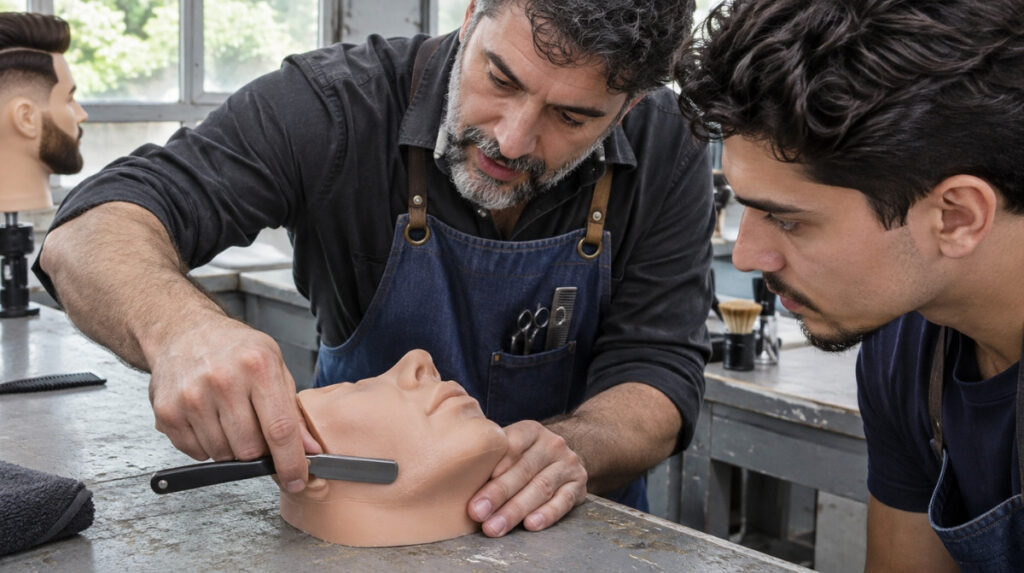
- Beginners build skills in stages. You can start without haircutting experience. Expect to learn tool control and practice on mannequins before serving clients under supervision.
- Haircuts are one part of the job. Beard shaping and straight-razor shaves can broaden your service menu. Georgia’s Master Barber curriculum also includes coloring, permanent waving, and relaxing.
- Study theory alongside hands-on work. In Texas’s fiscal year 2025 Class A Barber results, 37.25% of completed written attempts passed, compared with 89.80% of completed practical attempts. In Georgia, use the exam materials for the license you’re pursuing.
- Keep a record you can use next time. A few details about clipper settings, neckline preferences, and product reactions can make the next appointment easier to plan.
Your first lessons in barber school give you time to develop a steady hand and learn how to assess the hair before you cut it. As you get more comfortable with the tools, you’ll start making decisions based on the client’s growth patterns, texture, and preferred style. If you’re weighing barbering and cosmetology, think about which services you’d like to spend most of your time doing.
From Your First Cut to Working With Clients
A cut starts with noticing what the hair does on its own. A strong swirl at the crown, for example, can change how the hair sits once you take weight out of that area. Mannequin work gives you room to try different cutting angles and see how each adjustment affects the shape.
Georgia’s barber school curriculum lays out what students cover before they begin working with clients:
- Assess the hair and scalp. Observe density, texture, growth direction, and scalp condition before choosing a technique.
- Develop steady tool control. Get comfortable with shears, clippers, and trimmers while learning how to position yourself around the chair.
- Repeat techniques on mannequins. Work on sectioning, cutting, and blending until you can get a consistent result.
- Apply those skills in the student clinic. Once you’ve completed the initial training and received formal instructor sign-off, you can practice consultations and services with live clients under supervision.
Building a Steady Hand With Your Tools
Set the chair height so you can see the area you’re cutting without hunching over. Turn the chair or change your position when you need a better view of the neckline. Early practice gives you time to pay attention to movements like these before working on speed.
- Clippers. Try different guard sizes and lever positions to see how they change the transition between lengths.
- Shears. Hold the stationary blade steady and use your thumb to move the cutting blade.
- Straight razor. Practice setting the blade angle, keeping pressure light, and controlling each stroke with an instructor’s guidance.
Letting the Hair Guide the Cut
Look at where the hair separates naturally and where it changes direction around the crown and nape. Lift a section, then let it fall again. What you see can help you decide where to start a fade, how much length to leave around a cowlick, or how much a curl may spring up as it dries.
When Georgia Students Can Begin Clinic Work
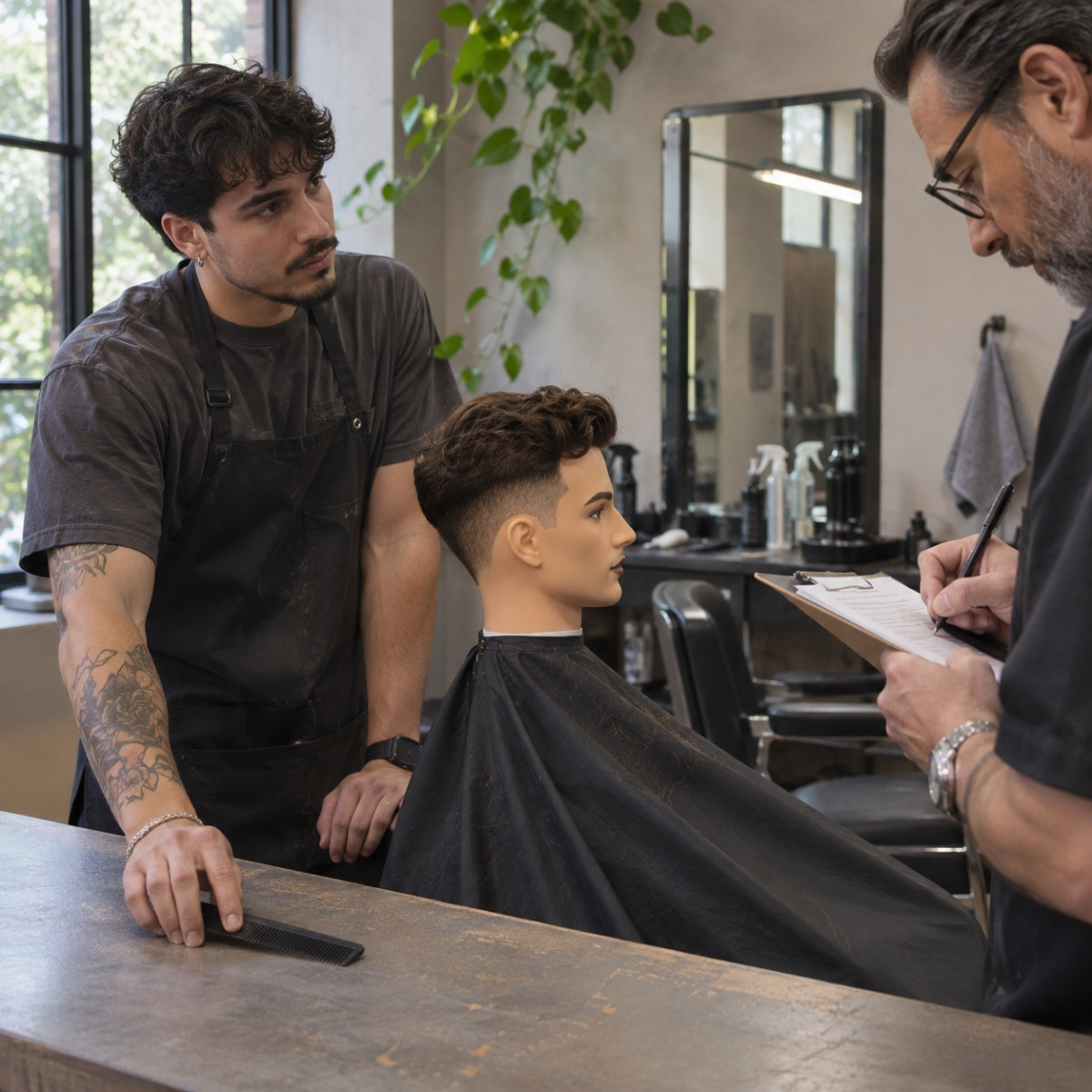
Georgia includes 35 hours of mannequin training in the Master Barber program’s initial haircutting and styling block. Master Barber students complete 280 hours of initial training before performing clinical services on live clients. Barber II students complete 190 hours. At that point, the licensed instructor and student sign a notarized readiness statement for the state board. Once you’re on the clinic floor, you’ll learn to adapt your technique to each client’s hair and preferences. See the Georgia barber curriculum rules for both pathways.
Building Your Barber Service Menu
Fades, tapers, scissor cuts, and line-ups can form the core of your menu. You can build on them with beard sculpting and hot-towel shaves. If you hold a Georgia Master Barber license, you can also offer color services such as gray blending. Before adding a service, think through how often clients are likely to request it, how long it takes, and what it costs to deliver.
Planning a Beard Trim or Hot-Towel Shave
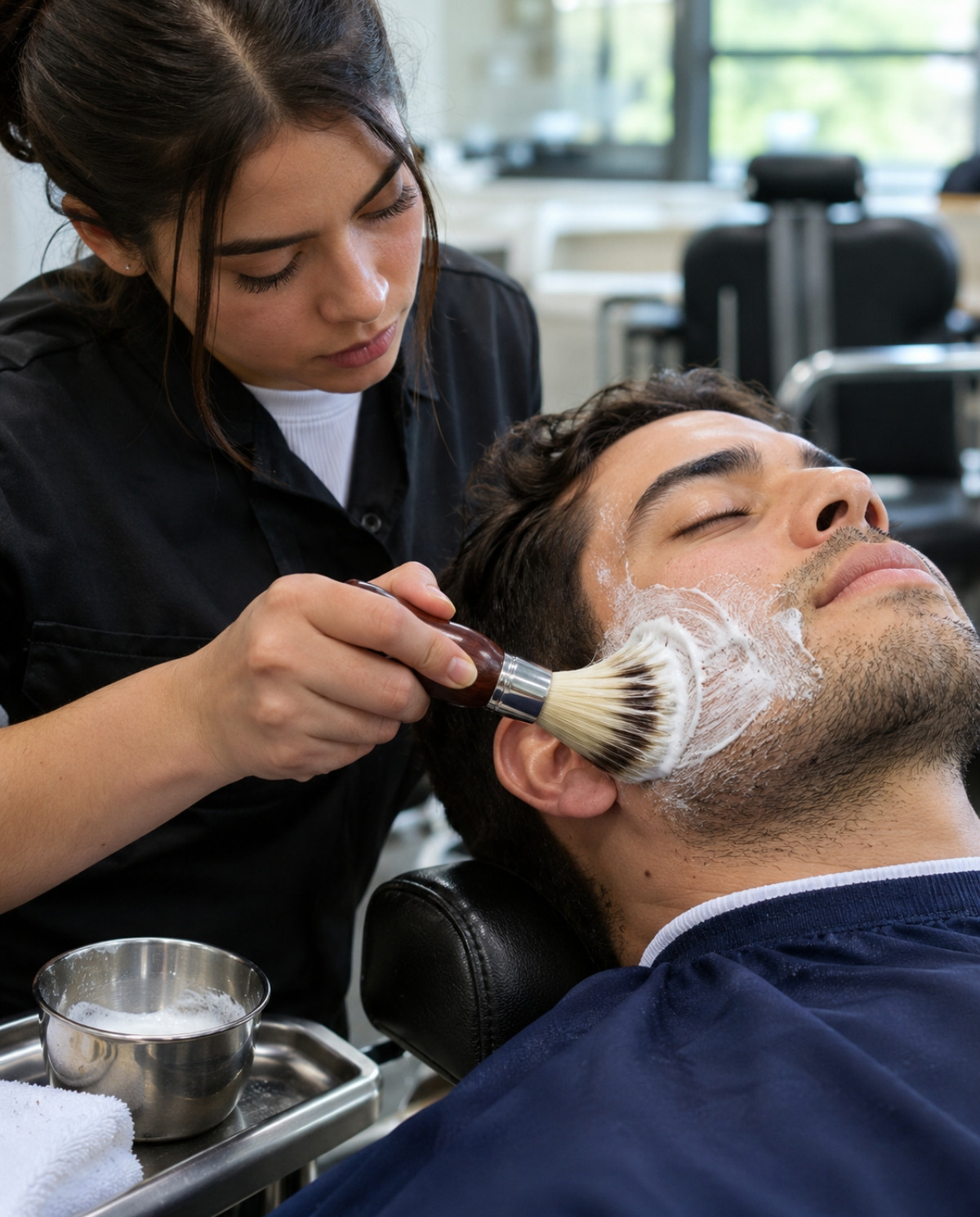
Before you start, ask whether the client gets razor bumps or irritation and check which way the beard grows. The direction can change across the neck and under the jaw. For a basic hot-towel shave:
- Apply a warm, damp towel to soften the beard.
- Use shaving cream or gel to lubricate the skin and help the blade glide.
- Follow the grain with short, controlled strokes. Avoid going over the same area repeatedly, especially where the client gets razor bumps.
- Finish with a cool towel or rinse and use a gentle moisturizer if it suits the client’s skin.
For a client who regularly gets ingrown hairs, discuss leaving a little stubble with a trim. The DermNet guide to razor bumps explains how shaving direction and closeness affect irritation. The consultation is also a good time to confirm how the client wants their beard, neckline, and mustache shaped.
Where Barber II and Master Barber Scope Differ
Georgia’s Barber II scope includes cutting and dressing hair, shaving or trimming beards, facial or scalp massage, and certain facial or scalp treatments. The Master Barber scope also includes hair coloring, permanent waving, relaxing, and straightening. If you want to offer gray blending, ask how much supervised color practice the Master Barber program provides. See Georgia Code § 43-10-1 for the license definitions and the barber school rules for what each program teaches.
Comparing What Each Service Brings In per Hour
A $40 haircut that takes half an hour and uses $2 in supplies leaves $38 before overhead. If both half-hour slots are booked, that’s $76 per booked hour. A $55 haircut and beard service that takes 45 minutes and uses $4 in supplies leaves $51 before overhead, equivalent to $68 per booked hour. The longer service brings in more per appointment. The shorter one brings in more per booked hour in this example. Use your own prices, supply costs, and appointment lengths, then account for fixed expenses such as booth rent. The U.S. Small Business Administration’s break-even guide explains how to include fixed and variable costs.
For a national earnings reference, the U.S. Bureau of Labor Statistics reported a median barber wage of $18.37 per hour in May 2025. The wage data include tips and exclude self-employed workers. In a separate estimate, BLS classified 80% of U.S. barber jobs in 2025 as self-employed. If you rent a chair or own a shop, track what clients pay alongside the costs of providing each service. If you’re still budgeting for training, our barber school cost and enrollment overview covers common expenses to ask schools about.
A Sanitation Routine for Every Appointment
Before you start, check that the service is appropriate for the client’s skin, scalp, and hair. Keep that same attention through draping, tool use, and cleanup, even when appointments are back to back.
What to Look For During the Consultation
- Skin and scalp. Look for open sores, irritation, or unusual patches where you’ll be working. If you suspect a contagious condition, pause the service and suggest the client have it checked. The CDC’s ringworm guidance explains how ringworm can spread through contact and shared items.
- Hair and chemical history. Check density, texture, and growth direction for a cut. Before a chemical service, ask about earlier bleaching, coloring, or relaxing and look for damage or breakage.
- Previous reactions. Ask which products have caused irritation. For hair color, follow the manufacturer’s instructions and the FDA’s guidance on patch testing and gloves.
Resetting Your Chair and Tools Between Clients
- Wash your hands and change the draping. Georgia requires handwashing before and between client services. Use a fresh neck strip and a clean cape for each client.
- Remove debris before disinfecting. Clean reusable tools with warm, soapy water to remove hair and debris. For reusable implements disinfected by immersion, Georgia’s facility rules specify complete immersion for 10 minutes in an EPA-registered disinfectant. Choose a product suited to the implement and method, and follow its label for preparation and use. The EPA’s disinfectant guidance explains how contact time works.
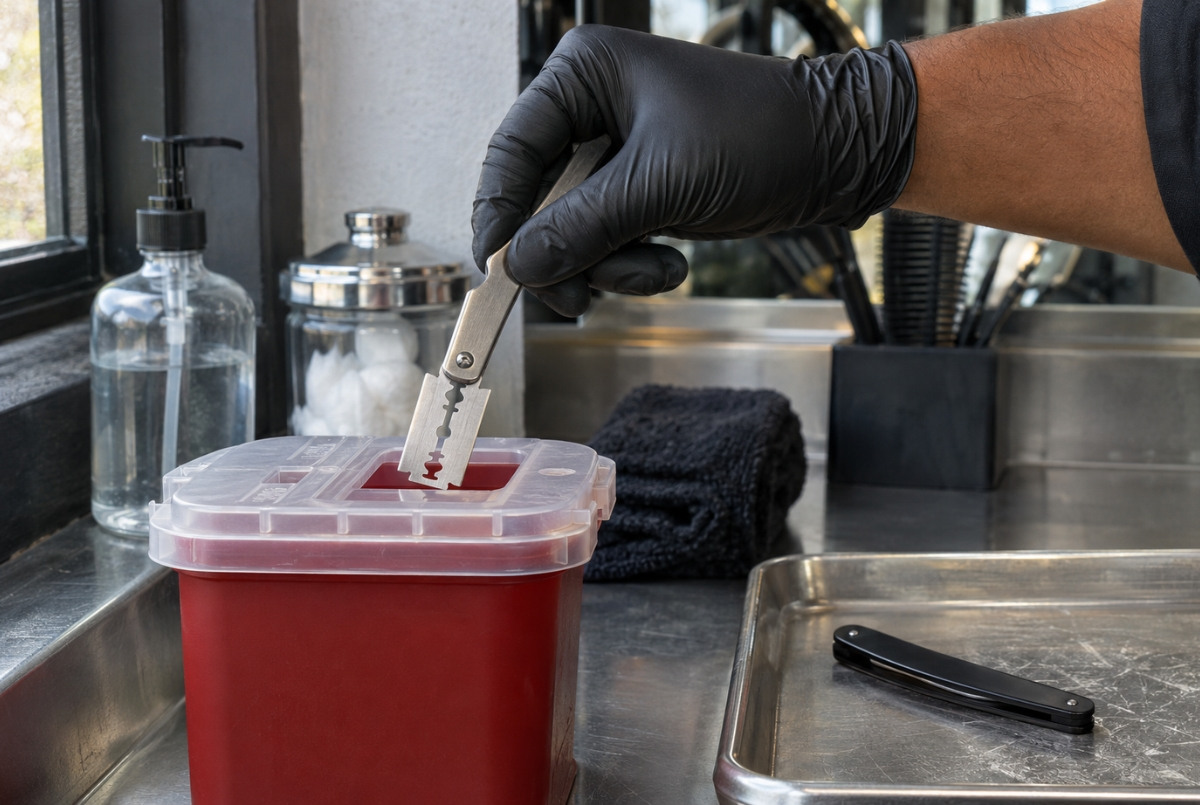
- Handle disposable blades as sharps. When using a replaceable-blade razor, load a fresh blade for each client and place the used blade in a designated sharps container.
Reducing Strain and Skin Irritation
Long periods of standing and repeated wrist and shoulder movements can take a toll. Position the chair before you begin, move around it to reach each area comfortably, and pay attention to how hard you grip your tools.
Repeated contact with water, shampoo, and chemicals can also irritate your hands. A 2022 review of studies on hairdressers estimated that 38.2% had experienced hand eczema at some point in their lives. DermNet’s guidance for hairdressers and barbers covers practical steps such as using suitable gloves for wet or chemical work, drying your hands thoroughly, and moisturizing regularly.
Keeping Track of Clients and Their Visits
When a client asks for the same cut they had last time, a note about the blend or neckline gives you something specific to confirm. It also helps when a client likes most of the previous cut and wants to change just one detail.
Which Details to Save After a Service
A note such as “taper fade, #1 to #3, leave weight at the crown, natural neckline” is easy to scan before the next visit. For color, save the product, formula, date, and any patch-test result or reaction.
- Technical details. Note guard numbers, lever positions, where the blend began, and where you kept extra length.
- Safety information. Record relevant sensitivities and past reactions so you can review them before repeating a service.
- Preferences. Save how the client wants their neckline finished, how they style their hair at home, and which products they’d like you to use again.
Measuring How Many New Clients Come Back
Paper cards can work for service notes. A digital booking system can also show which services fill your schedule and whether clients follow through on return appointments. To measure 60-day retention, start with first-time clients whose initial visit was at least 60 days ago. Count how many of them completed a second visit within 60 days of their first appointment, then divide by the total number of first-time clients in that group. Use the same method over time to see whether changes to your follow-up routine affect return visits.
Getting Ready for Georgia’s Barber Board Exams
For Georgia Master Barber or Barber II licensure by examination, you must pass the written and practical exams and submit your license application. Georgia requires a minimum score of 70% on each section. If you fall short on one section, you can retake that section on its own. Georgia also has an endorsement route for eligible applicants who already hold an out-of-state license. Start with the Georgia board’s exam FAQ and the state examination rules.
Training Hours for Each School Pathway
Through Georgia’s school pathway, Barber II requires 1,140 hours over at least seven months, and Master Barber requires 1,500 hours over at least nine months. Classroom study covers topics such as state rules, disinfection, and chemistry. Supervised practice gives you a chance to apply that material while cutting, shaving, and performing other services in your program. Georgia also has a supervised apprenticeship pathway with separate training requirements. See the state curriculum requirements and the Georgia barber licensing guide.
When looking at school schedules, ask how many hours you’ll attend each week and how missed clinic hours can be made up.
Making Separate Study Plans for Theory and Practice
For the practical exam, turn the candidate bulletin for your license into a checklist of tasks, supplies, and time limits. Rehearse each task from setup and client protection through cleanup. For theory, practice explaining why each safety step matters. The NIC barber styling theory outline gives examples of topics such as infection control, blood-exposure procedures, hair and scalp anatomy, and chemical services. Check the current Georgia PSI bulletin through the state board’s exam page for your specific test. Our barber licensing overview covers general steps and uses California for its example of written exam timing and question counts.
The Texas Department of Licensing and Regulation reported a 37.25% written pass rate and an 89.80% practical pass rate for completed Class A Barber exam attempts in fiscal year 2025. Those are Texas results. When comparing Georgia schools, ask for recent graduate pass rates for each section and, where available, figures for first-time attempts. You can also watch this video on looking up exam pass rates.
Visit Our Barber School in Peachtree Corners
At USA Beauty & Barber Academy, the Master Barber program combines hands-on training in haircutting, styling, shaving, and coloring with topics such as salon business and client retention.
Use our Enrollment page to request a free 30-minute campus tour. You can see where students train, meet staff, and ask about scheduling and admissions. You can also contact our admissions team directly.
Common Questions About Starting Barber School
Can I Apply if I’ve Never Cut Hair?
Yes. Prior haircutting experience is not listed among our admissions requirements. At USA Beauty & Barber Academy, applicants must be at least 18 and have a photo ID, Social Security card, and a high school diploma or GED. The school considers official transcripts case by case. See the published admissions requirements for details.
What Is the Minimum Time to Finish Barber School in Georgia?
For the school pathway, the state sets a minimum of seven months and 1,140 hours for Barber II or nine months and 1,500 hours for Master Barber. Your completion date depends on your weekly schedule and attendance. See the Georgia barber school rules for the full requirements.
Where Do Master Barber and Master Cosmetology Overlap?
In Georgia, both licenses cover haircutting, styling, and chemical hair services. Beard shaving and trimming fall within the Master Barber scope. Master Cosmetology also covers esthetics and nail services. Compare the license definitions in Georgia Code § 43-10-1 against the services you want to offer.
Which Tools Are Part of a Barber Student Kit?
Georgia’s basic kit requirements include clippers, guards, trimmers, shears, a straight razor, and combs. The state lists mannequins separately as equipment the school provides. Ask admissions what the school supplies, which kit items you’re expected to buy, and how those charges appear on your enrollment paperwork. You can find the full kit list in the Georgia barber school equipment rule.