

What Is Esthetician School Like? A Real Look at Training and Prep
Transitioning from a skincare enthusiast to a licensed professional is a significant life shift. Moving into a treatment room is a different world compared to your bathroom mirror. This path turns a hobby into a career that requires clinical knowledge, high sanitation standards, and hands-on expertise.
This guide walks you through what the daily reality of a modern esthetics education looks like so you can feel confident before you start.
Key Takeaways
- Market Demand: The Bureau of Labor Statistics expects jobs for skincare specialists to grow 7% between 2024 and 2034.
- Scientific Core: Training focuses heavily on skin barrier health, product ingredients, and keeping clients safe through sanitation.
- Regulatory Updates: Regulations like MoCRA have made safety and clear labeling even more important across the beauty industry.
- Program Length: Depending on where you live, training can range from 220 hours to 1,000 hours.
- Earning Potential: Median wages sit around $19.98 per hour, though specialized roles often pay much more.
What Is Esthetician School Like in Reality?

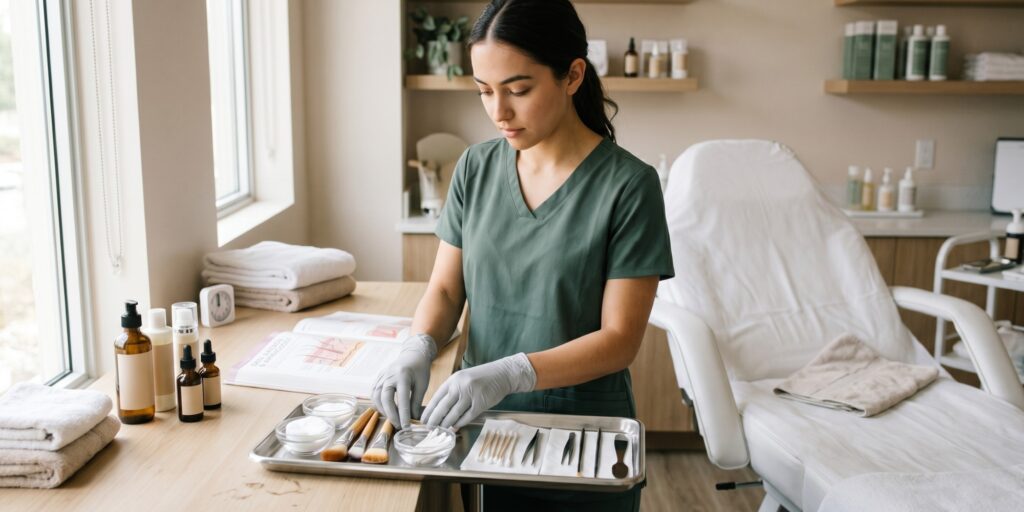
Many people ask what esthetician school is like before they sign up. It often feels more like working in a professional clinic than sitting in a lecture hall. A good program combines theory with a lot of repetition. You might spend your morning studying skin anatomy and your afternoon practicing in a supervised student clinic.
During your esthetician training, you learn how to handle consultations, identify skin issues within your scope, and perform services safely. This includes learning the rhythm of a professional workspace, from setting up your room to documenting treatment notes. If you want to dive deeper into the basics of starting this career, you should check out this guide on how to become an esthetician.
The Shift Toward Quick Services
The U.S. Bureau of Labor Statistics reports that the industry is growing quickly. This growth is partly because more people want fast, affordable treatments like mini-facials. Understanding what an esthetician does on a daily basis helps show that efficiency and safety are just as important as the actual skin treatment.
The Curriculum: From Biology to Technique
Some students feel a bit nervous about the science side of esthetics, but this foundation is what makes you a professional. You need to understand the why behind every treatment to keep your clients safe.

Understanding the Science
One of the first things you learn is that pH matters because it affects the health of the skin barrier. You will also spend time learning why knowledge of skin conditions is valuable for an esthetician. This helps you recognize when a client has a concern that needs a doctor’s attention rather than a facial.
Developing Your Practical Skills
Your esthetician classes can cover everything from manual facial techniques to hair removal and makeup. You will learn specific facial steps so your results are safe and consistent. Extractions are often one of the most useful parts of training because learning how to clear pores safely helps prevent unnecessary skin damage.
Whether you are attending esthetician school for facial work, lash services, or waxing, you will learn to use professional tools precisely. You also get to know different skincare lines and the types of products estheticians use in real treatment settings.
Hours, States, and Schedules
The length of your program depends on your state’s rules. This is the biggest logistical factor in how quickly you can start working.
- Texas: You will need to complete 750 hours for an esthetician license.
- Florida: Requires 220 hours for a facial specialty or 400 hours for a full specialist.
- Georgia: Requires 1,000 hours of training.
- Arizona: Usually requires 600 hours under current standards.
If you are wondering how long it takes to complete esthetician school, a full-time program often takes a few months. For those with busy schedules, looking for weekend or night classes can make the transition much easier. While you can sometimes handle the theory portion from home, the practical work always happens in person.
Safety and Compliance in 2026
The Modernization of Cosmetics Regulation Act (MoCRA) has changed how the beauty industry looks at safety. As a student, you focus on following state board rules, recognizing reaction signs, and documenting adverse reactions appropriately. This level of responsibility is what separates a professional from an amateur.
Planning Your Education Costs
Tuition prices can vary based on your location and the supplies included in your kit. It is smart to check whether your school offers financial aid options, payment plans, or other funding support.
When you look at the price of esthetician school, consider the value of the career you are building. Some people look for an esthetician school under 10k, but you should also weigh the quality of the training and the job placement support the school offers.
Preparation for the State Board Exam

Before your first day, make sure you know the requirements to get into esthetician school in your state. Most places require you to be a certain age and have a high school education. If you are wondering whether you can attend esthetician school with a GED or without a high school diploma, the answer usually depends on your specific state board.
Once you start, you will likely receive an esthetician kit for school. This usually includes items like facial brushes, extraction tools, textbooks, and other classroom supplies. You may also use beginner esthetics textbooks and workbooks during your training.
The State Board: Your Final Hurdle
The final step is the state board. Most students spend their last weeks reviewing safety rules, service procedures, infection control, and state-law requirements. Knowing what is on the esthetician state board exam is vital for success.
The Bureau of Labor Statistics notes that median pay is around $19.98 per hour, but Beauty Insurance Plus points out that specialized roles can earn much more. Your license is the key that opens these doors.
Take the Next Step at USA Beauty Academy
Finding a school that fits your goals is more important than just hitting an hour requirement. You want a place that prepares you for the daily rhythm of a real spa. Having the right mentors and a supportive environment can make a major difference in building professional confidence.
If you are ready to learn more about starting your journey, you can find details in the school’s Enrollment section. You can also explore the esthetics program and learn more about training at USA Beauty Academy.
Please fill out the contact form at the bottom of this article to get in touch with us. We can help you schedule a tour or answer any questions you have about upcoming start dates.
FAQ: Common Questions About Esthetics
Is esthetician school hard to get into? Admission is generally straightforward. You typically just need to meet the age and education requirements for your state.
Can I do esthetician school online? You might find theory offered in an online or hybrid format, but you must complete your practical training hours in person to get licensed.
Is there an esthetician school for nurses? Yes. Many nurses choose to attend an esthetician program to move into skincare-focused or medically adjacent beauty settings, though their allowed services depend on state regulations.
What is an esthetician trade school vs a community college? A trade school usually focuses exclusively on beauty and can be a faster route, while a community college might offer a broader academic experience alongside the program.
Do I need a license for a home-based studio? In almost every state, you must have a license to perform skin services for money, even at home. You also have to follow local zoning and sanitation laws.